

An African safari transcends traditional travel – it is a captivating expedition that offers a unique blend of awe-inspiring landscapes, wildlife encounters, and cultural immersion.
Having visited South Africa, Kenya, and Tanzania, I looked forward to returning to Africa, this time to Namibia, a country that blows away any preconceived notions of what Africa should be. We packed our bags and headed on our adventure with Micato Safaris. A nonstop flight took us from New York to Johannesburg where we met up with our expert safari director, Brian. After an overnight stay at the beautiful resort-like Saxon Hotel, we connected with a short flight to Namibia’s capital city, Windhoek, spending a night at the iconic Weinberg Hotel. This serene estate property was the perfect place to recover from jetlag.
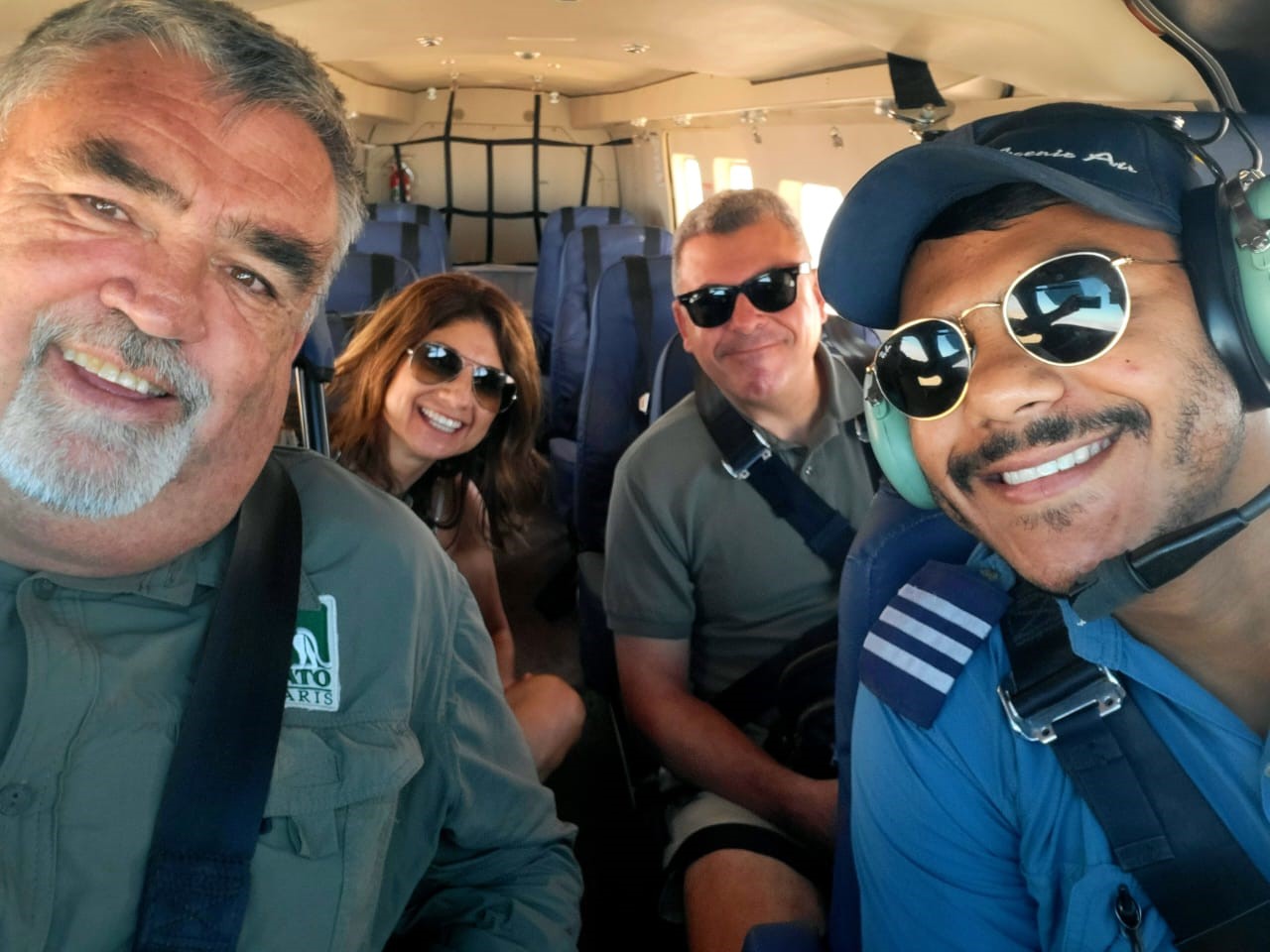
From Windhoek, we flew via Scenic Air light aircraft from lodge to lodge – from Etosha National Park to the Skeleton Coast to Sossusvlei. Our trusted pilot, Cam, made sure we were comfortable in the Kodiak plane throughout our journey, and we were honored to get to know him throughout our two-week trip.

It is indescribable the distinctiveness of this remote, yet well-developed country in the southwestern corner of the continent. Namibia is a land of stark contrasts, where towering sand dunes meet the wild Atlantic Ocean, where traditional tribal customs blend with modern life, and remarkable animal species adapt to a harsh environment.
Our itinerary included an unforgettable stay at Shipwreck Lodge, perched on Namibia’s 310-mile-long Skeleton Coast. This revered and feared National Park is a raw, rugged, and remote slice of African wilderness — it earned its name from the countless shipwrecks that wash up on its shores.
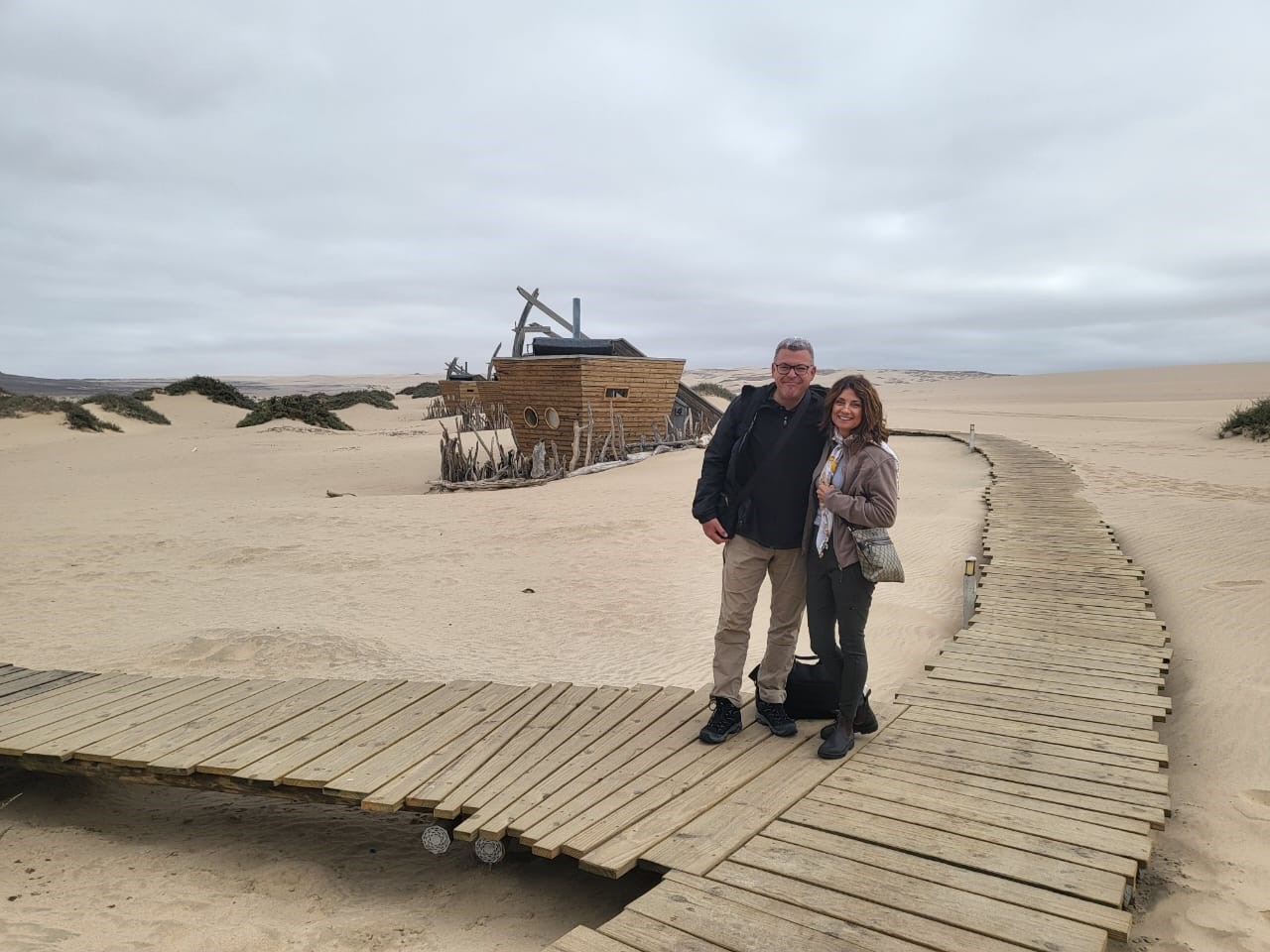
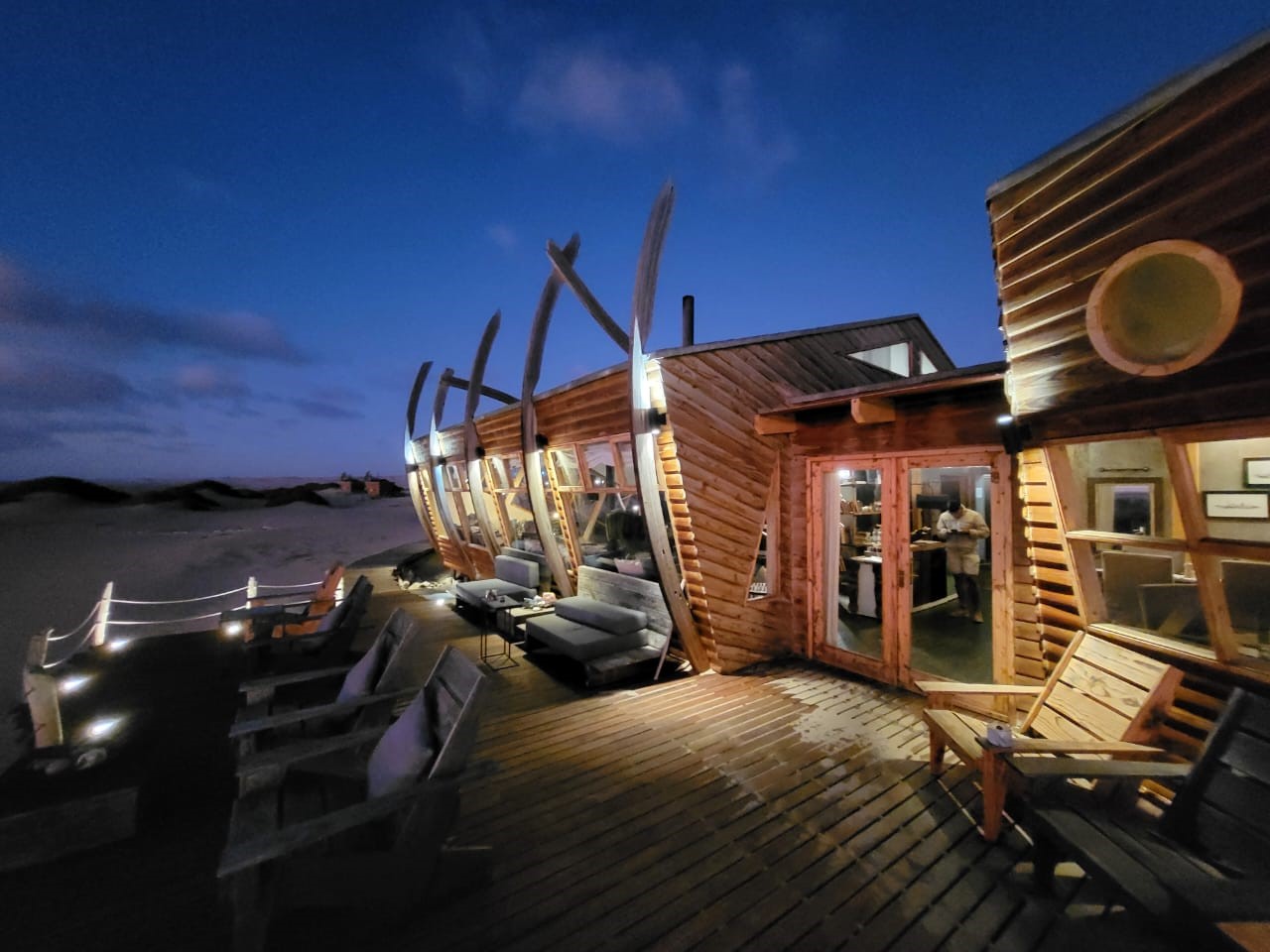
Shipwreck Lodge, which honors the mariners who braved these perilous waters, is an oasis in what is the world’s oldest desert – The Namib. The lodge is uniquely designed to reflect the famous shipwrecks lining the nearby coast. Cabins, nestled between the dunes, with views of the Atlantic Coast, offer a warm and inviting environment that contrasts the harshness of the surrounding area.
Getting here:
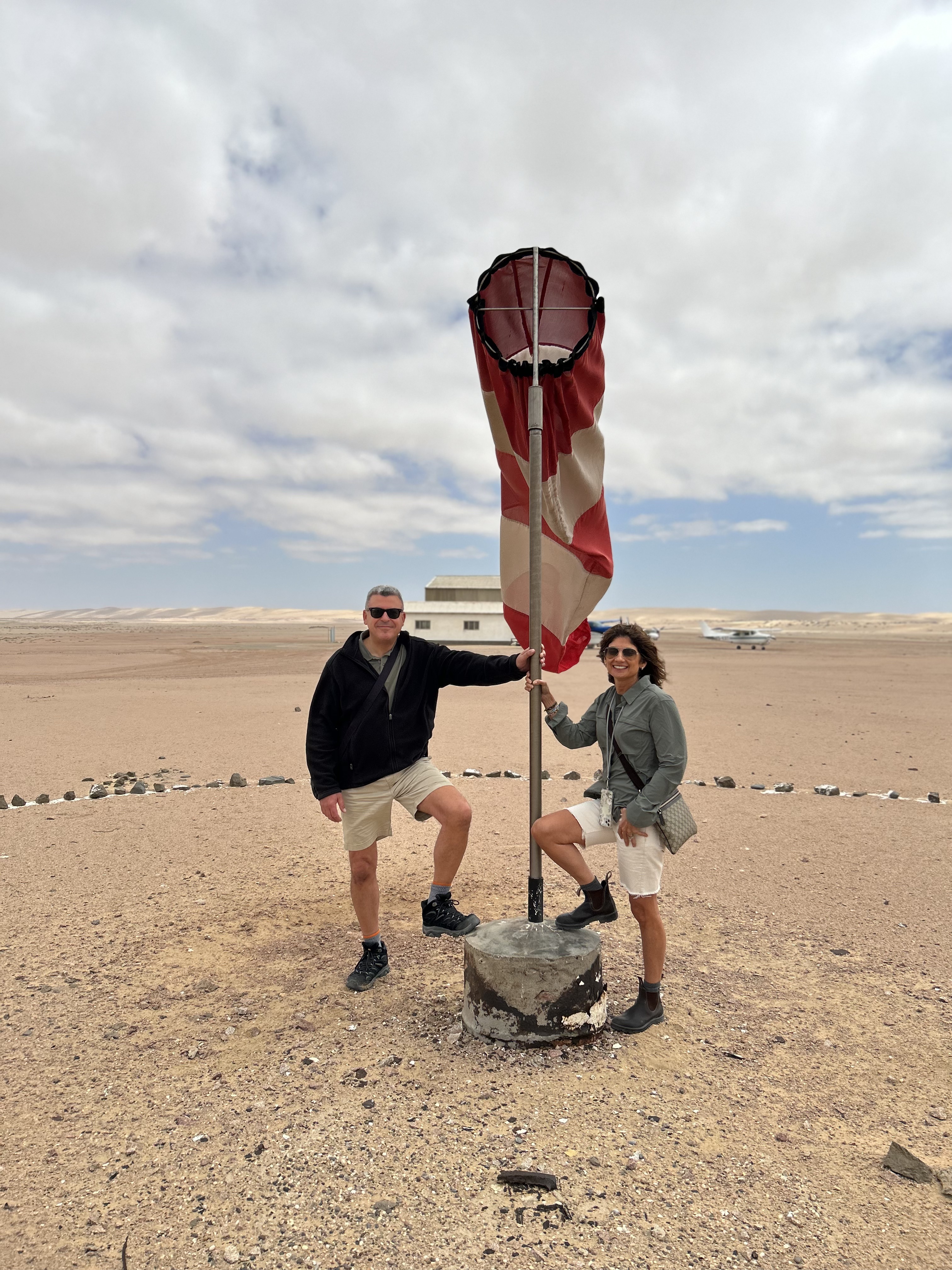
We accessed the lodge via a flight to Möwe Bay, the nearest airstrip. Very surreal — only a simple hanger and a lone, red and white windsock indicates this is an airport – the runway is barely distinguishable from the desert sand. A 45-minute transfer via the lodge’s 4×4 vehicle included a stop at a seal colony and several wrecks perched on the beaches. There is no official “road” to the lodge, only a lightly marked, constantly shifting, sandy path along the dunes.



Accommodations:
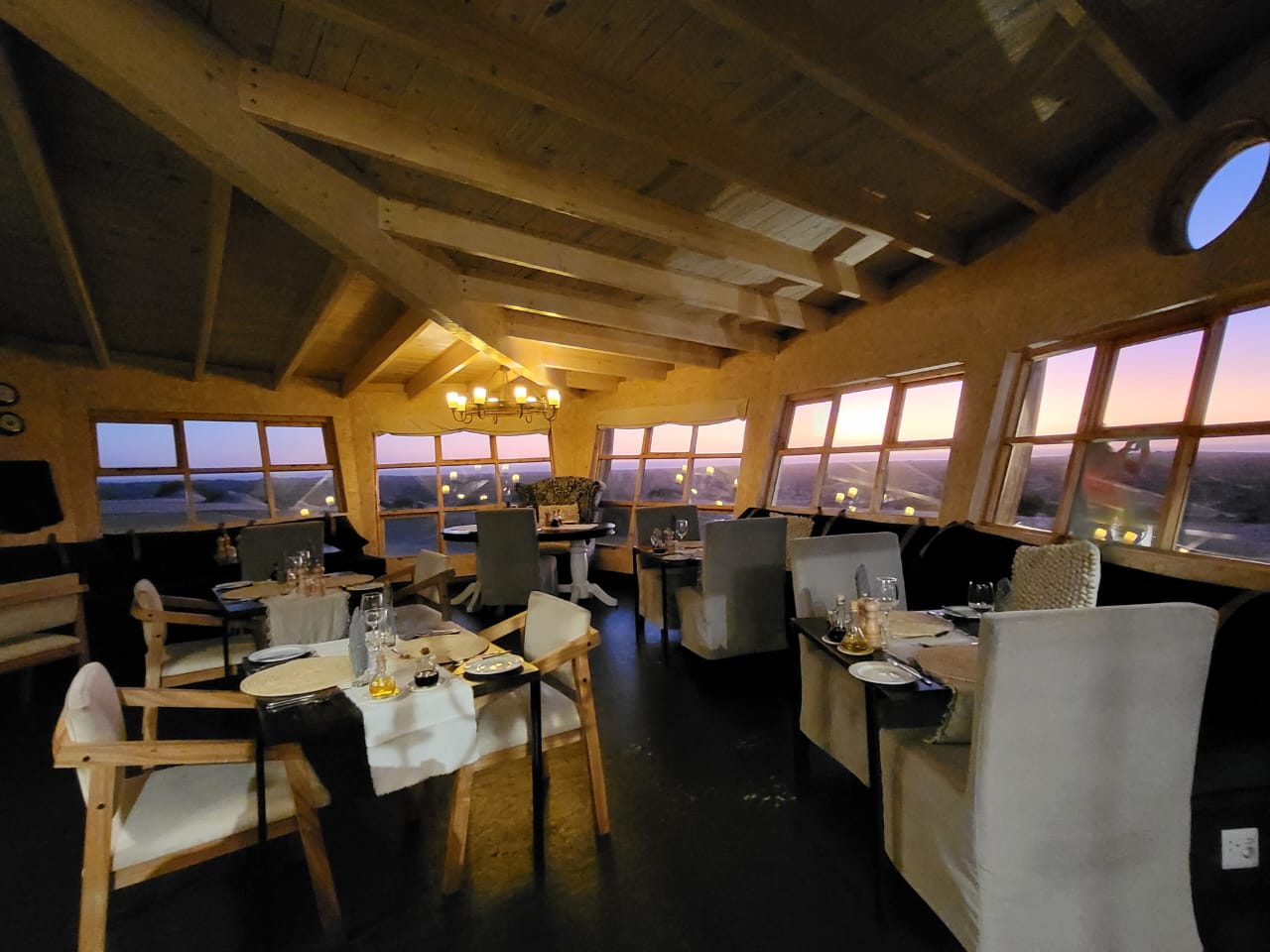
The lodge’s rustic elegance and remote location blend easily to create an atmosphere of tranquility and wonder. Ten cozy, eco-friendly, solar powered, wooden cabins come equipped with a wood burning stove to keep warm on chilly nights. Outside the cabin door is a spacious deck with sturdy Adirondack chairs. In the center of the lodge stands the timber and glass lounge, bar, and restaurant. After day-long game drives, we would settle into cozy cushioned couches and chat with other visitors from around the world. A wraparound deck offered uninterrupted views out to the Atlantic Ocean – a great place to just sit and contemplate life!



Excursions:
Our first night we joined other lodge guests and drove down to the beach in a 4×4 for a traditional safari “Sundowner.” A delicious display of canapes and gin was set up on a petite table in the sand just steps from the water. As the sun set behind the dunes, we tried to absorb the vastness of this world around us – it was too big to grasp!

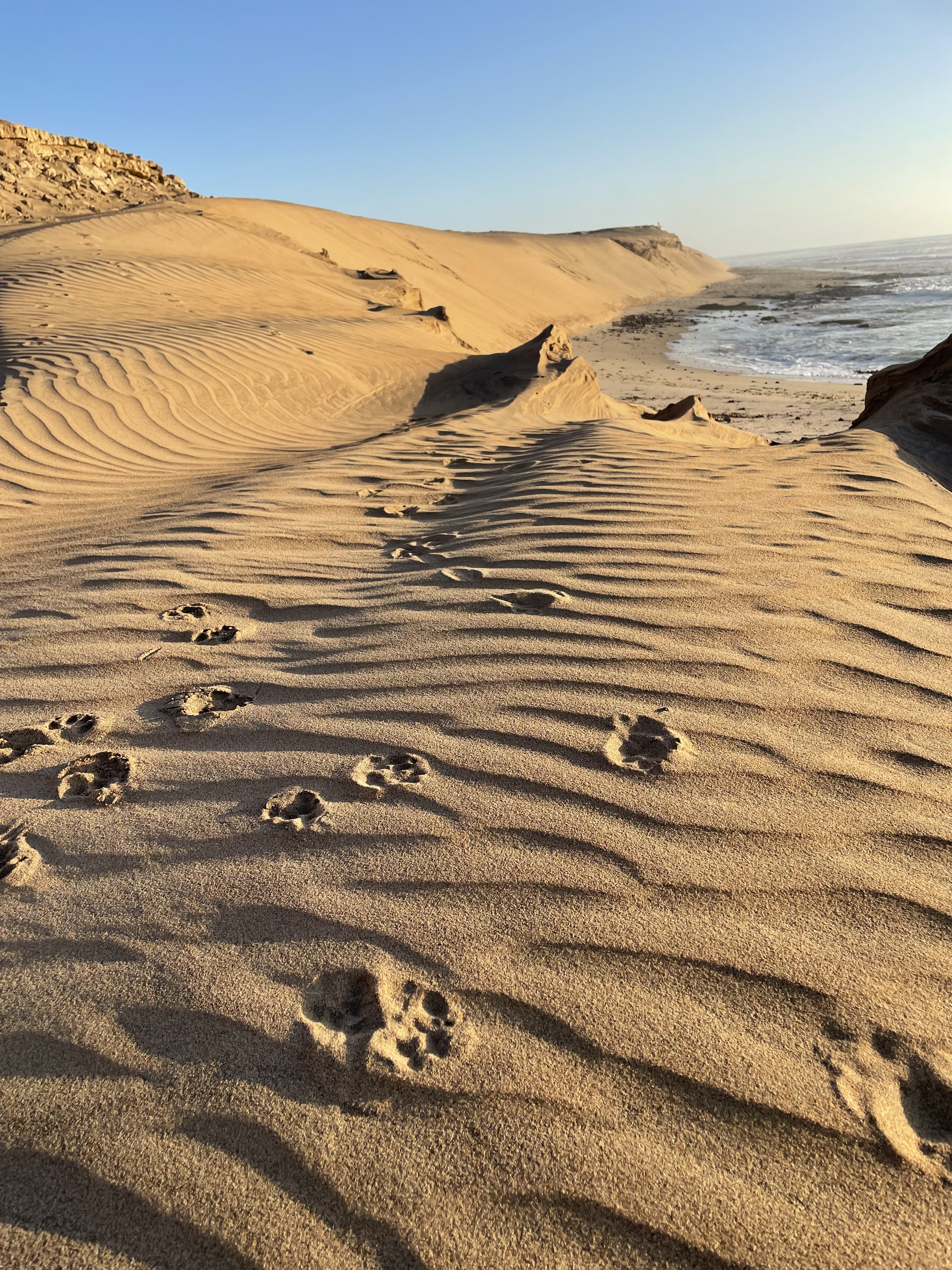
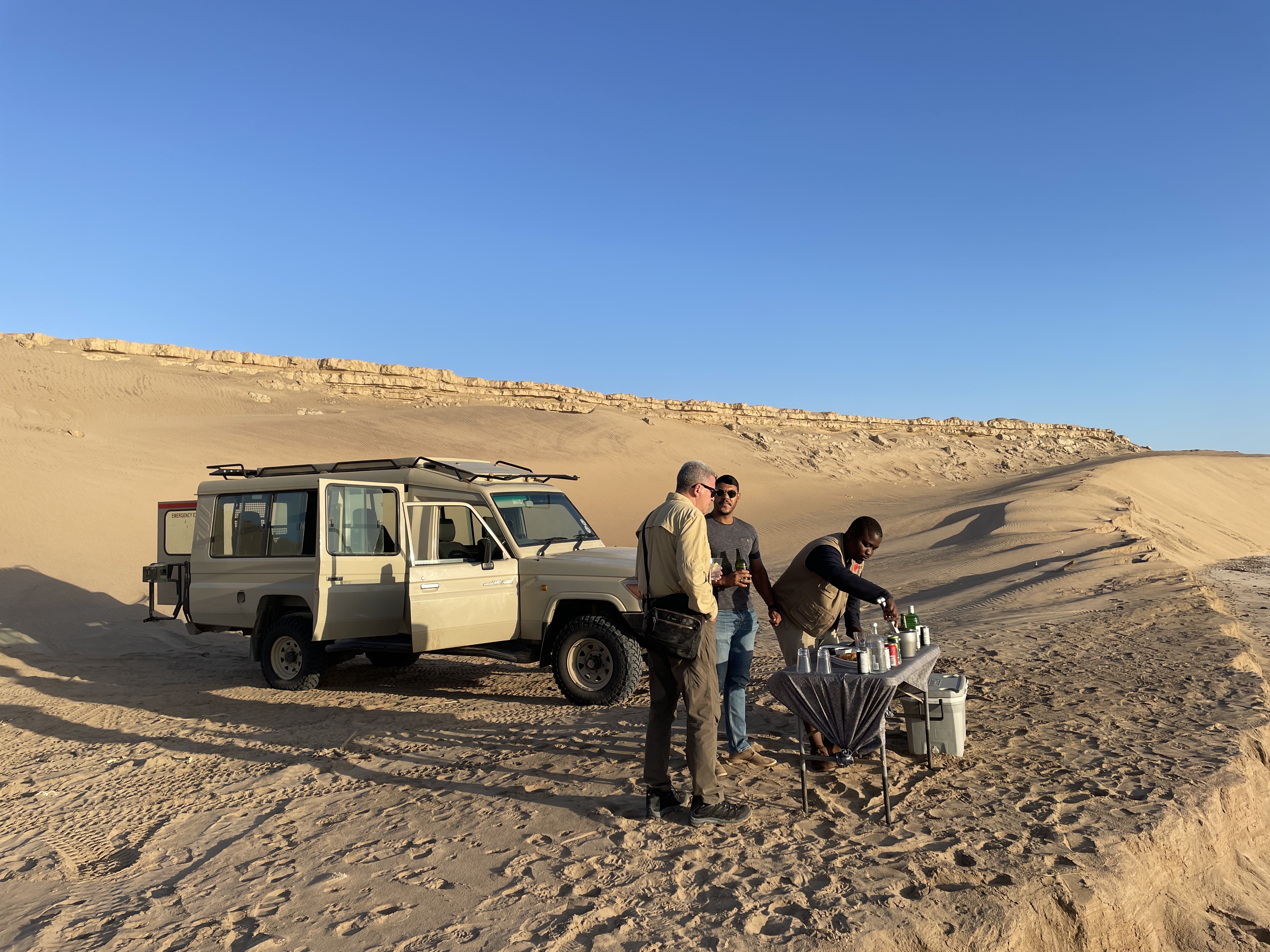
On our second day, our guide took us into the dunes just behind the lodge. After a quick lesson, we donned helmets, boarded quad bikes, and then stopped to do some “sandboarding,” taking turns going head or feet first over the edge and then gleefully being driven back up to the top for another run. Afterwards, we formed a neat line of quads and ventured up even higher into the dune-filled world – colossal mountains of sand as far as the eye could see.


On our third day we joined our local guide and explored the scenic Hoarusib River, an often dry, ephemeral river, rimmed by sheer cliffs and narrow canyons. Driving for several hours, we spotted plenty of unique desert dwelling creatures as we followed the riverbed through a constantly changing landscape. We hiked through the russet-hewed Clay Castles which had been carved out for centuries by the flowing water.


Scenic flights:
After our stay we returned to Möwe Bay where we boarded our plane and embarked on a scenic flight over the southern Skeleton Coast to our next stop, Sossusvlei. Our bird’s eye view afforded us a glimpse of the rugged coastline, shipwrecks, and a startling thousand-member flock of pink flamingoes below.


Namibia’s pristine wilderness is an escape from the fast-paced world we live in – it gives you a profound sense of tranquility. This country has made a strong commitment to sustainability in its approach to tourism by protecting its rich biodiversity, reminding us of the importance of safeguarding our precious environment. Lodges and safari operators are deeply committed to tourism that specifically benefits local communities and supports wildlife conservation. Your visit helps contribute to preservation efforts and safeguards these environments for future generations.
It’s never TOO early to plan your next adventure. Email me: mollie@herrickstravel.com and find out about upgrades, complimentary breakfast, special amenities, and VIP service for all Herricks Travel customers. To receive my blogs to your inbox, please enter your email address in the subscriber box, and respond to the confirmation email.
When in Namibia, your eyes can barely absorb all the beauty around you! Check out some videos here below…
 unique family traveler