Discover the Beauty of Namibia’s Namib Desert at &Beyond Sossusvlei Desert Lodge

Discover the Beauty of Namibia’s Namib Desert at &Beyond Sossusvlei Desert Lodge

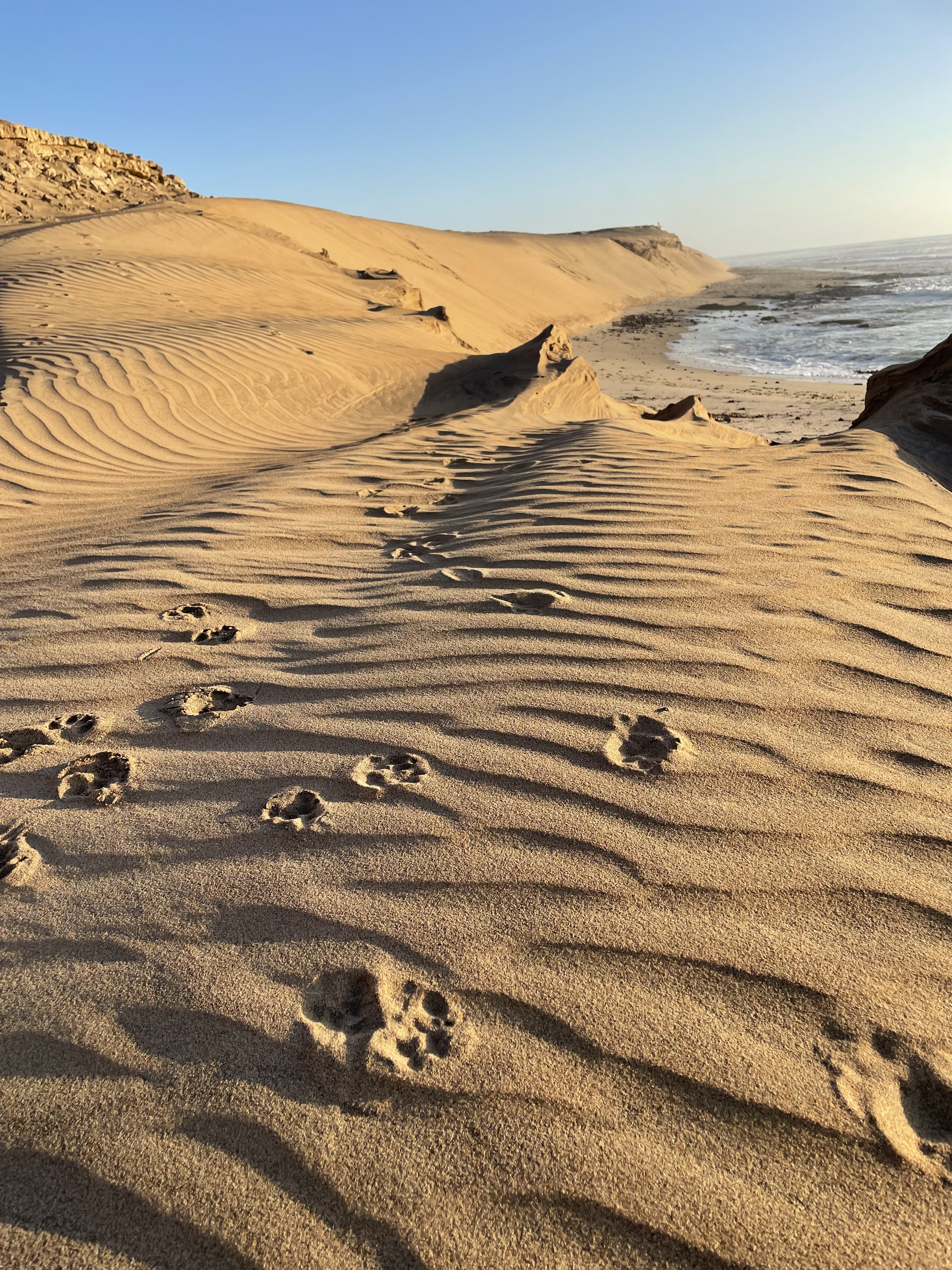
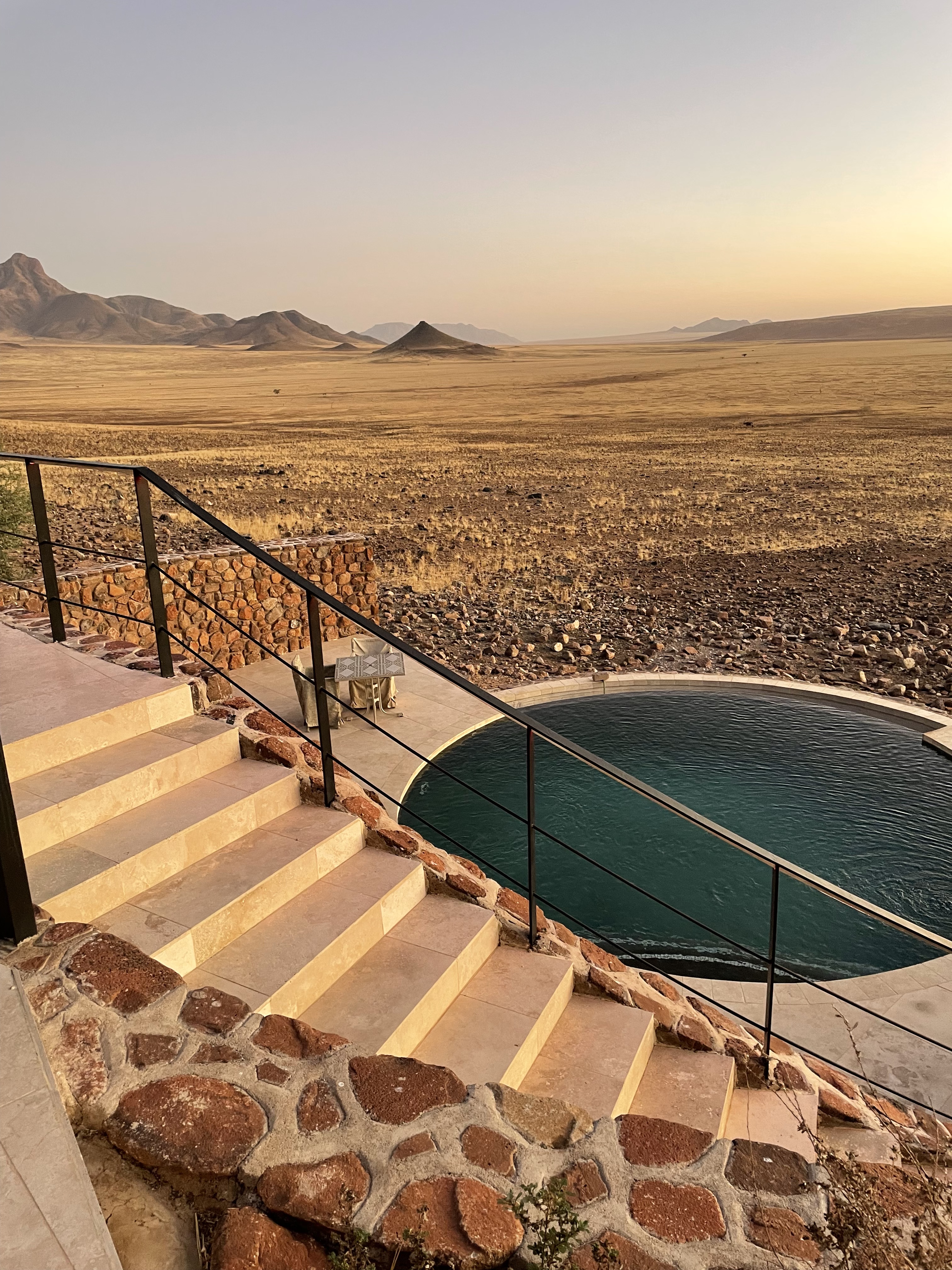
Hidden within Namibia’s Namib Desert, &Beyond Sossusvlei Desert Lodge offers an exclusive retreat amidst one of Africa’s and the world’s most striking landscapes. For an authentic African Safari experience, include a stay here. This luxury lodge blends seamlessly with its surroundings, providing an unparalleled experience of the desert’s serene beauty. Wake up to breathtaking views of the vast dunes and mountains. Explore the region’s unique flora and fauna, or simply relax by the lodge’s infinity pool, which overlooks the expansive desert plains. As night falls, the lodge’s state-of-the-art observatory opens, offering mesmerizing stargazing opportunities under some of the clearest skies on Earth. Combining luxurious accommodations with a deep respect for the natural environment, &Beyond Sossusvlei Desert Lodge promises an unforgettable journey into the heart of Namibia’s desert wonderland.

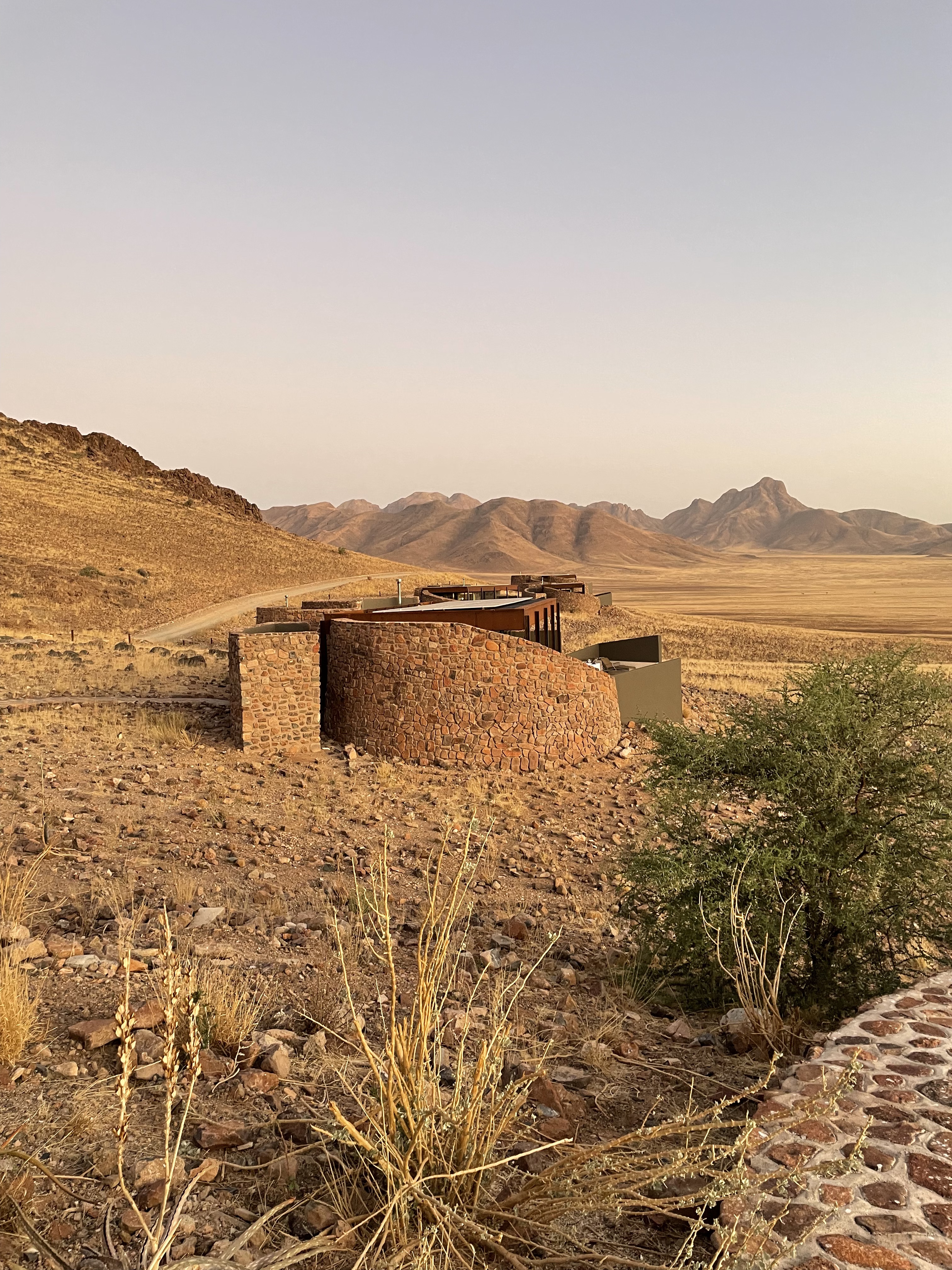
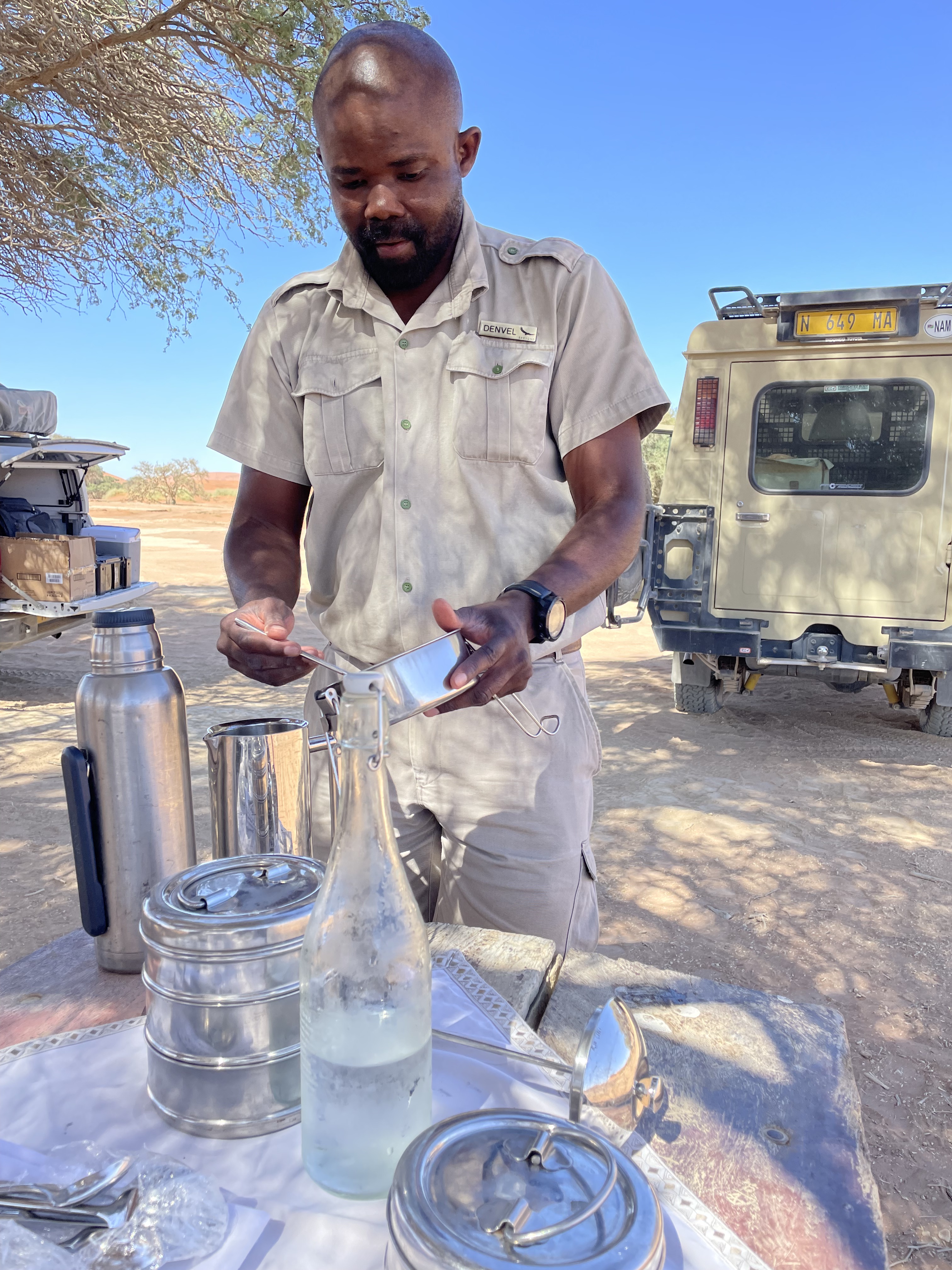
Our amazing Micato Safari started in Namibia’s capital city Windhoek, then continued on with overnight stays and game drives in Etosha National Park and the Skeleton Coast (click the links to see my previous articles). After departing Shipwreck Lodge and a quick refuel stop, we landed at &Beyond’s private lodge airstrip. Our first glimpse revealed the resort’s dramatic setting among an expanse of dunes, rocky outcrops, and plains. Ten beautifully appointed stone and glass suites, along the curve of the escarpment, look out on the ever-changing desert landscape. All suites are air conditioned with shaded veranda, private plunge pool, living room with fireplace, and glass enclosed rain shower with 180-degree views. The main, split level, lodge area was the perfect spot to enjoy a drink and watch nature unfold before us.

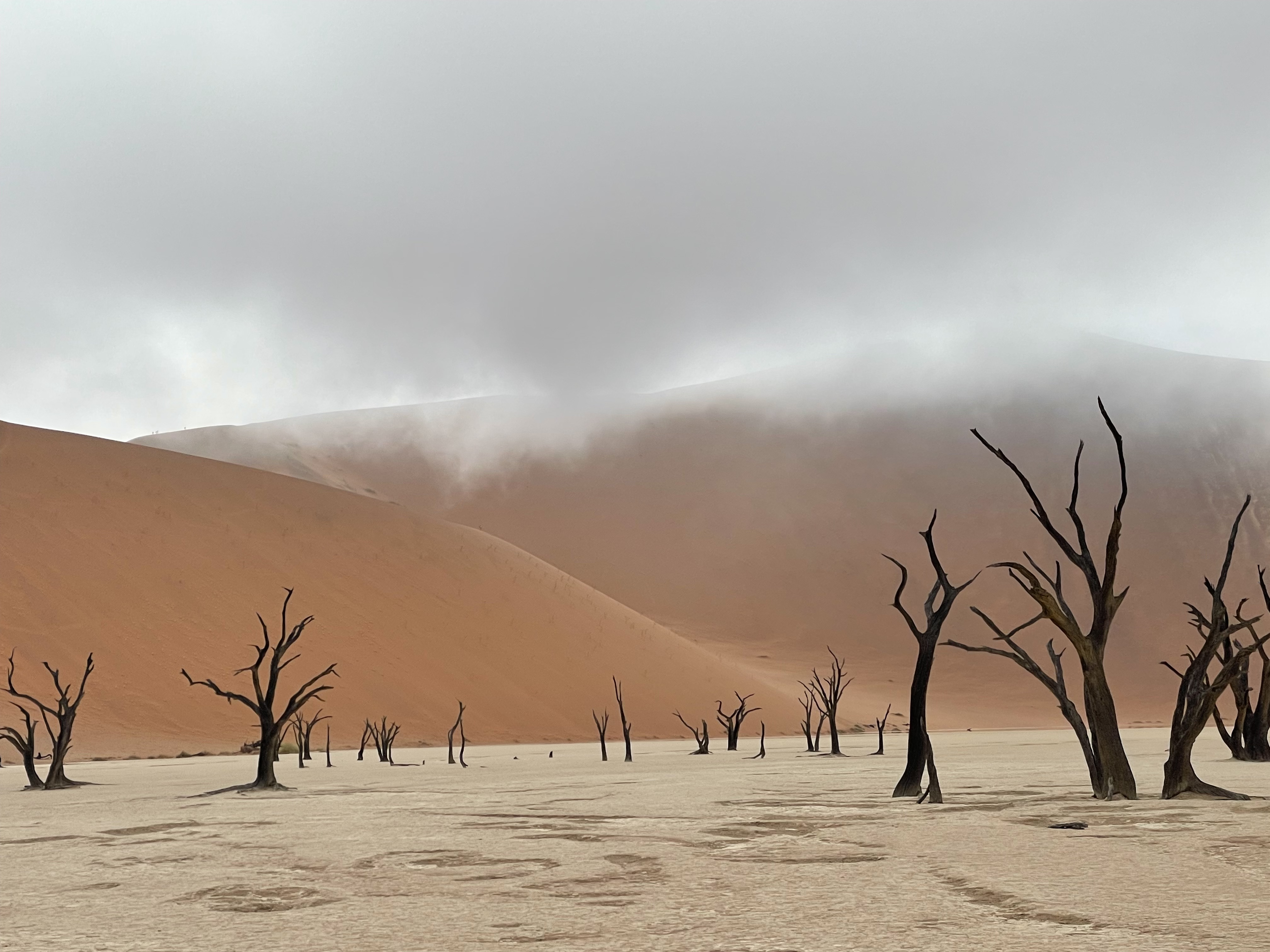
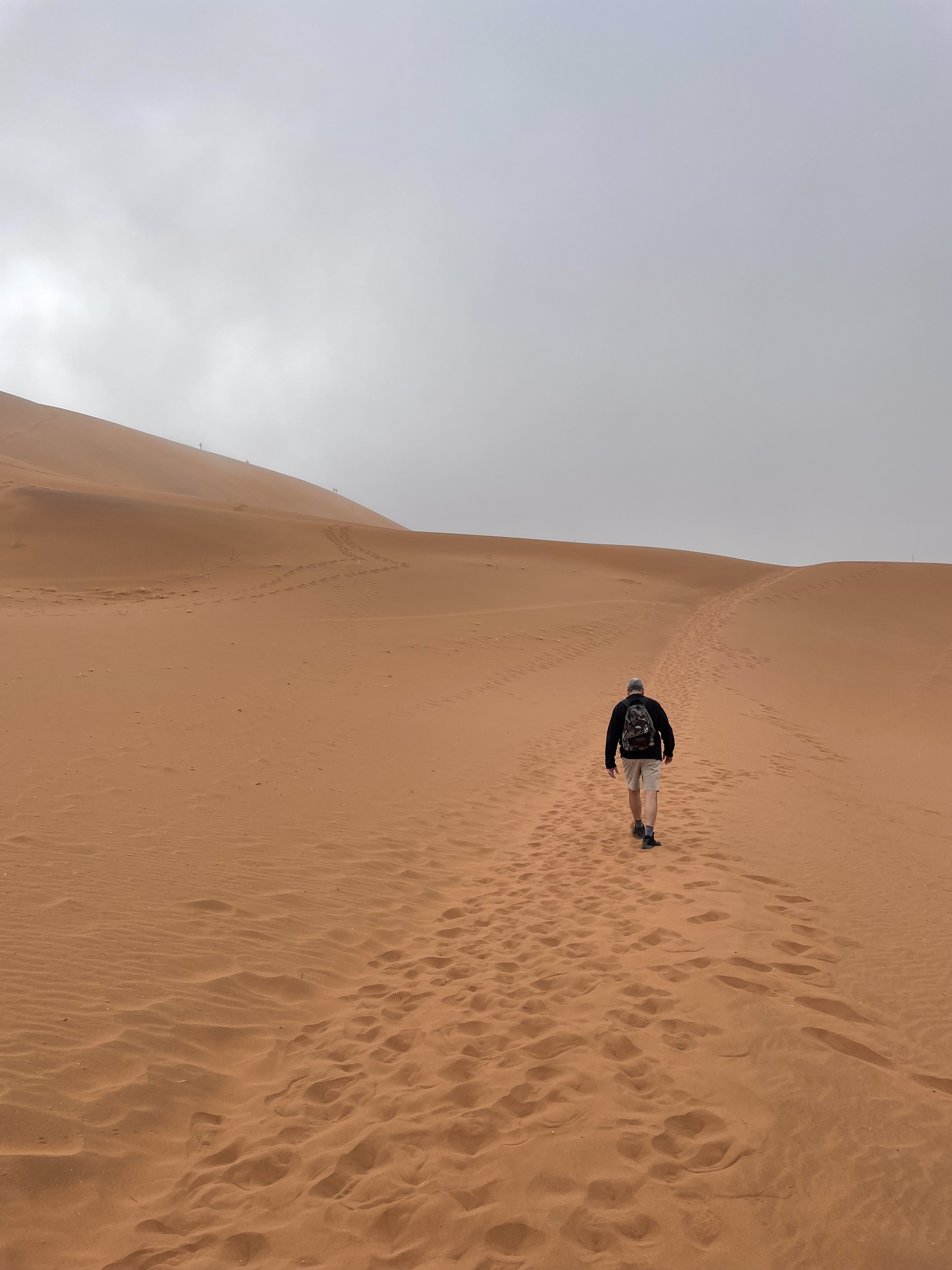
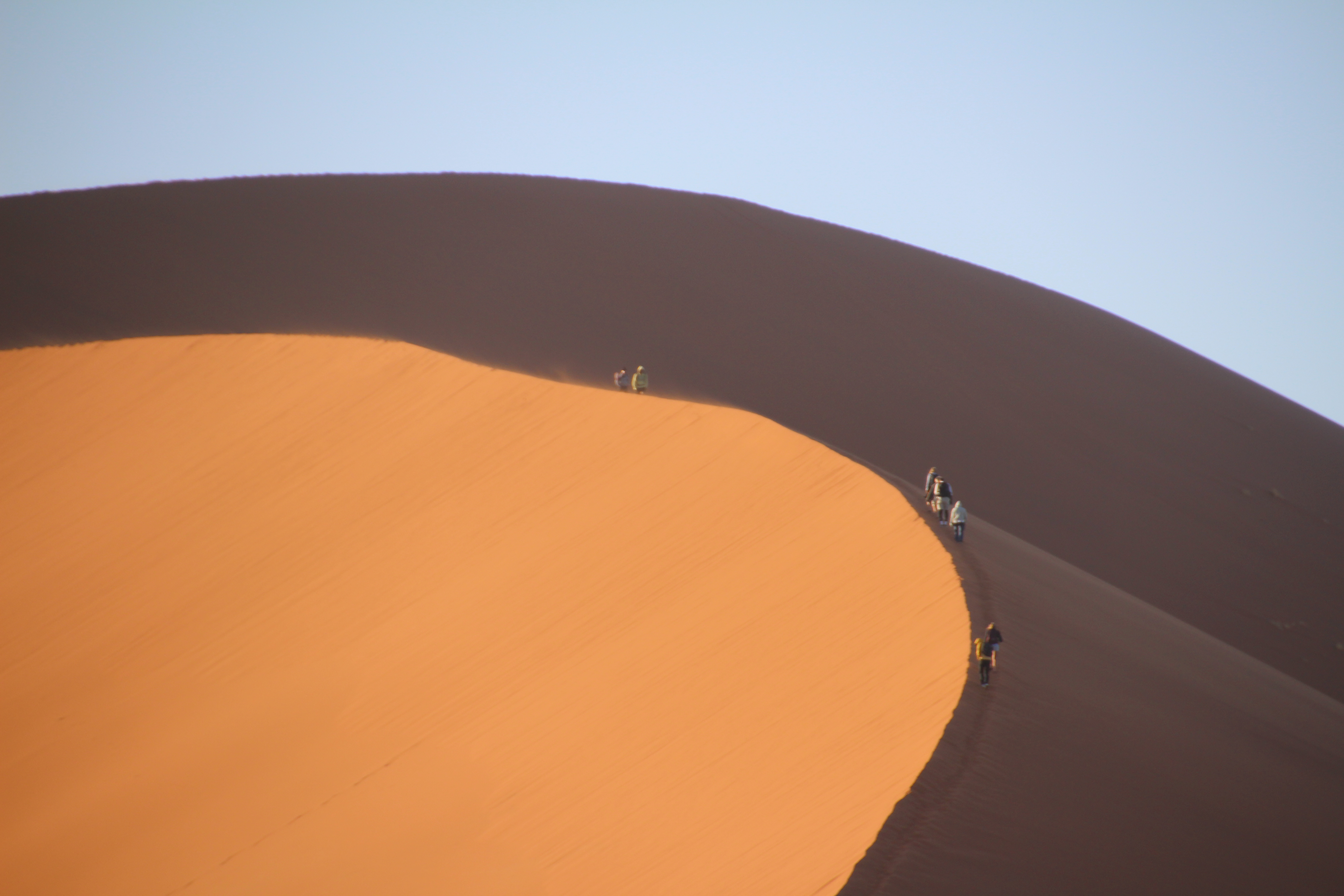
&Beyond Sossusvlei Desert Lodge put us in the perfect position to embark on a safari game drive in the vast Namib-Naukluft National Park. Sossusvlei is a surreal desert landscape – its towering red dunes meet stark white salt pans, creating an otherworldly spectacle. Climbing the iconic Dune 45 (not for the faint of heart!) offers panoramic views that stretch to the horizon, while the hauntingly beautiful Deadvlei, with its ancient, desiccated trees standing in stark contrast to the white clay pan and red dunes, is a photographer’s dream. The tranquility and raw beauty of Sossusvlei make it a must-visit for those seeking to immerse themselves in one of the world’s most unique desert environments.

We could not tear ourselves away from this mystical landscape, furiously taking pictures as the early morning mist slowly lifted to reveal colors that our eyes could not comprehend. The musky desert fragrance, the cool breeze transformed into desert heat, and the silent setting created a vivid full sensory memory of this magical place and left us grateful that places like this still exist on our fragile planet.

It’s never TOO early to plan your next adventure. Our safari was organized with Micato Safaris, voted top safari outfitter year after year. They ensured our trip went off with out a hitch, with the best guides, accommodations, transportation, and amenities. Email me, mollie@herrickstravel.com and find out about upgrades, complimentary breakfast, special amenities, and VIP service for all Herricks Travel customers. To receive my blogs to your inbox, please enter your email address in the subscriber box, and respond to the confirmation email.

Namibia’s Skeleton Coast “Shipwreck Lodge”

Namibia’s Skeleton Coast “Shipwreck Lodge”

An African safari transcends traditional travel – it is a captivating expedition that offers a unique blend of awe-inspiring landscapes, wildlife encounters, and cultural immersion.

Having visited South Africa, Kenya, and Tanzania, I looked forward to returning to Africa, this time to Namibia, a country that blows away any preconceived notions of what Africa should be. We packed our bags and headed on our adventure with Micato Safaris. A nonstop flight took us from New York to Johannesburg where we met up with our expert safari director, Brian. After an overnight stay at the beautiful resort-like Saxon Hotel, we connected with a short flight to Namibia’s capital city, Windhoek, spending a night at the iconic Weinberg Hotel. This serene estate property was the perfect place to recover from jetlag.

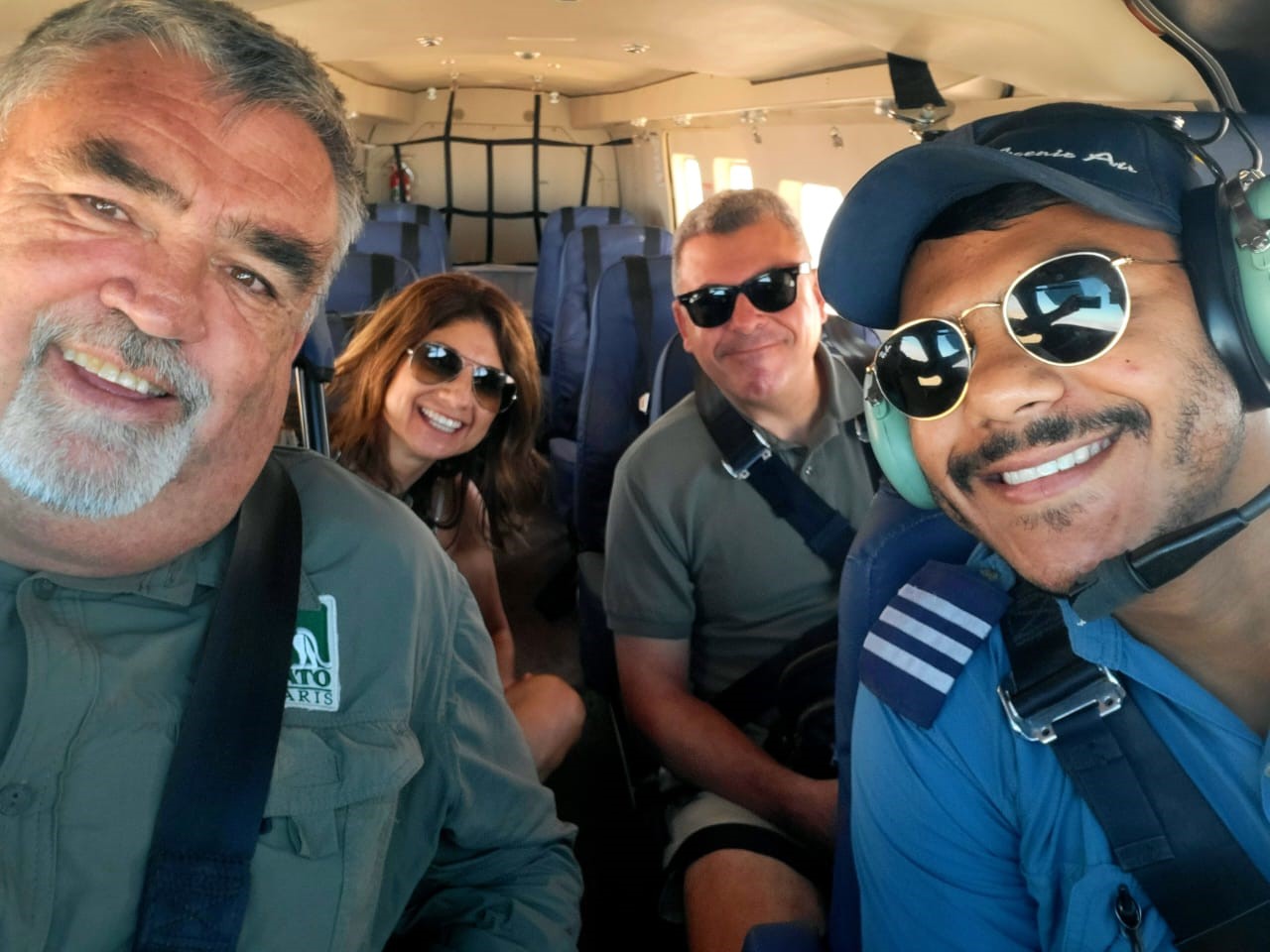
From Windhoek, we flew via Scenic Air light aircraft from lodge to lodge – from Etosha National Park to the Skeleton Coast to Sossusvlei. Our trusted pilot, Cam, made sure we were comfortable in the Kodiak plane throughout our journey, and we were honored to get to know him throughout our two-week trip.

It is indescribable the distinctiveness of this remote, yet well-developed country in the southwestern corner of the continent. Namibia is a land of stark contrasts, where towering sand dunes meet the wild Atlantic Ocean, where traditional tribal customs blend with modern life, and remarkable animal species adapt to a harsh environment.

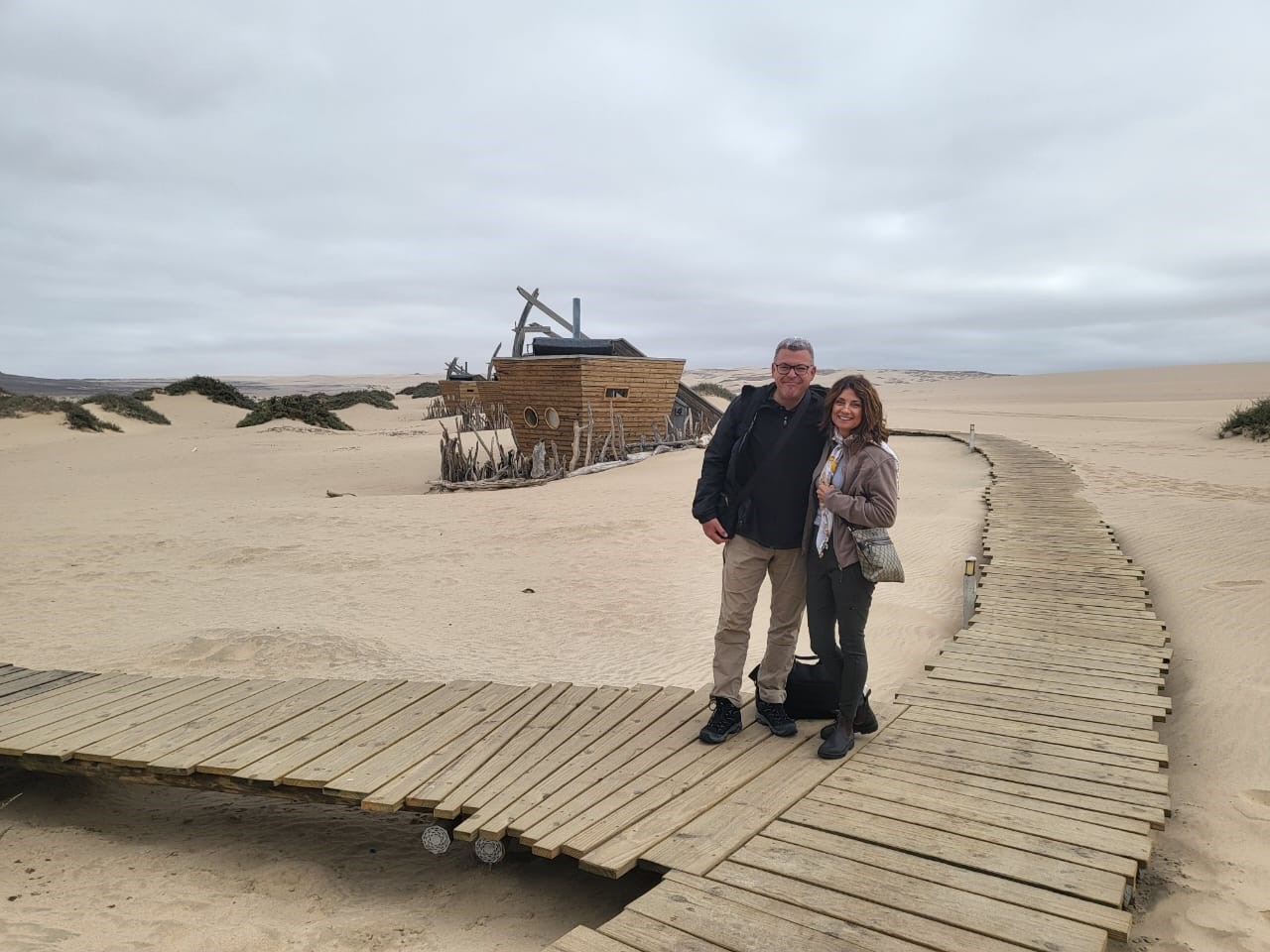
Our itinerary included an unforgettable stay at Shipwreck Lodge, perched on Namibia’s 310-mile-long Skeleton Coast. This revered and feared National Park is a raw, rugged, and remote slice of African wilderness — it earned its name from the countless shipwrecks that wash up on its shores.

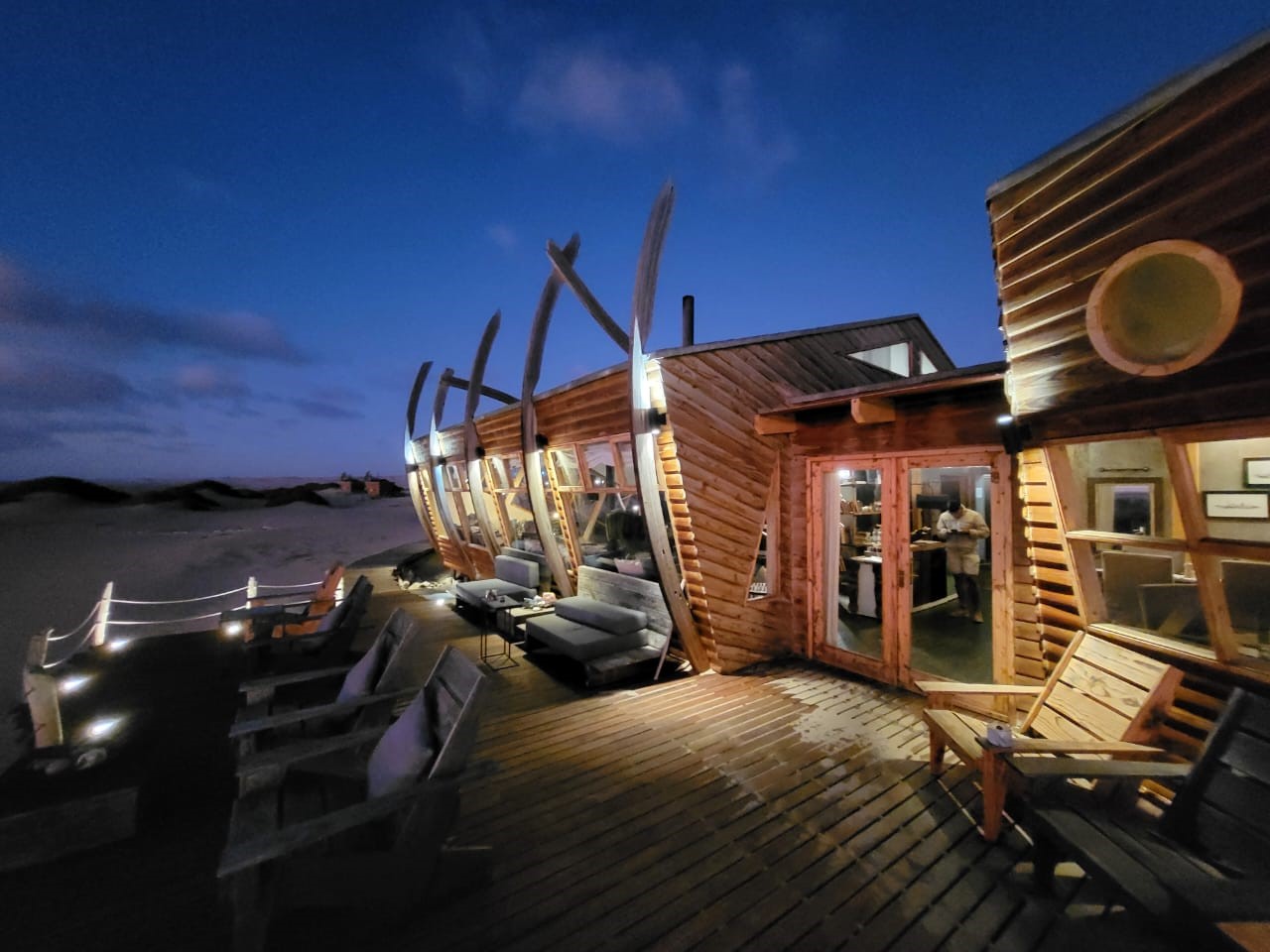
Shipwreck Lodge, which honors the mariners who braved these perilous waters, is an oasis in what is the world’s oldest desert – The Namib. The lodge is uniquely designed to reflect the famous shipwrecks lining the nearby coast. Cabins, nestled between the dunes, with views of the Atlantic Coast, offer a warm and inviting environment that contrasts the harshness of the surrounding area.

Getting here:
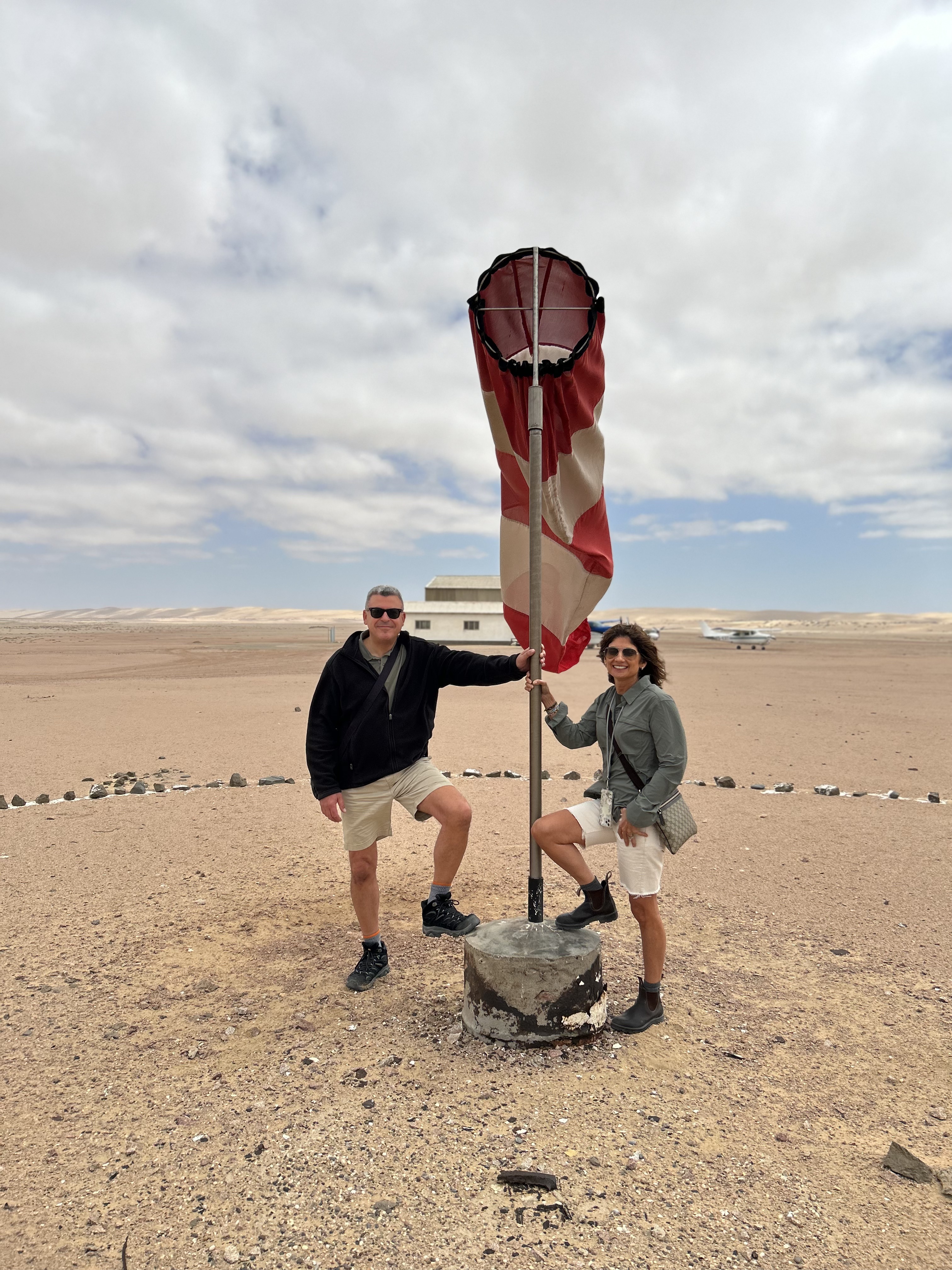
We accessed the lodge via a flight to Möwe Bay, the nearest airstrip. Very surreal — only a simple hanger and a lone, red and white windsock indicates this is an airport – the runway is barely distinguishable from the desert sand. A 45-minute transfer via the lodge’s 4×4 vehicle included a stop at a seal colony and several wrecks perched on the beaches. There is no official “road” to the lodge, only a lightly marked, constantly shifting, sandy path along the dunes.

Accommodations:
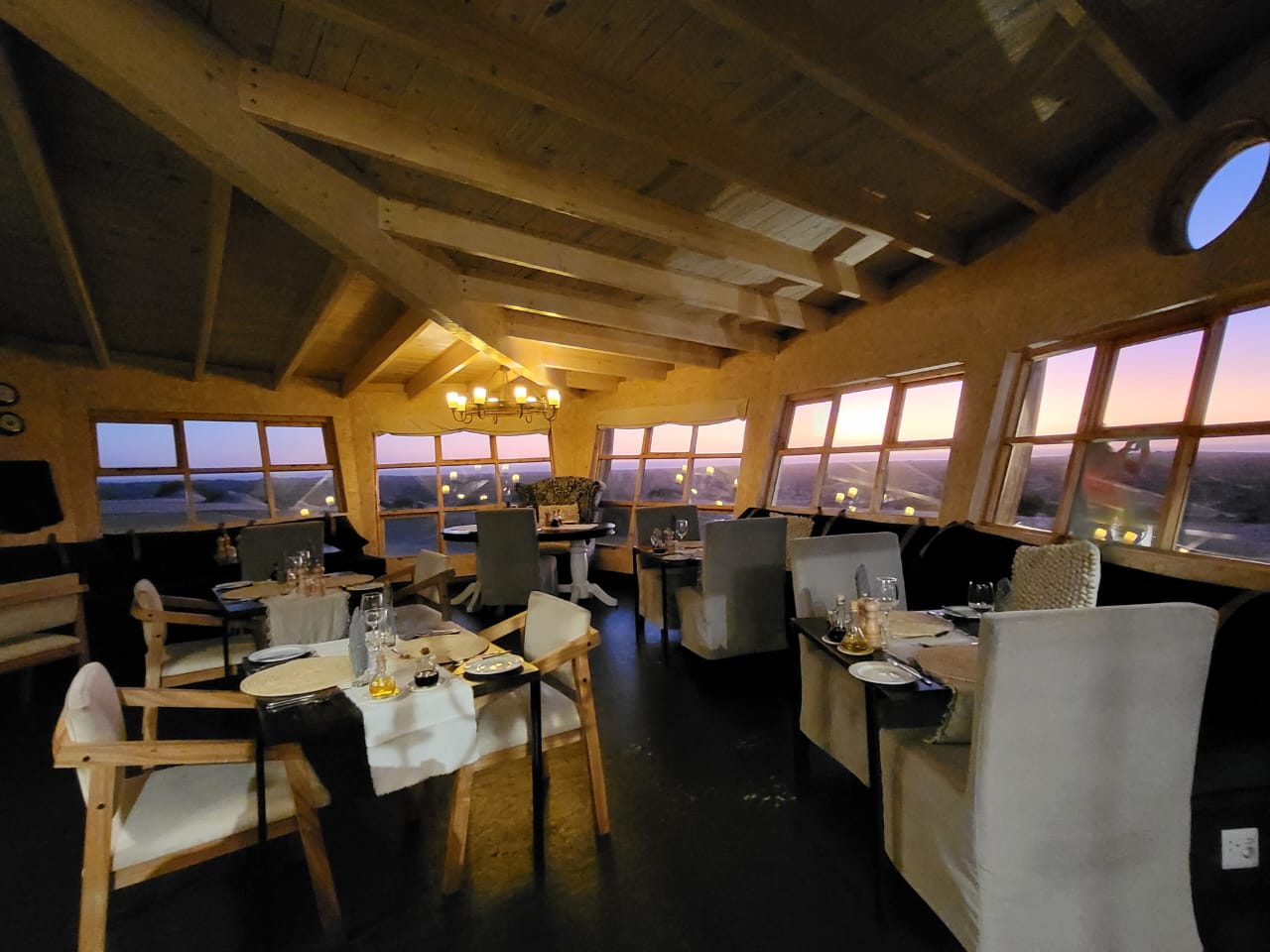
The lodge’s rustic elegance and remote location blend easily to create an atmosphere of tranquility and wonder. Ten cozy, eco-friendly, solar powered, wooden cabins come equipped with a wood burning stove to keep warm on chilly nights. Outside the cabin door is a spacious deck with sturdy Adirondack chairs. In the center of the lodge stands the timber and glass lounge, bar, and restaurant. After day-long game drives, we would settle into cozy cushioned couches and chat with other visitors from around the world. A wraparound deck offered uninterrupted views out to the Atlantic Ocean – a great place to just sit and contemplate life!

Excursions:
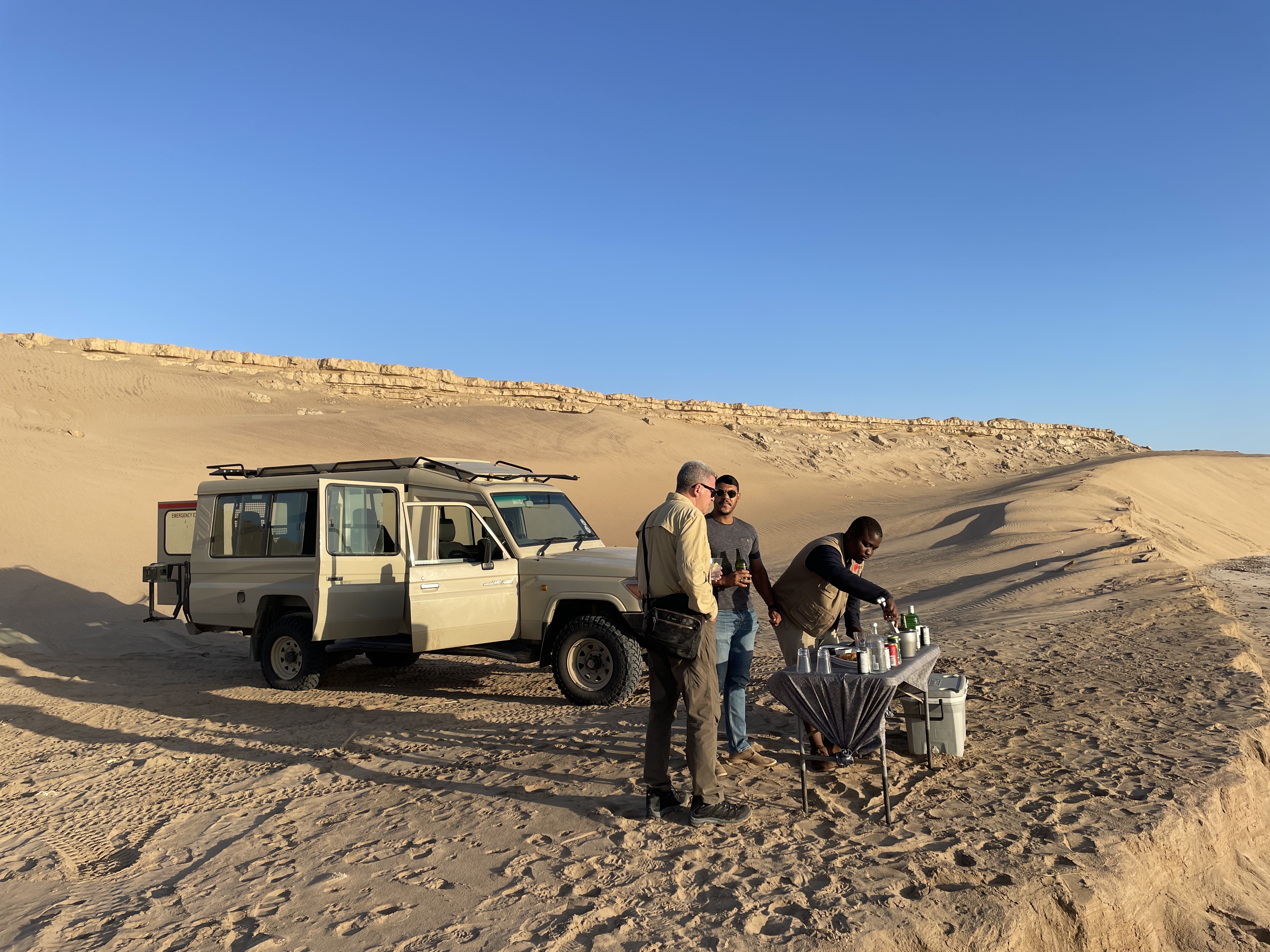
Our first night we joined other lodge guests and drove down to the beach in a 4×4 for a traditional safari “Sundowner.” A delicious display of canapes and gin was set up on a petite table in the sand just steps from the water. As the sun set behind the dunes, we tried to absorb the vastness of this world around us – it was too big to grasp!

On our second day, our guide took us into the dunes just behind the lodge. After a quick lesson, we donned helmets, boarded quad bikes, and then stopped to do some “sandboarding,” taking turns going head or feet first over the edge and then gleefully being driven back up to the top for another run. Afterwards, we formed a neat line of quads and ventured up even higher into the dune-filled world – colossal mountains of sand as far as the eye could see.

On our third day we joined our local guide and explored the scenic Hoarusib River, an often dry, ephemeral river, rimmed by sheer cliffs and narrow canyons. Driving for several hours, we spotted plenty of unique desert dwelling creatures as we followed the riverbed through a constantly changing landscape. We hiked through the russet-hewed Clay Castles which had been carved out for centuries by the flowing water.

Scenic flights:
After our stay we returned to Möwe Bay where we boarded our plane and embarked on a scenic flight over the southern Skeleton Coast to our next stop, Sossusvlei. Our bird’s eye view afforded us a glimpse of the rugged coastline, shipwrecks, and a startling thousand-member flock of pink flamingoes below.

Namibia’s pristine wilderness is an escape from the fast-paced world we live in – it gives you a profound sense of tranquility. This country has made a strong commitment to sustainability in its approach to tourism by protecting its rich biodiversity, reminding us of the importance of safeguarding our precious environment. Lodges and safari operators are deeply committed to tourism that specifically benefits local communities and supports wildlife conservation. Your visit helps contribute to preservation efforts and safeguards these environments for future generations.

It’s never TOO early to plan your next adventure. Email me: mollie@herrickstravel.com and find out about upgrades, complimentary breakfast, special amenities, and VIP service for all Herricks Travel customers. To receive my blogs to your inbox, please enter your email address in the subscriber box, and respond to the confirmation email.

When in Namibia, your eyes can barely absorb all the beauty around you! Check out some videos here below…

Safari in The Laikipia Reserve, Kenya

Safari in The Laikipia Reserve, Kenya

A Kenya Safari requires much advance planning, but with the help of a travel agent, the process becomes stress free. As a travel specialist, it’s my job to create a seamless experience from take off to safe return home. My recent article on Safari Planning Basics will help you jump start your itinerary and take this from dream trip to reality. After an overnight stay in Nairobi, hop a bush plane to Maasai Mara for excellent game tracking, and then on to Mount Kenya for a little rest and relaxation. Next stop, a stay in The Laikipia Reserve — the perfect addition to your safari experience.

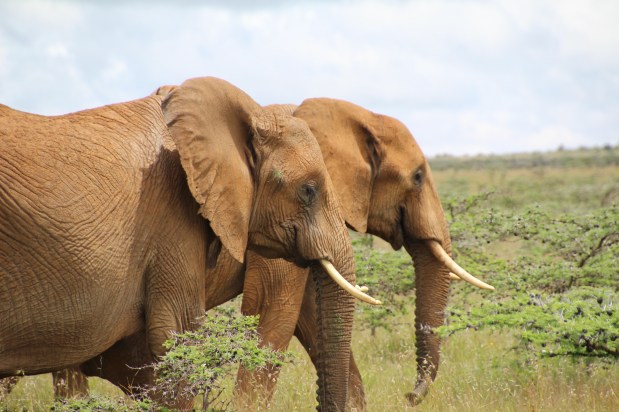
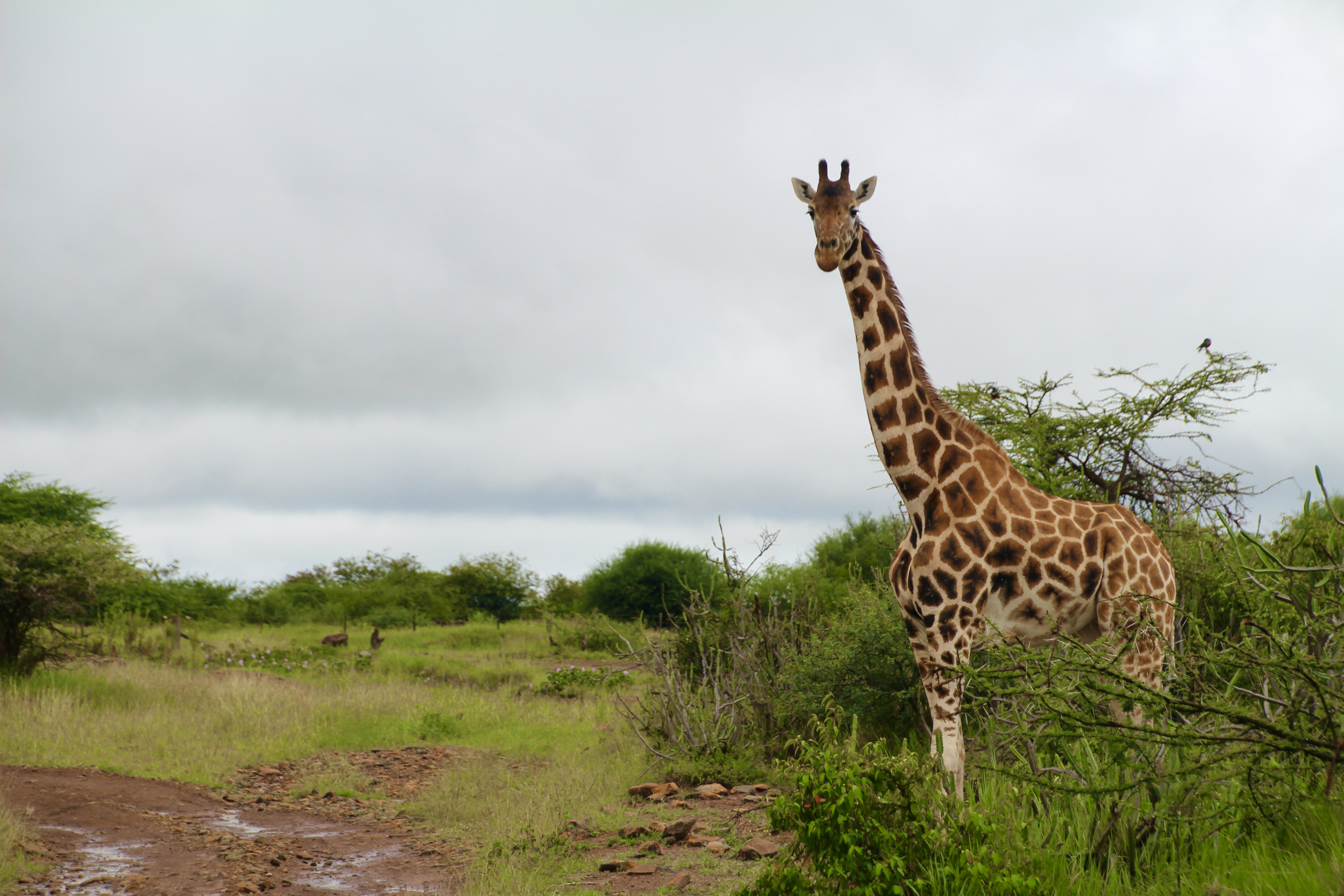
Known for its untamed beauty, The Laikipia Reserve was formed when the ranches of the Colonial era were converted from farming to wildlife. Possessing one of the largest elephant populations in East Africa, it is one of the last strongholds of the endangered black rhino. The plateau has reverted back to its wilderness roots, with a wildlife refuge supporting huge numbers of game including lion, cheetah, leopard, wild dog, impalas, gazelle, and reticulated giraffe.

After arriving by bush plane, we visited the Loisaba Conservation Center, a 56,000-acre wildlife conservancy located within Laikipia. As poachers continue to kill thousands of elephants and giraffes throughout Africa, organizations are banding together to develop strategies to stop the illegal killing of these threatened species. Education is one of these key strategies. The organization aims to become the hub for conservation education in Laikipia for the local community, tourists, and students. The center’s ultimate goal is “to help inform visitors about community-based conservation and how this model, with their support, will help preserve the area’s habitat and the endangered animals that live here.” Through their work, they show how conservation benefits both wildlife and the community.

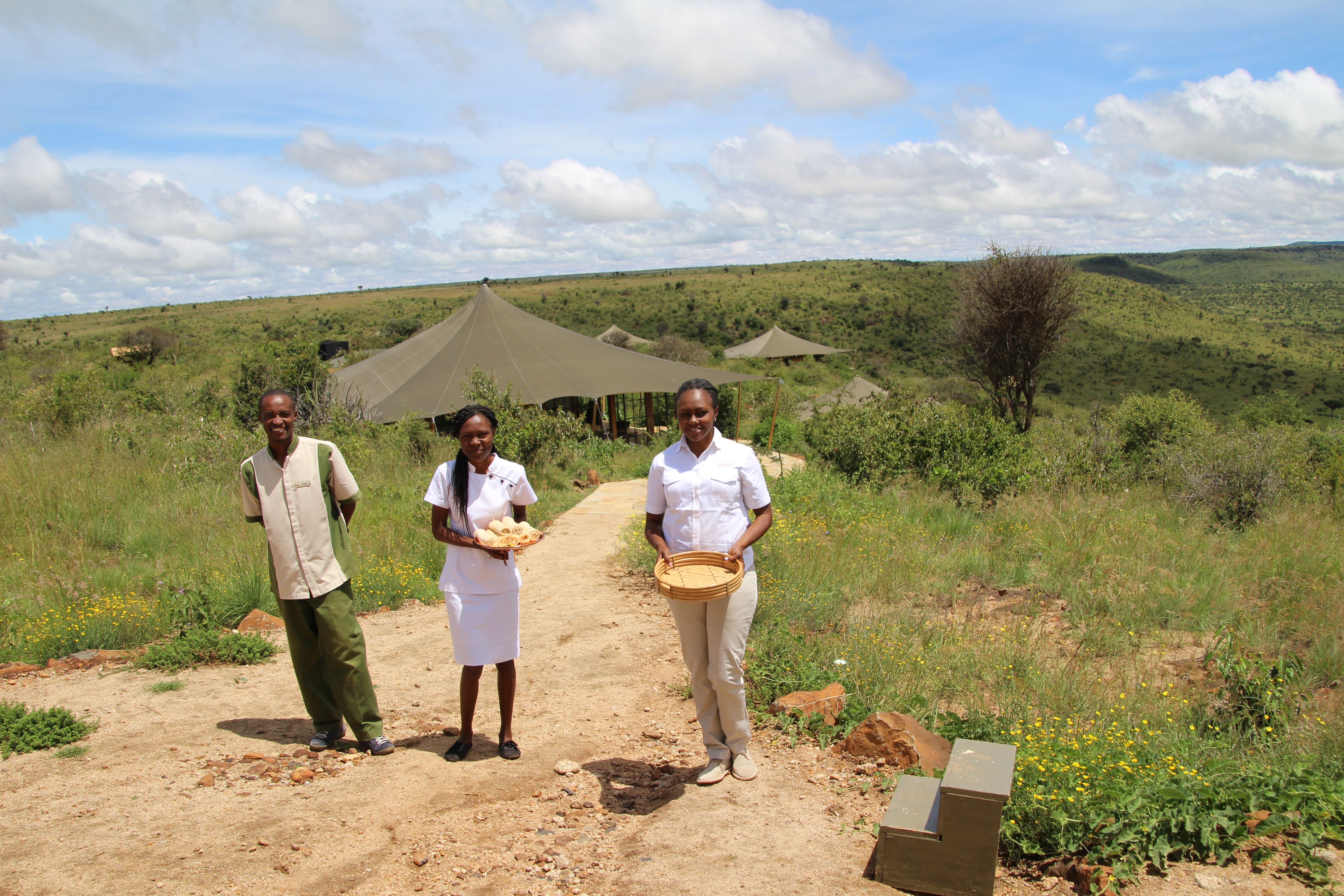
Located within the reserve, Elewana Loisaba Lodo Springs offers the ultra-private lodge experience with eight private, spacious tented rooms each with impressive views over the valley below. With floor to ceiling windows, wide plank wood floors, oversized bathrooms, expansive decks, and minimalist but sophisticated Africana furnishings, they have more in common with boutique accommodations than their canvas namesake. (Click on this video below for a tour of my accommodations.)

Our days were filled with long morning treks and drives across the savannah as we searched out rhino, dik-dik, eland hartebeest, warthog, and Cape buffalo. The resort arranged breakfast served in the bush, and also offers horseback riding, mountain biking, fishing, and nighttime game drives.

For something REALLY unusual, stay a night or two at the Elewana Loisaba Star Beds. Poised on a rocky outcropping, this lodge features individual thatched roof accommodations with four-poster wooden beds that sit on raised wooden platforms. At night, the beds are slowly rolled out to the outdoor deck for guests to enjoy the most memorable sleep under an endless African sky. The Star Beds are rustic in design and are meant to harmonize with the natural rocky landscape.

It’s never TOO early to plan your next adventure. Email me: mollie@herrickstravel.com, for assistance and find out about upgrades, special amenities, and VIP service for all Herricks Travel American Express/Altour customers regardless of credit card membership. Looking for the best of the best Safari experience? Let me help you plan your trip with Micato Safaris, one of the world’s top outfitters, delivering unparalleled service.

Become a SUBSCRIBER and receive all my latest articles right to your inbox: look for the “subscribe to this blog by email” box and then respond to the follow-up email. For more information on my trip planning services, for assistance with Amex “Pay with Points” and Amex Fine Hotels & Resort Hotels, please click HERE.

Safari Packing Tips

Safari Packing Tips

Light luggage, light heart

The rule “less is more” definitely applies when packing for an African safari.  Unburdening yourself from the usual travel trappings is liberating.   On our recent family trip to South Africa we journeyed from city to safari and back again hopping from lodge to lodge by bush plane (click here to read my recent posts).  Not worrying about our “stuff” added to the spirit of adventure.  Need advice on what (or what NOT) to pack for your safari?  Here are my top tips:

Thank you Micato Safaris for the great duffle bags

WEATHER:
Weather can vary based on the country and the time of year (seasons may be opposite of your home country). Wintertime in the southern hemisphere (June through September) means as you travel north (towards the equator) temps go up, with the reverse being true in their summer (December — March).  Kenya and Tanzania, located in East Africa, have milder, spring-like weather year-round verses South Africa, which has much greater temperature swings.  No matter the destination, early morning and late evening game drives can be cooler than when the sun is high in the sky.

LUGGAGE SIZE:
Luggage requirements (weights and measurements) vary by airline carrier, so check these in advance, especially the baggage allowed on small bush planes. For our safari, a medium sized rolling duffle bag with exterior zippered pockets to store non-valuables worked perfectly.

SHOES:
Shoes take up lots of room, so choose carefully. Hiking boots are only necessary if you plan on trekking or mountain climbing. On safari, you are traveling mostly by vehicle, but hard soled, comfortable shoes are a must for bush walks.  Over the ankle hiking boots are bulky, so a better option are walking or hiking shoes (preferably with waterproof Gortex, like North Face or Merrells).  Flip flops come in handy for the lodge pool or Jacuzzi.  And, slip-on style leather sneakers are convenient for airport security and work well for “in between” weather patterns. Touring Johannesburg and Cape Town during their winter?  Pack a pair of light weight leather ankle booties with rubber soles for cool or rainy days.

CLOTHING:
Layers, layers, layers.  Simple and neat, casual clothing, whether you are in the city or on safari, always works best.  Even in warmer weather, long pants and long sleeve shirts made from quick-dry or dri-FIT material will protect you from strong sun and mosquitoes. Wear a short sleeve shirt or tank top underneath for quick changes en route when the mercury rises.  Leggings or jeans are okay, but leave the trendy, ripped ones at home.  Ventilated trousers (like REI, prAna, or KUHL) are a great option and will keep you cool and dry.

Sabi Sabi Safari

As the sun sets, long sleeves and trousers work best

Pack clothing that can be washed (not dry cleaned) since many lodges provide complimentary same-day laundry service).  Pick neutral colors and leave the brights at home.  No camouflage patterns – it is simply not acceptable.  And, keep away from brash, logo t-shirts – it’s best to blend in.

When temps drop, most lodges will provide warm blankets or hot water bottles in the open-air vehicles, but come prepared with scarf, wool beanie, glove liners, fleece jacket, and light-weight quilted vest, because when the sun sets it gets cold!  Heavy winter boots and coats are not necessary — but I definitely appreciated my flannel pajamas during our visit in July!  In the cooler evenings in Cape Town and Johannesburg, I made good use of light weight merino wool cardigans that were easily layered (and didn’t take up much room in the luggage).

Sabi Sabi Safari

Dress in neutral attire that will not “attract” animals, especially when spending time outside the vehicle during a “Sundowners” break

Outdoor dining at the lodges is very popular, but dressing up for dinner is generally unnecessary; it’s more relaxed than you think, even at the luxury tented camps.  Usually, we went right from our evening drive to our al fresco dinner.

Other important items?  A brimmed hat and bathing suit for warm, sunny days and rain shell and collapsible umbrella for rainy days.  And, if you have read my previous packing article (click here) you will know I never travel without a wrap or Pashmina!

Mini surge protector

ELECTRONICS:
Bring extra batteries, memory cards, and lens cloths for your camera (dust gets everywhere) plus power packs for your phone. Converters and adapters will be required for most electronics, and a mini surge protector always is useful in any hotel room where outlets may be few and hard to reach. During game drives, my boys also made good use of binoculars — great for children who may not be using a camera or spotting wildlife through a zoom lens.

This adapter kit works with all Apple devices

Many lodges provide flashlights, but pack one of those mini mag lights just in case — lodges can be pitch-dark at night (although for safety reasons, you are usually escorted back to your tent by a guide). Most lodges include a hairdryer so skip packing this heavy item (and wear that hat you packed!)    Make sure to download books to your e-reader in advance because wifi and cell service can be unpredictable, or better yet, bring an actual book or travel-sized board game – since being “off the grid” is really the point.

SAFARI DAY-PACK:
Take a tote bag or a light weight backpack to use in the safari vehicle to store your camera and the extra layers of clothing you may shed (it can double as your carry on).  Make sure it has a zipper to keep your items dust-free (the bag usually winds up on the floor during all that off-road driving).

MEDICINE & FIRST AID:
Assemble a well-stocked first aid kit in a waterproof bag (check to see if the country you are visiting allows ziploc bags).  Include extra prescription medications (an antibiotic script, just in case) plus over-the-counter meds like ibuprofen, allergy and diarrhea tablets, cortisone cream, motion sickness pills, dry-eye drops, hand sanitizer, bug spray, sunscreen, and adhesive bandages.

Packing cubes

PRE-PACKING:
Before placing items in your bag, lay out your things by item type and then remove one item from each category – you will not miss them!  If traveling between several lodges, I recommend those flat, zippered, nylon pouches to arrange your stuff.   You can lift them from suitcase to dresser drawer and back again without having to repack each individual item.

DONATIONS:
Handing out toys, pens, and candies to local children you meet along the way is strongly discouraged because it creates an endless cycle of begging. Instead, search out a “Social Enterprise,” an organization that runs as a business with profits going to support a community project or social need — buy locally made handicrafts or stop at a community-run store or café. Upon your return home, make a donation to a cause that has pulled at your heartstrings be it animal conservation, children’s charity, or land preservation.  Your dollars, euros, or pounds will go a long way to helping our planet and all who dwell on it.

Sabi Sabi Safari

During our stay in Sabi Sabi, we visited a local community and the “Swa Vana Center,” which cares for orphaned and vulnerable children by offering physical, emotional, social, and educational support.
Sabi Sabi Safari

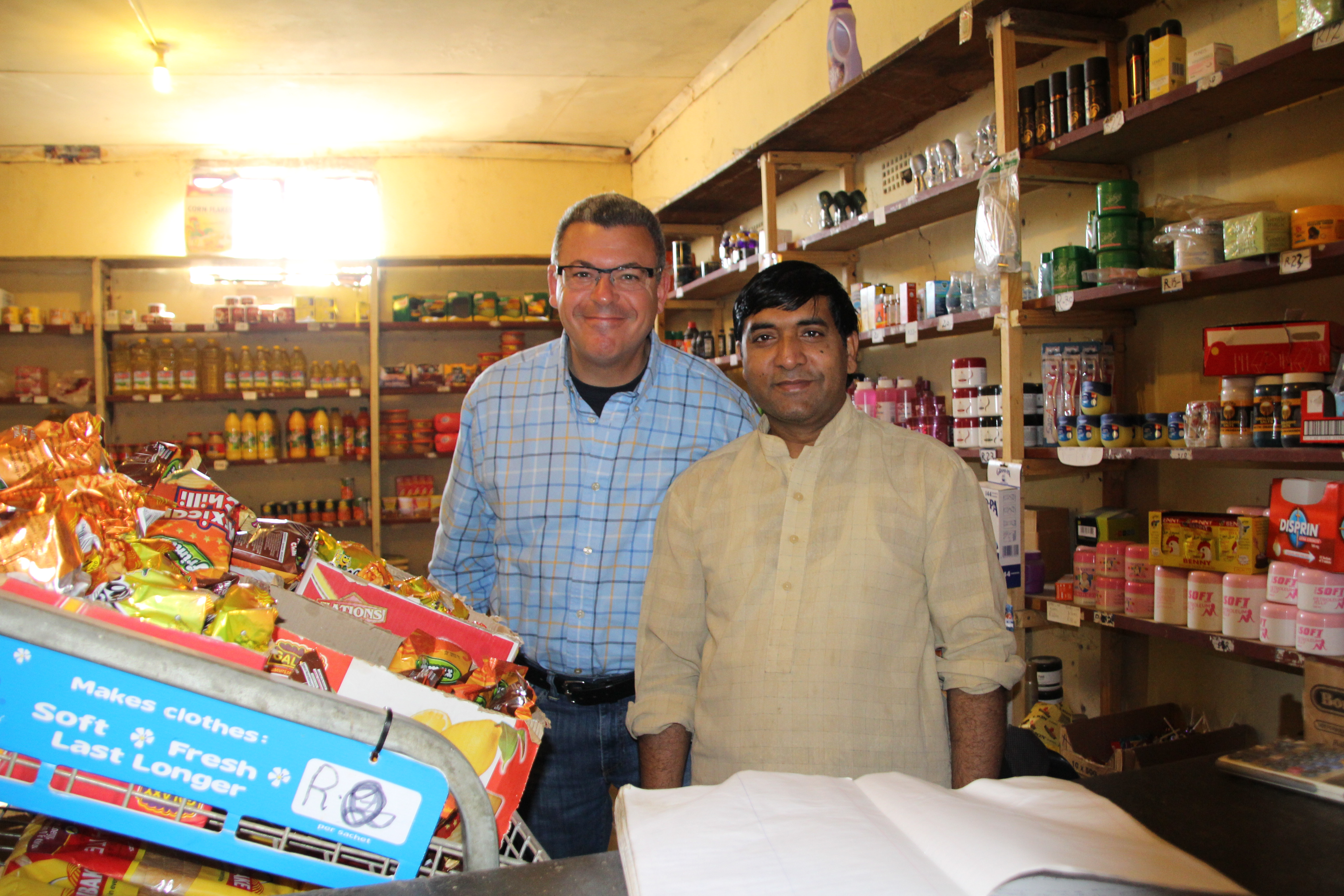
We stopped in a local market and met the proprietor.

Sabi Sabi Safari

After shopping at a local crafts market, we were treated to a performance of music and dancing.

Sabi Sabi Safari

The local children loved “hamming it up” for the camera
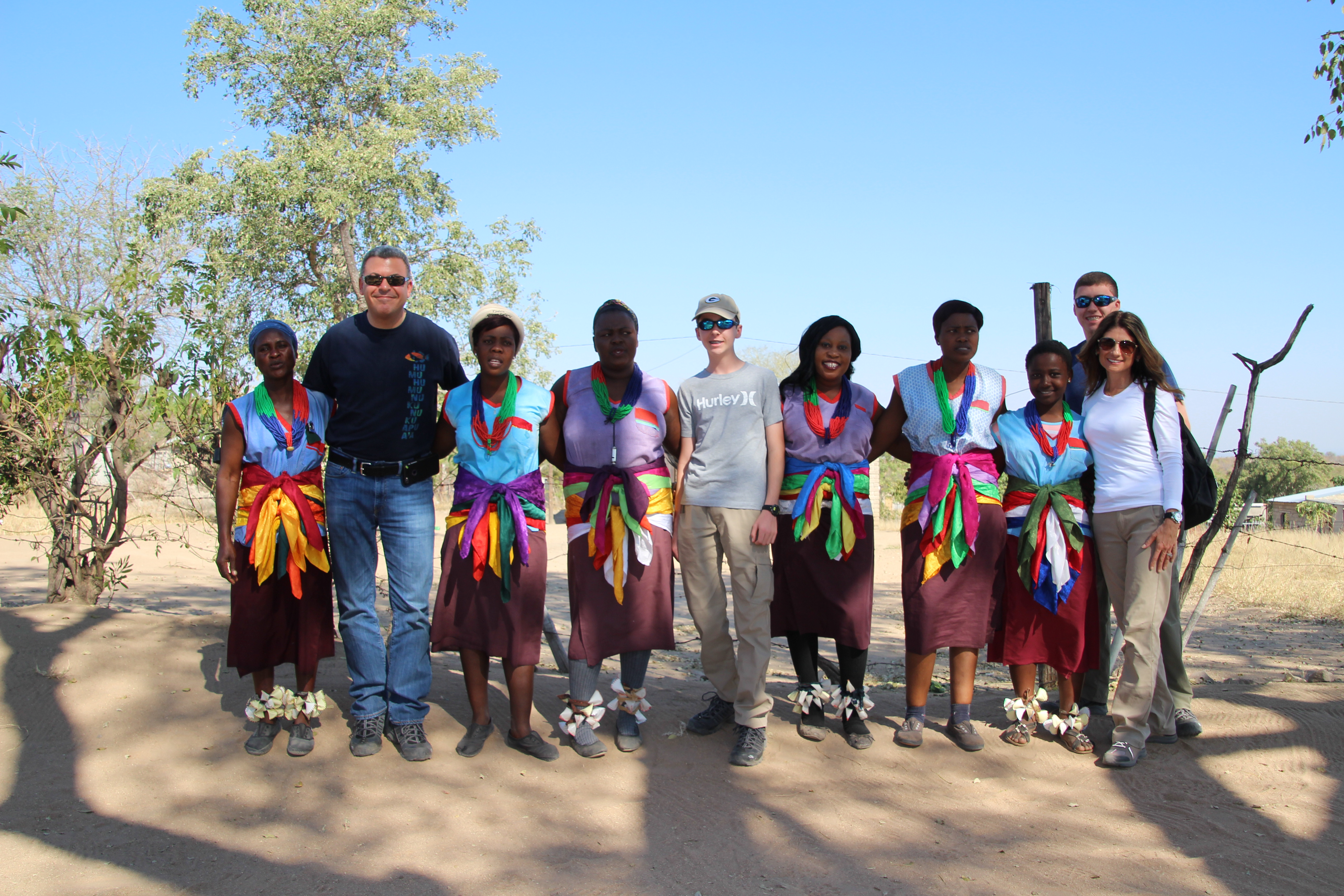
Our visit to the local communities in the Mpumalanga Province was an enriching and educational experience

PAPERWORK:
Check your travel documents — having the proper paperwork is crucial.  LOOK AT YOUR PASSPORT EXPIRATION DATE: it cannot expire prior to six months from the dates of your trip. If you have LESS thank six months left on the expiration you will NOT be allowed to checkin at the airport or board your departure flight! Make sure you secured the appropriate visas to enter a country. South Africa requires all children under the age of 18 to possess a valid birth certificate with a raised seal, in addition to a valid passport (even if traveling with both parents).  Many countries may require proof of inoculations so check the cdc.gov website (or visit a doctor that specializes in travel related immunizations) to learn about recommended shots.

For more packing advice, check out my recent articles: “Twelve Packing Tips Every Traveler Should Know” and  “A Few of my Favorite Travel Things.”

SUBSCRIBERS: to view this complete article online and read my previous articles, use this link: uniquefamilytraveler.com.


Herricks Travel American Express
 

To become a SUBSCRIBER, look for the “subscribe to this blog by email” box, and then respond to the follow-up email.

For more information on my trip planning services, please click here.

Herricks Travel American Express