Discover the Beauty of Namibia’s Namib Desert at &Beyond Sossusvlei Desert Lodge

Discover the Beauty of Namibia’s Namib Desert at &Beyond Sossusvlei Desert Lodge

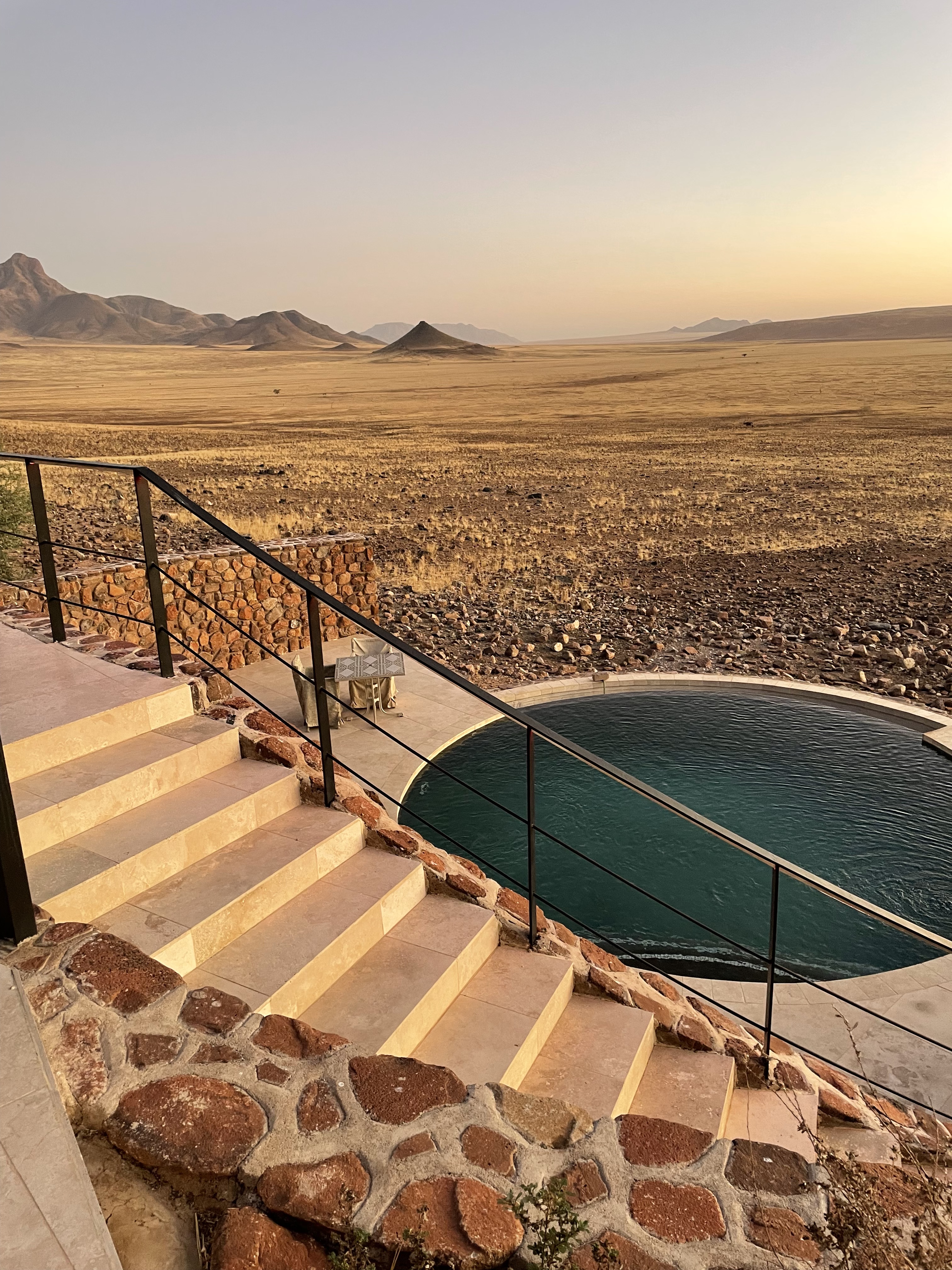
Hidden within Namibia’s Namib Desert, &Beyond Sossusvlei Desert Lodge offers an exclusive retreat amidst one of Africa’s and the world’s most striking landscapes. For an authentic African Safari experience, include a stay here. This luxury lodge blends seamlessly with its surroundings, providing an unparalleled experience of the desert’s serene beauty. Wake up to breathtaking views of the vast dunes and mountains. Explore the region’s unique flora and fauna, or simply relax by the lodge’s infinity pool, which overlooks the expansive desert plains. As night falls, the lodge’s state-of-the-art observatory opens, offering mesmerizing stargazing opportunities under some of the clearest skies on Earth. Combining luxurious accommodations with a deep respect for the natural environment, &Beyond Sossusvlei Desert Lodge promises an unforgettable journey into the heart of Namibia’s desert wonderland.

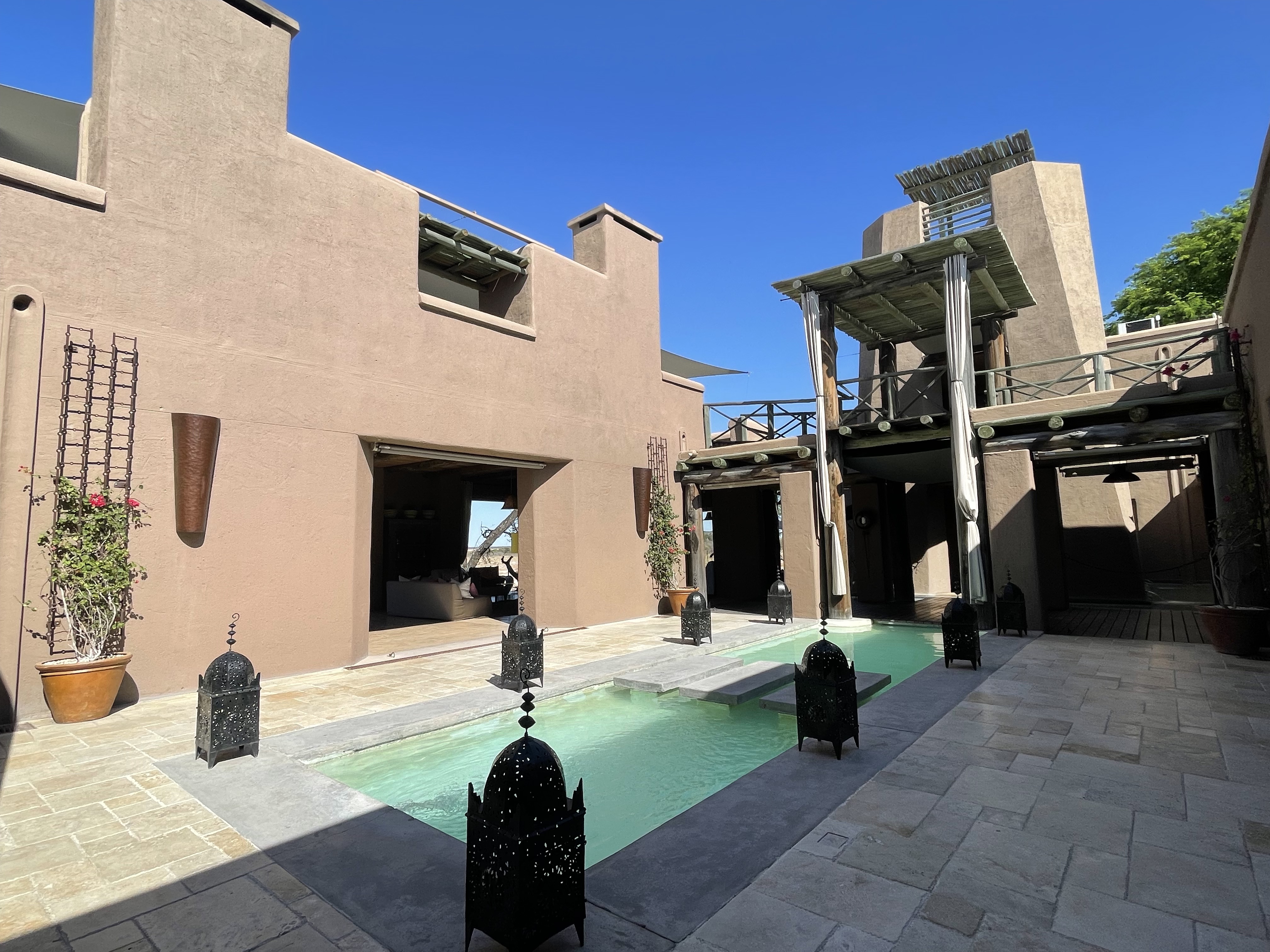
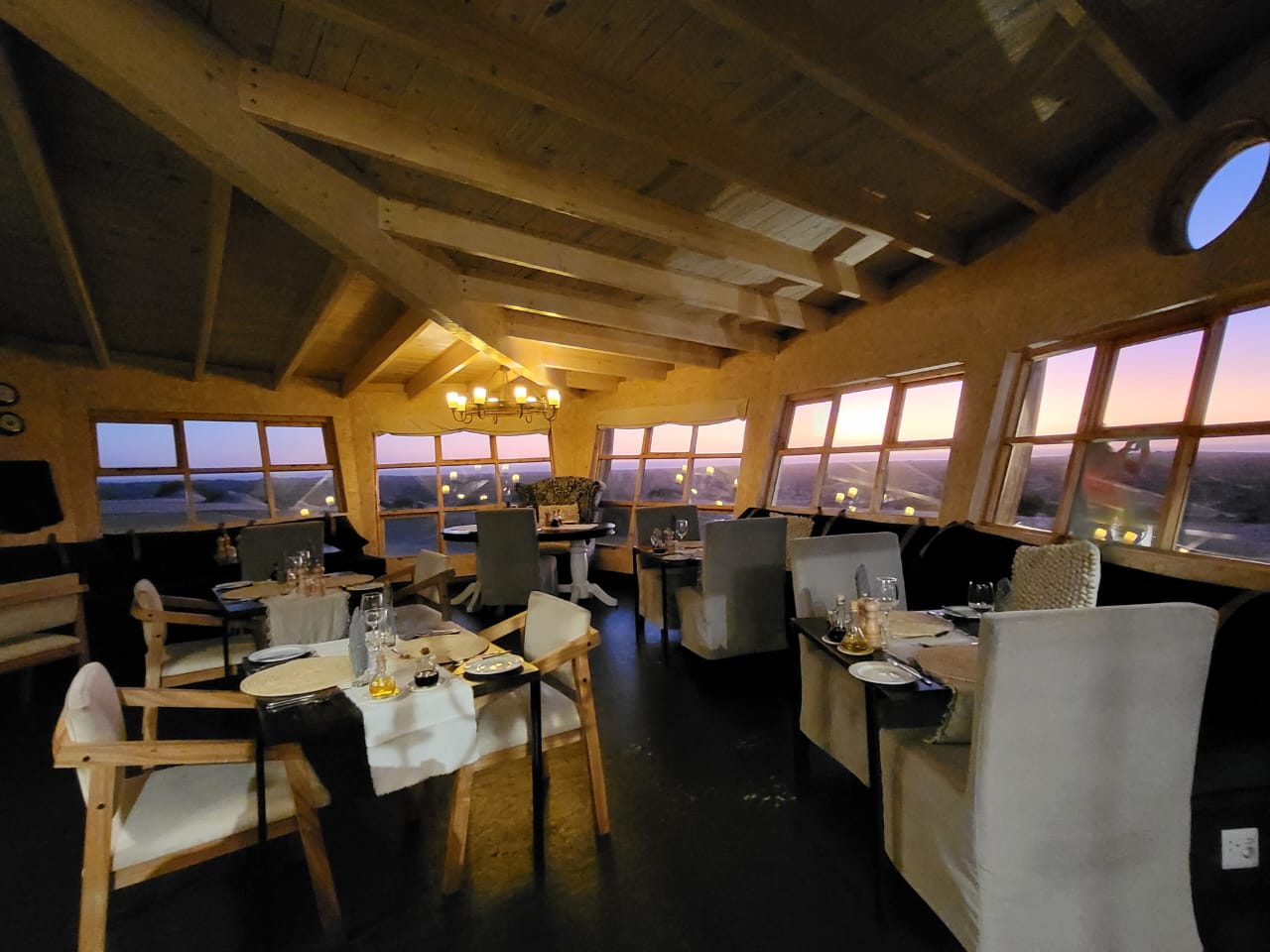
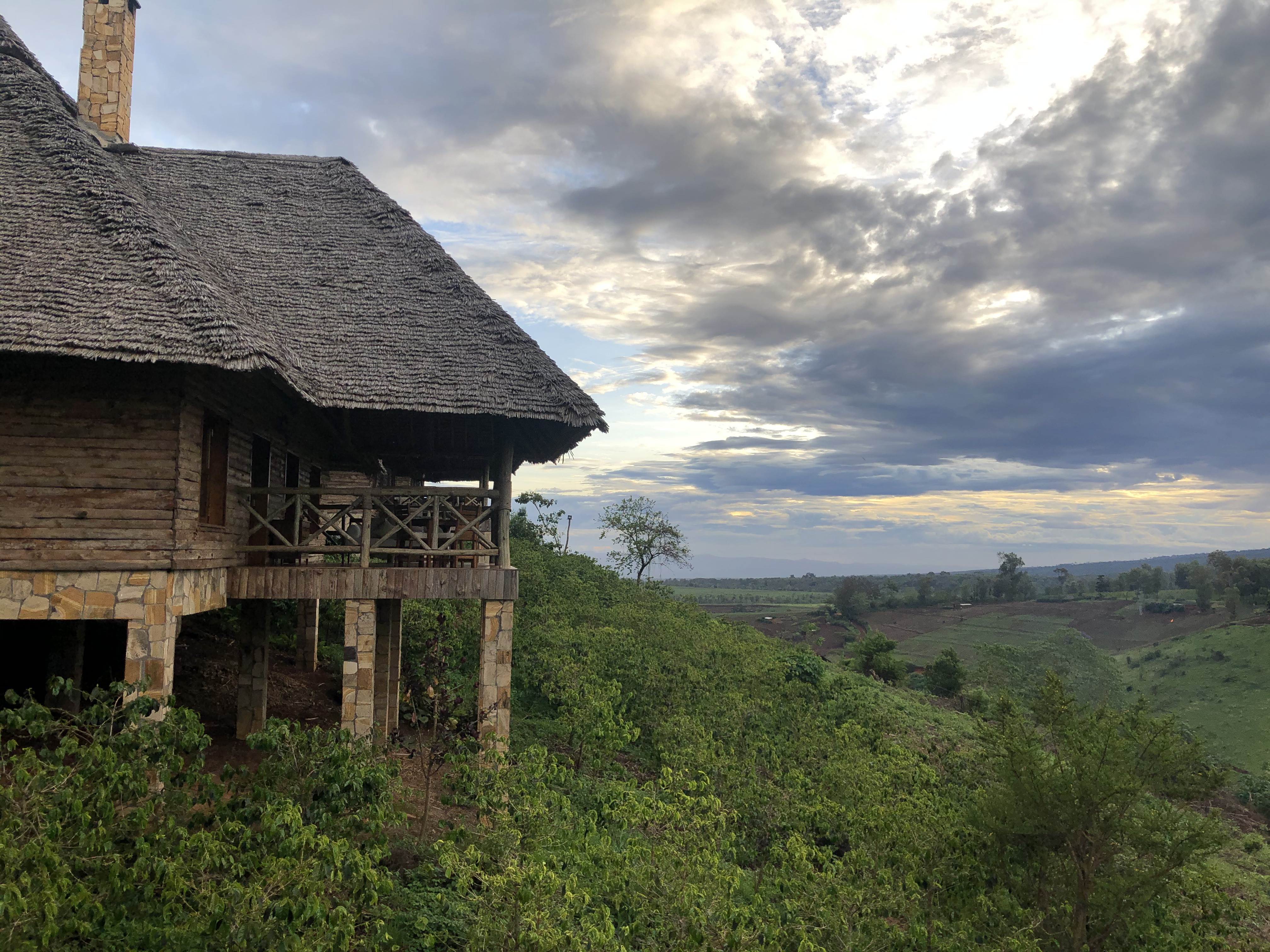
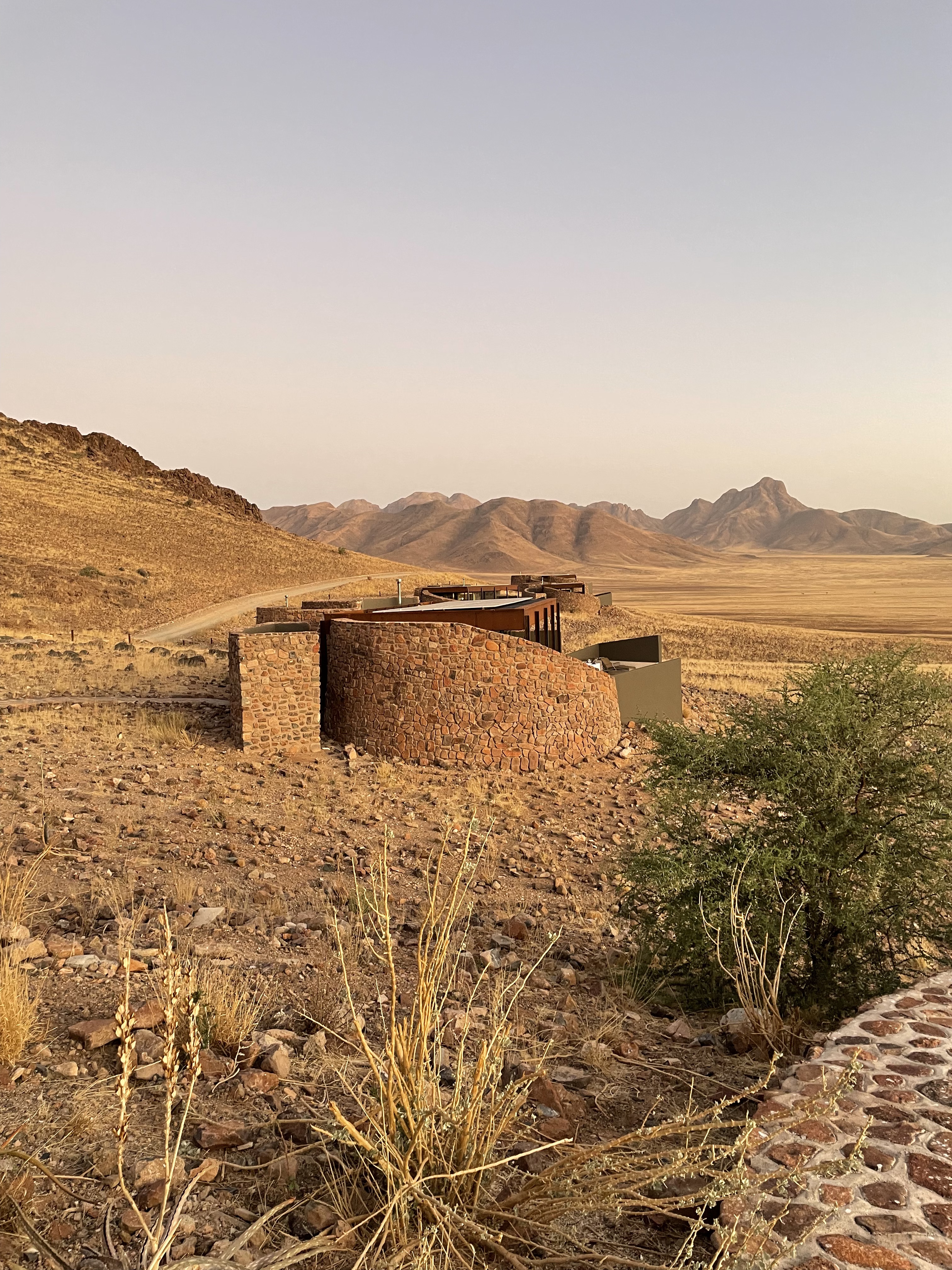
Our amazing Micato Safari started in Namibia’s capital city Windhoek, then continued on with overnight stays and game drives in Etosha National Park and the Skeleton Coast (click the links to see my previous articles). After departing Shipwreck Lodge and a quick refuel stop, we landed at &Beyond’s private lodge airstrip. Our first glimpse revealed the resort’s dramatic setting among an expanse of dunes, rocky outcrops, and plains. Ten beautifully appointed stone and glass suites, along the curve of the escarpment, look out on the ever-changing desert landscape. All suites are air conditioned with shaded veranda, private plunge pool, living room with fireplace, and glass enclosed rain shower with 180-degree views. The main, split level, lodge area was the perfect spot to enjoy a drink and watch nature unfold before us.
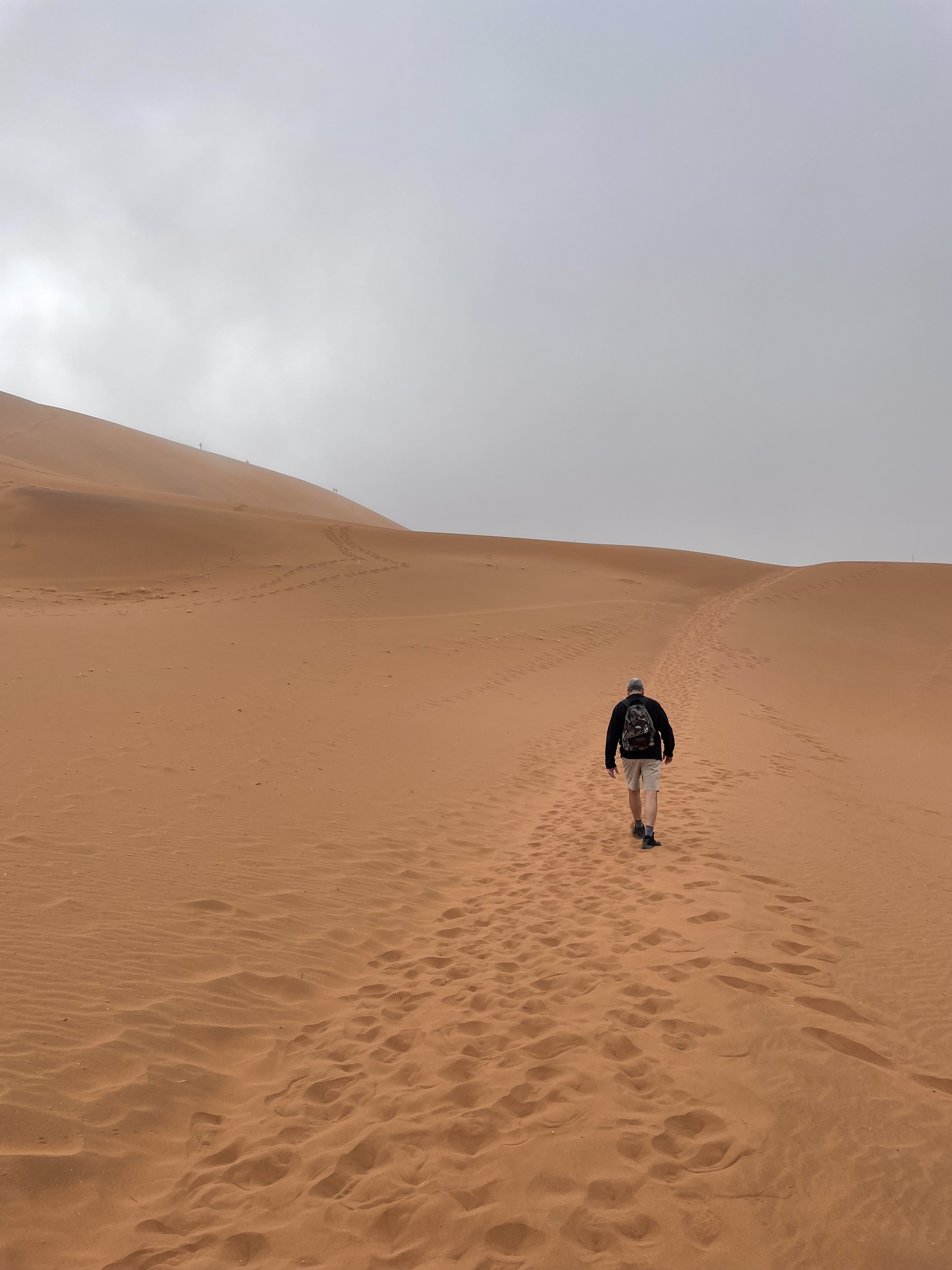
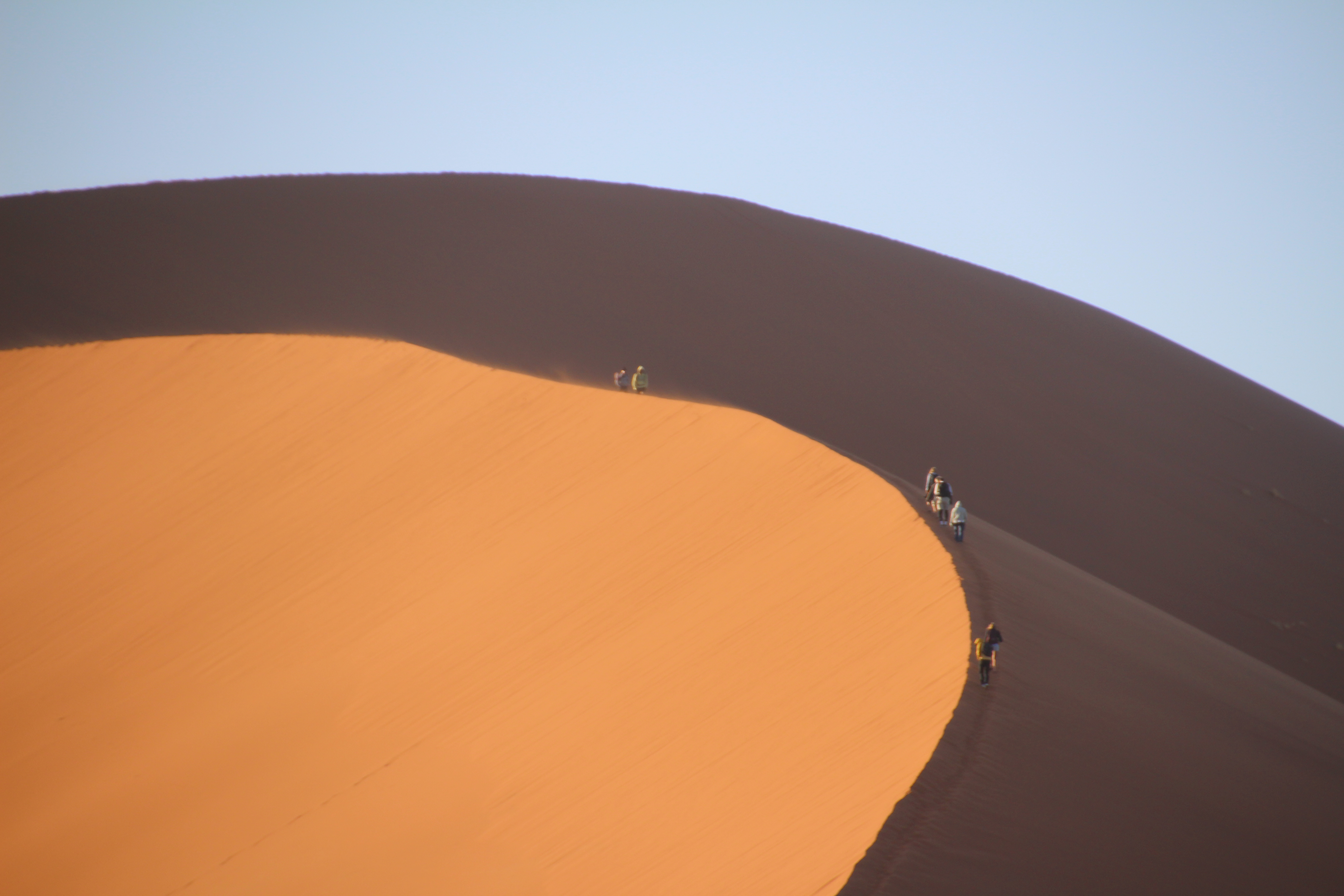
&Beyond Sossusvlei Desert Lodge put us in the perfect position to embark on a safari game drive in the vast Namib-Naukluft National Park. Sossusvlei is a surreal desert landscape – its towering red dunes meet stark white salt pans, creating an otherworldly spectacle. Climbing the iconic Dune 45 (not for the faint of heart!) offers panoramic views that stretch to the horizon, while the hauntingly beautiful Deadvlei, with its ancient, desiccated trees standing in stark contrast to the white clay pan and red dunes, is a photographer’s dream. The tranquility and raw beauty of Sossusvlei make it a must-visit for those seeking to immerse themselves in one of the world’s most unique desert environments.
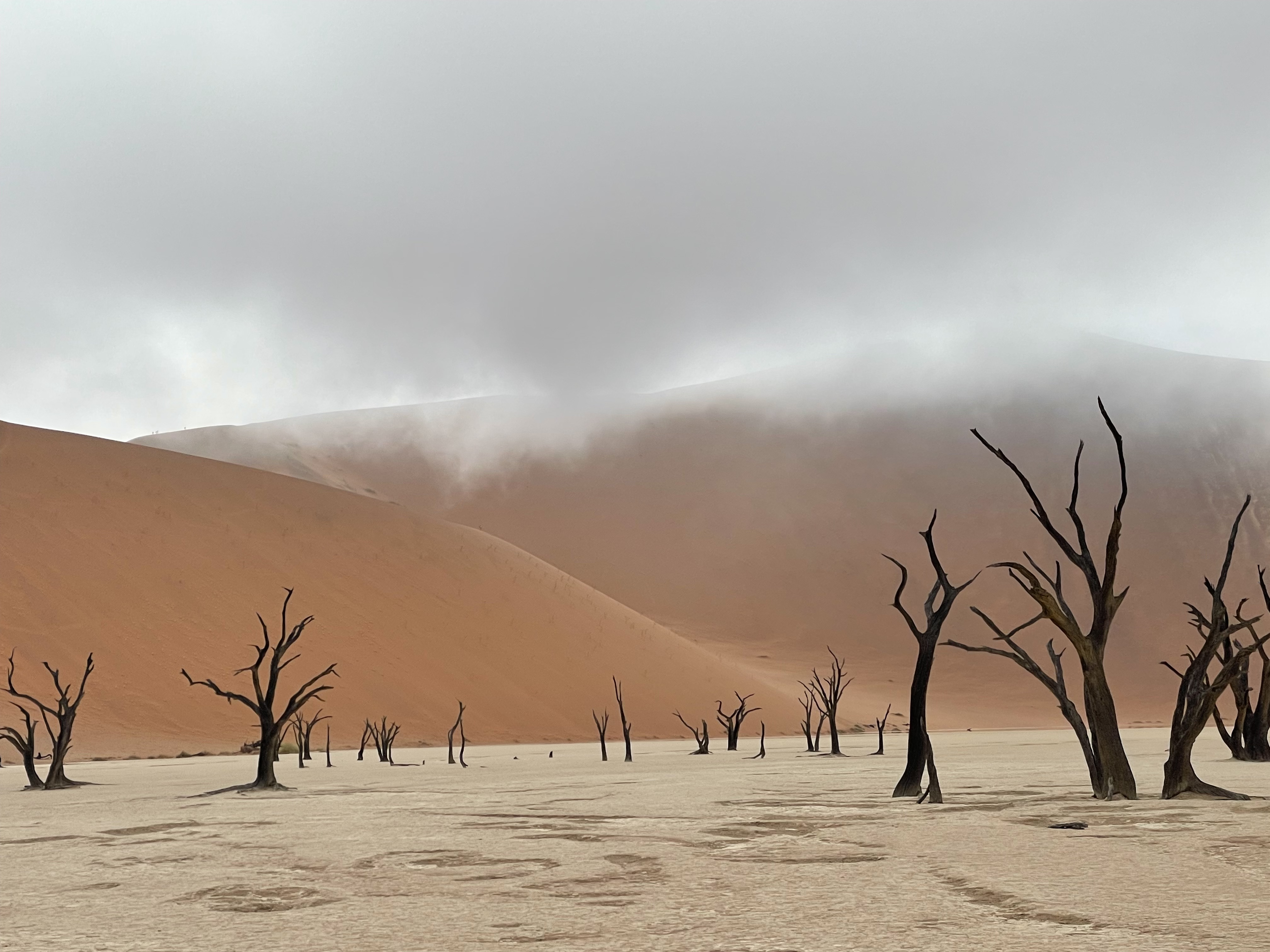
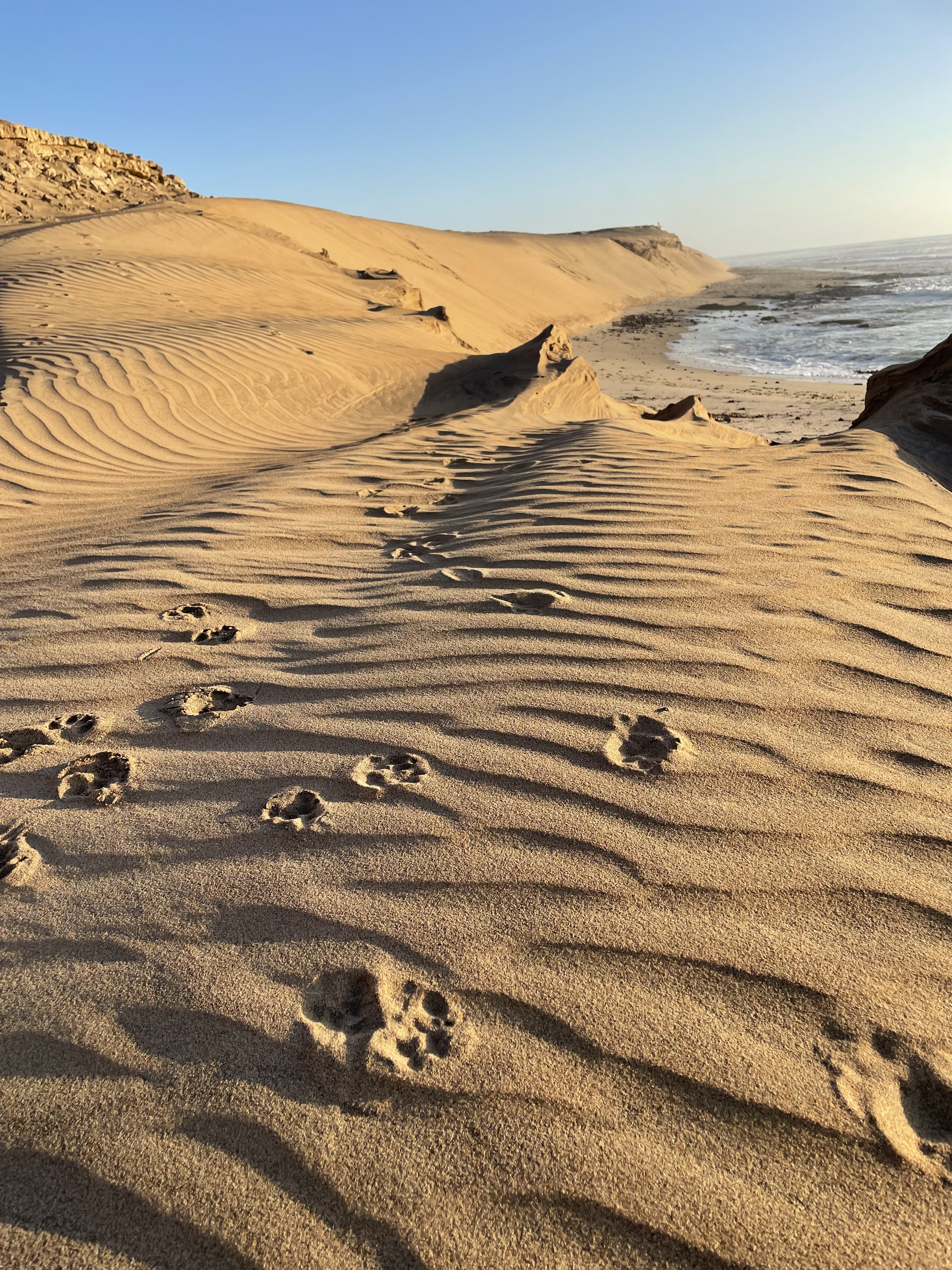
We could not tear ourselves away from this mystical landscape, furiously taking pictures as the early morning mist slowly lifted to reveal colors that our eyes could not comprehend. The musky desert fragrance, the cool breeze transformed into desert heat, and the silent setting created a vivid full sensory memory of this magical place and left us grateful that places like this still exist on our fragile planet.
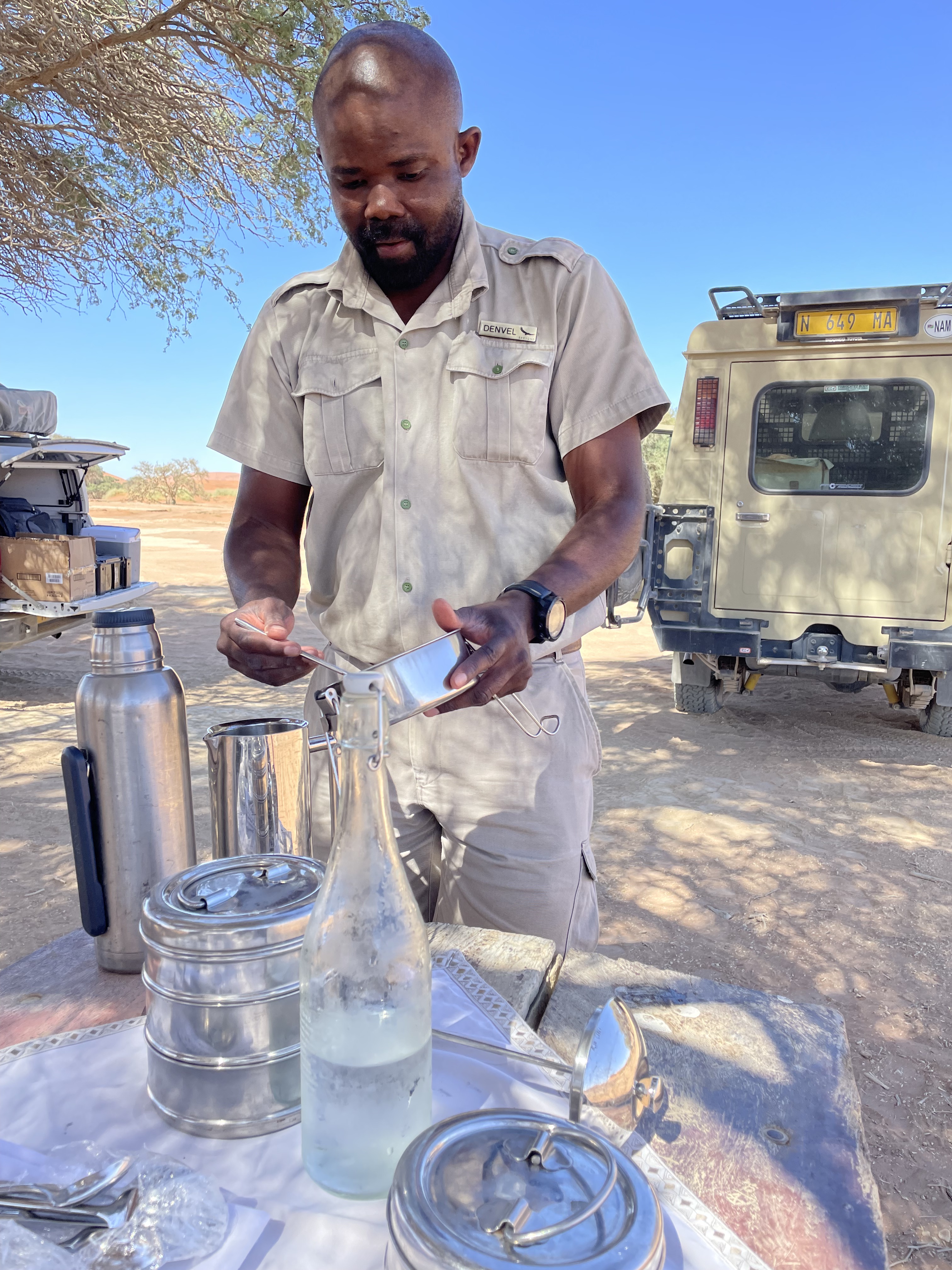
It’s never TOO early to plan your next adventure. Our safari was organized with Micato Safaris, voted top safari outfitter year after year. They ensured our trip went off with out a hitch, with the best guides, accommodations, transportation, and amenities. Email me, mollie@herrickstravel.com and find out about upgrades, complimentary breakfast, special amenities, and VIP service for all Herricks Travel customers. To receive my blogs to your inbox, please enter your email address in the subscriber box, and respond to the confirmation email.

Namibia’s Etosha National Park

Namibia’s Etosha National Park

Namibia takes its name from the world’s oldest and most impressive deserts — The Namib. Along with the famous Skeleton Coast, (check out my previous article here), Etosha National Park must be included on your Namibia safari itinerary. This southwestern African nation is bordered by South Africa, Zambia, and Botswana. A wildlife haven nestled in the heart of Namibia, the expansive park, covering over 22,000 square kilometers, is a paradise for nature enthusiasts and safari lovers. The park is not only a wildlife hotspot but also a place that reflects Namibia’s rich cultural tapestry — the local communities surrounding Etosha, including the Ovambo, Himba, and Herero people, contribute to the park’s cultural diversity.

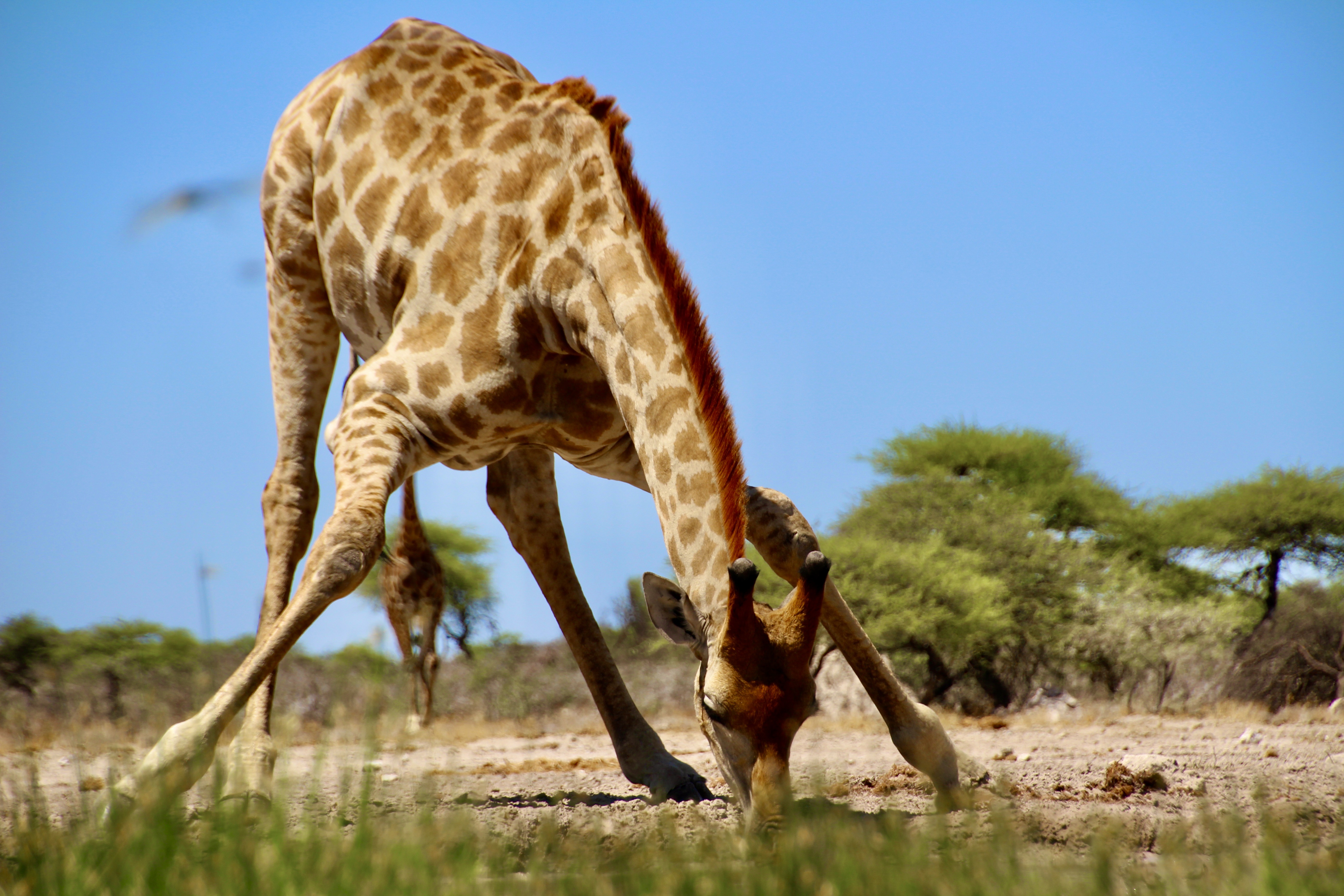
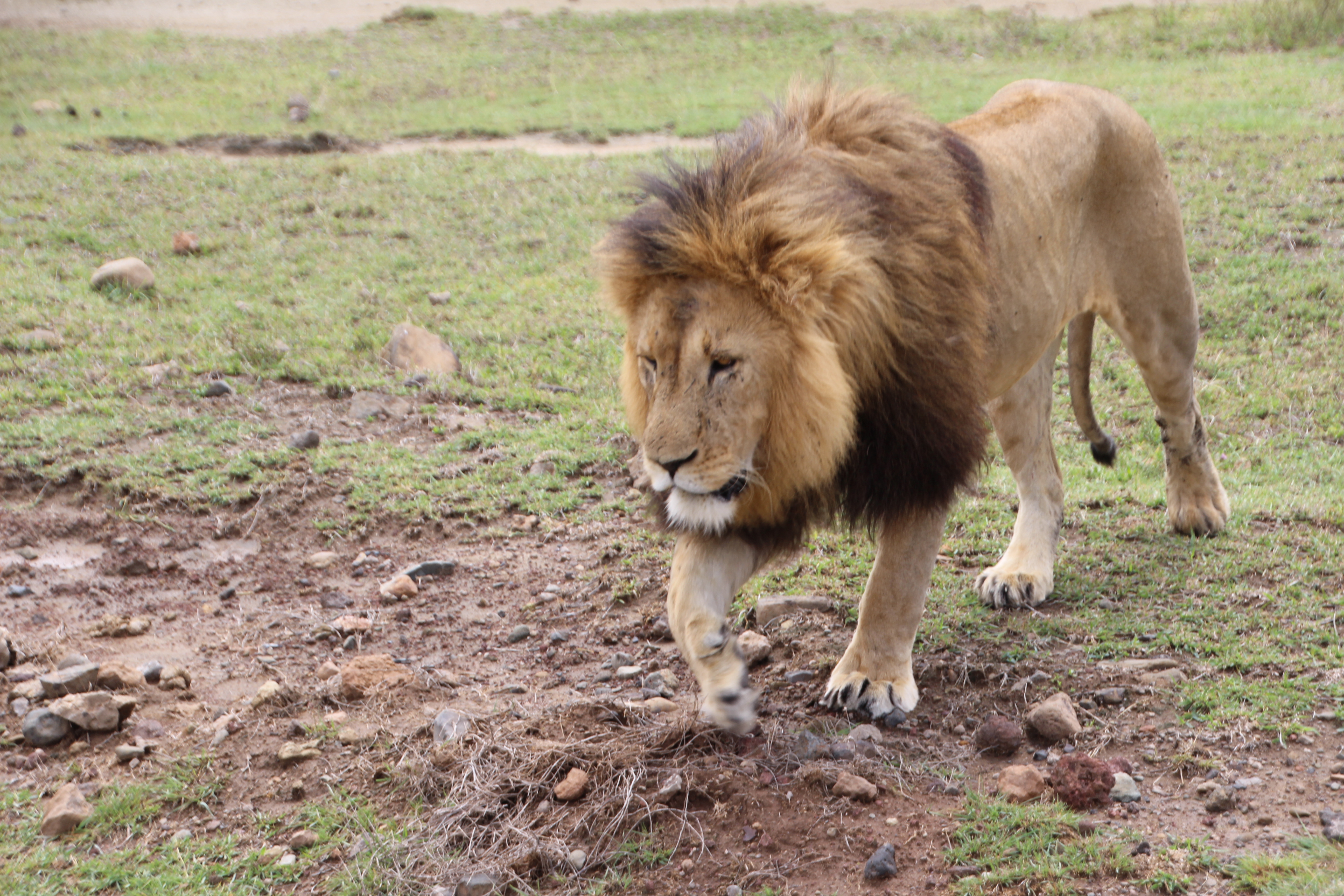
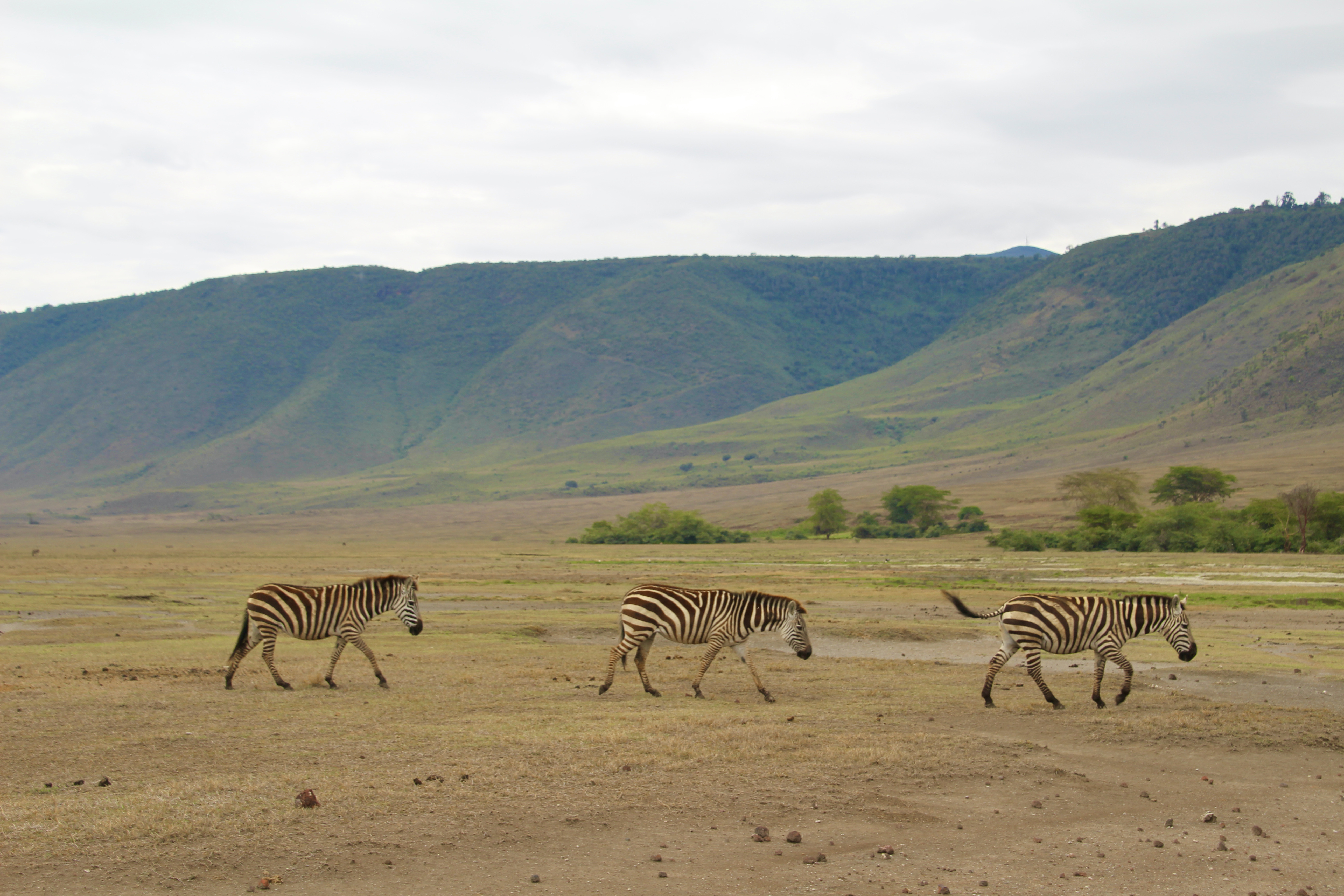
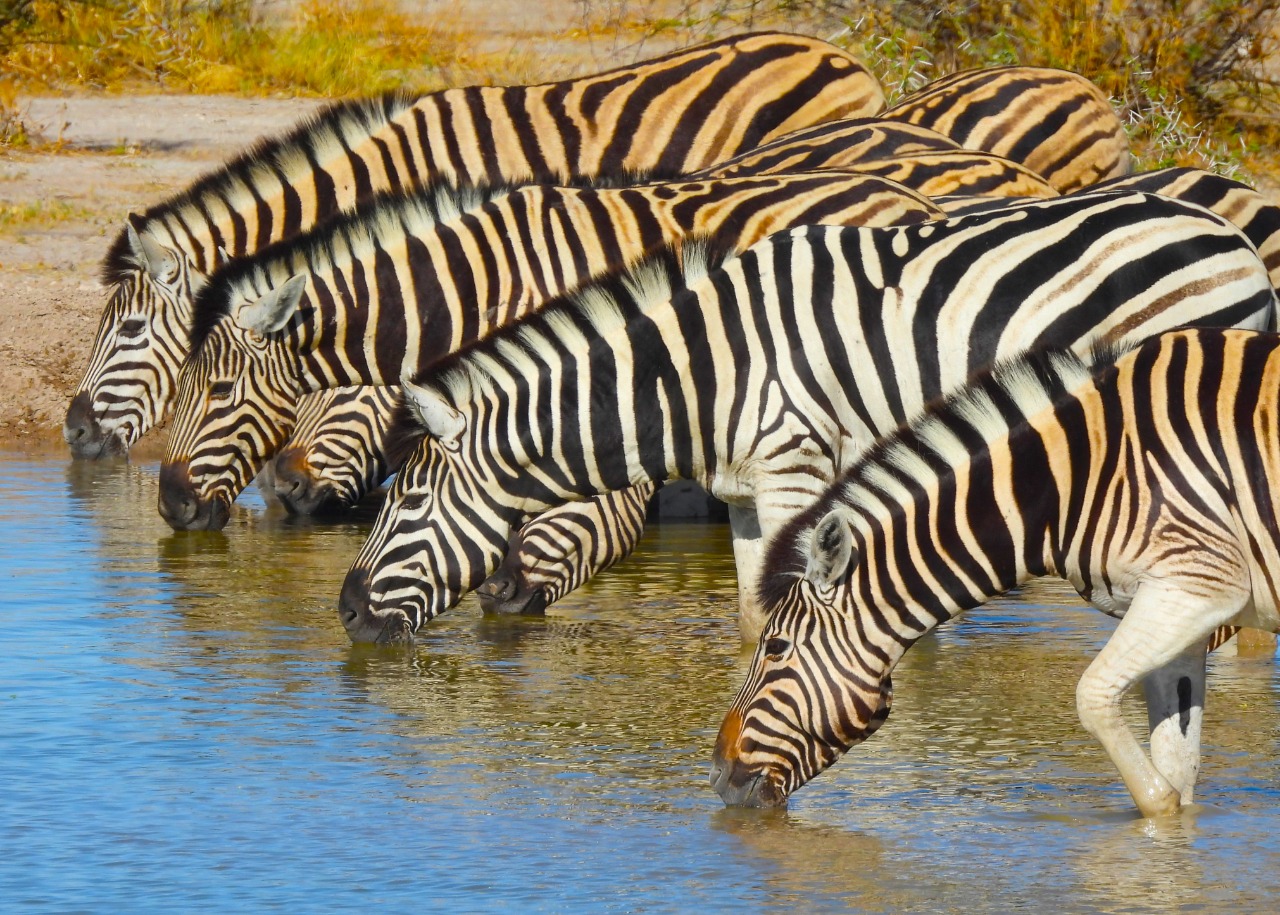
Etosha is renowned for its incredible wildlife and is home to four of the Big Five – elephants, lions, leopards, and rhinos – plus, plenty of giraffes, zebras, wildebeests, and numerous antelope and bird species. Etosha’s waterholes are a prime location for observing the animals as they gather to quench their thirst, providing unparalleled opportunities for wildlife photography.

To reach Etosha National Park, we flew on Scenic Air in a Kodiak Turbo Prop from capital city Windhoek, having spent the night after arriving via a short commercial flight from Johannesburg.

At the heart of the park lies the vast Etosha Pan, an otherworldly expanse of shimmering white salt. During the dry season, the pan is a striking contrast to the arid savannah, creating a surreal landscape that stretches as far as the eye can see and functions as the focal point for both wildlife and visitors alike.

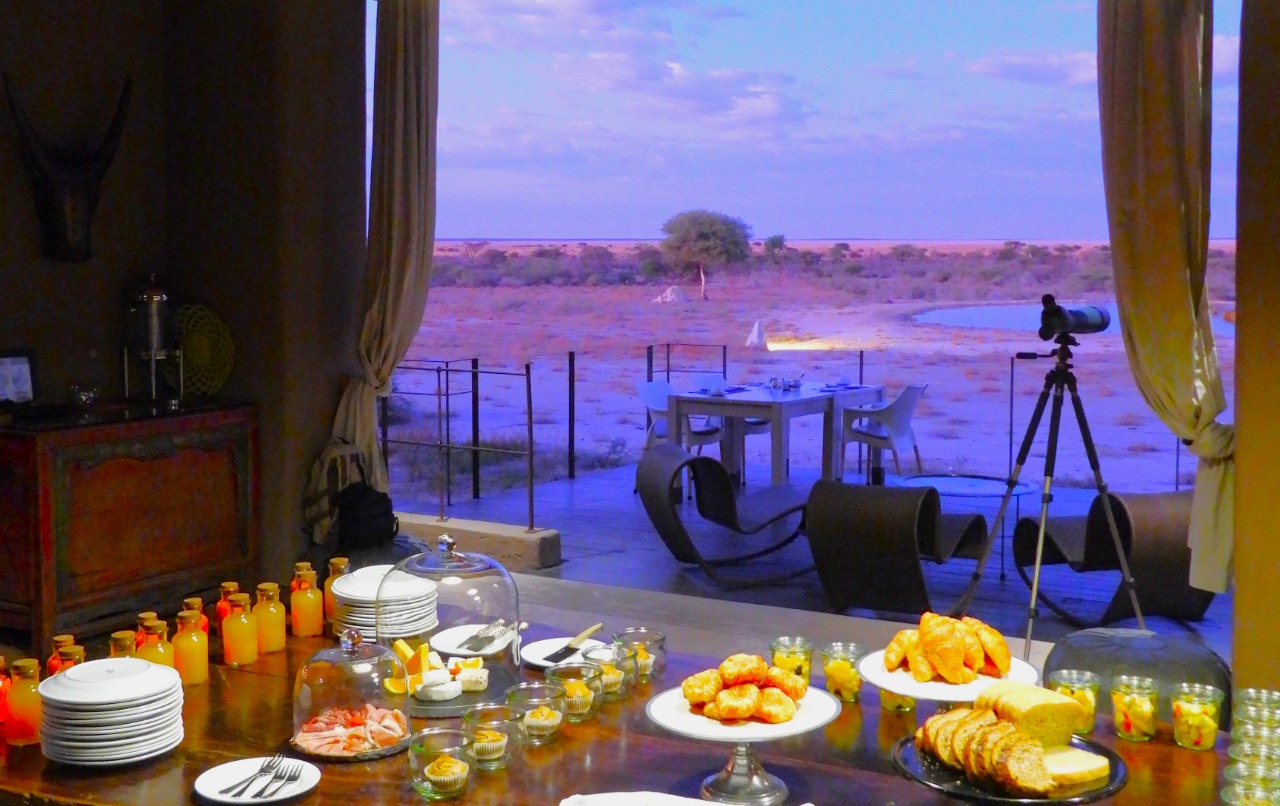
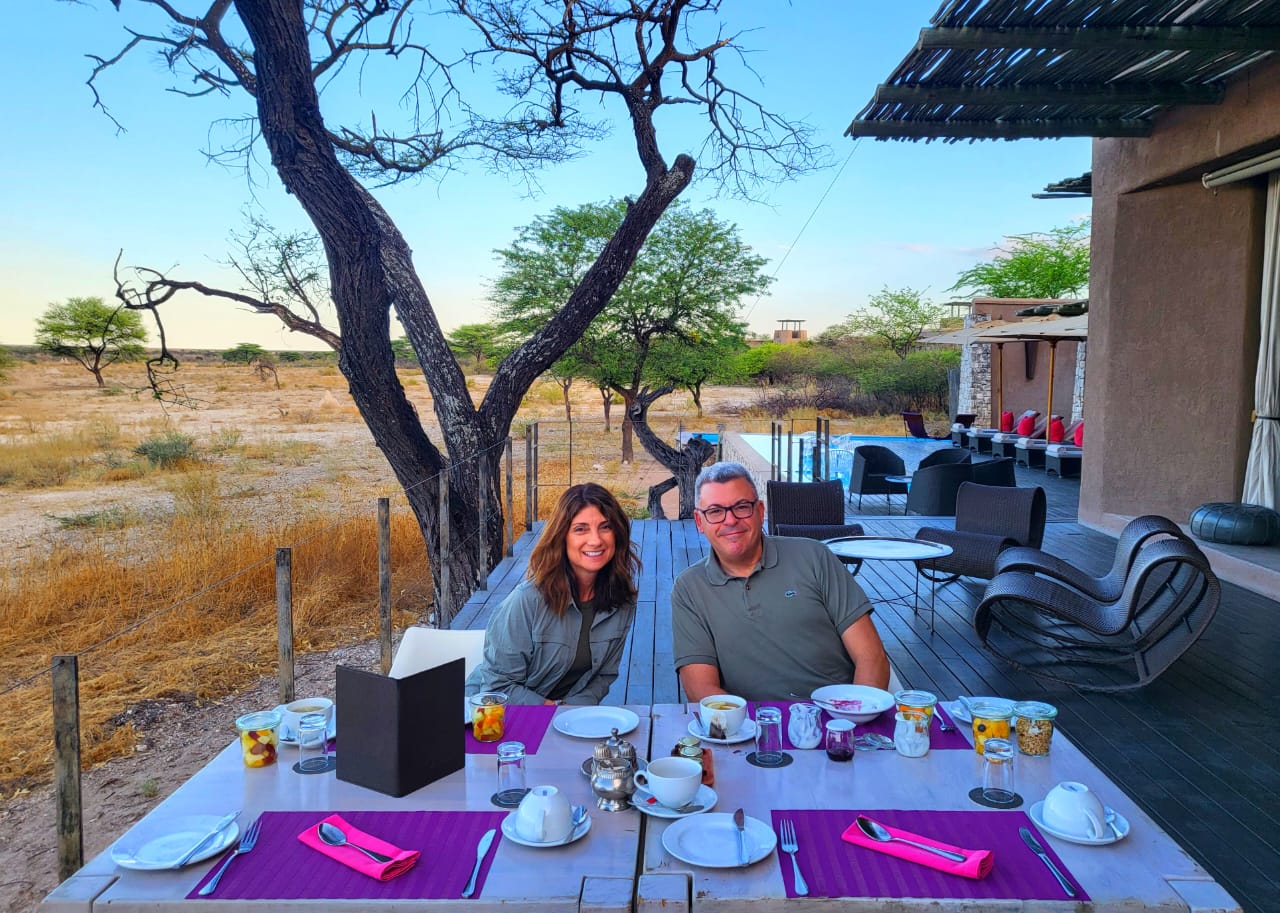
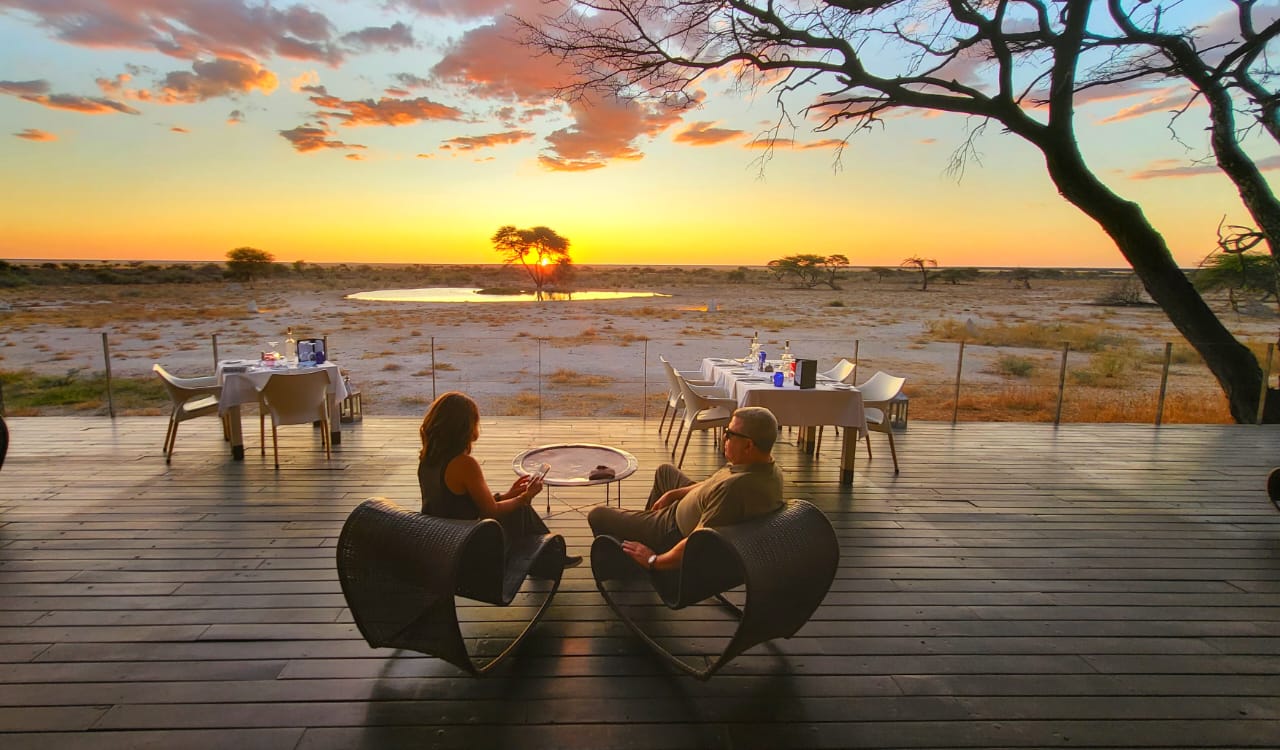
Our accommodations were at Onguma The Fort, located just outside the park. This exceptional property has a classic African feel with a touch of Indian and Moroccan flavors. Eleven private Bush Suites flank the Main Fort building, and all offer unparalleled sunset views of the Etosha Pans, frequently visited by a menagerie of wildlife especially during our evening meals on the lodge deck.

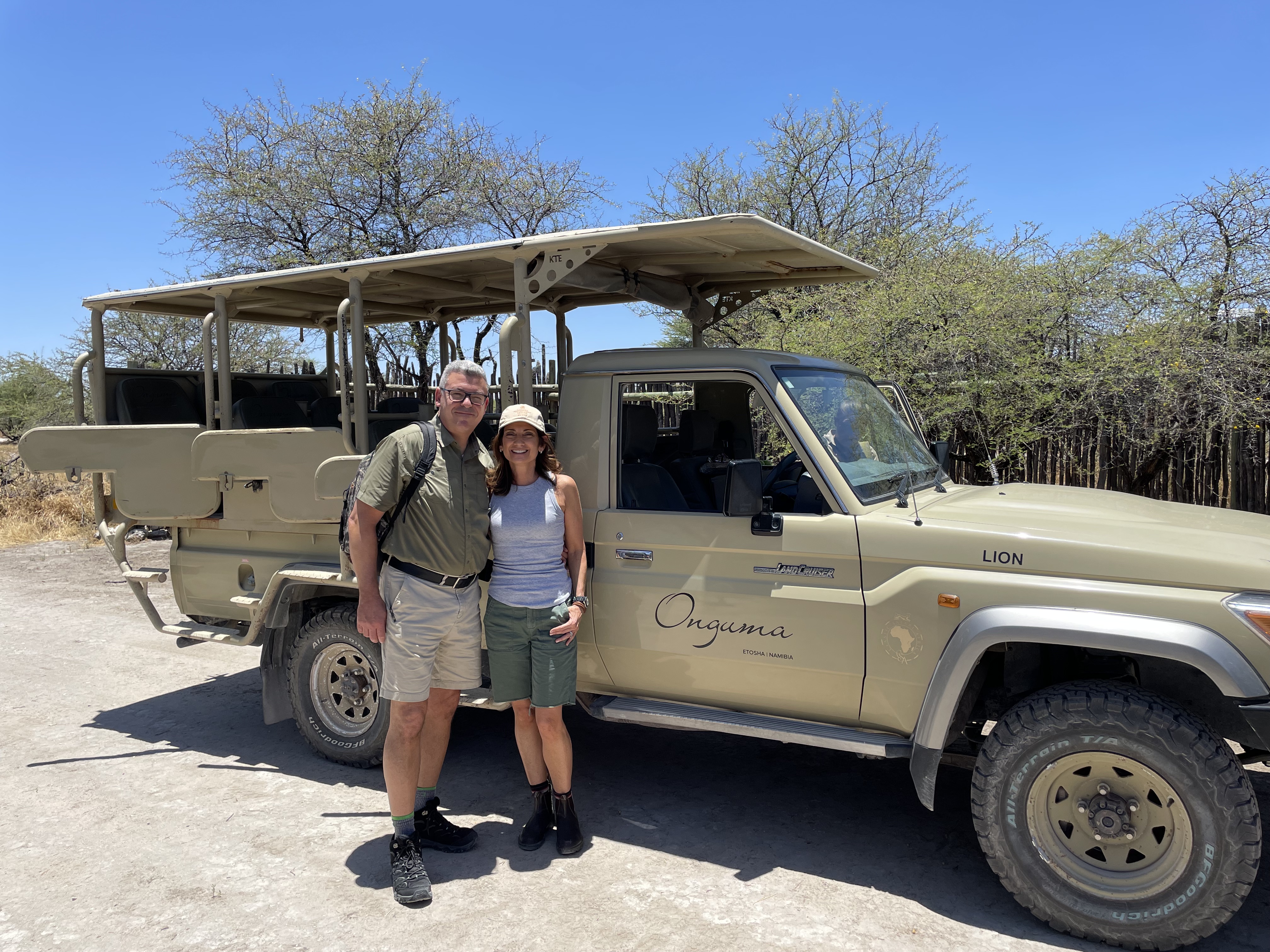
Our days were filled with early morning and late afternoon game drives in an open vehicle, with some time in between to sun ourselves and relax at the pool right off the main lodge courtyard. A big attraction at Onguma is “The Onkolo Hide.” This water-level camouflaged shelter affords guests the opportunity to sit calmly and enjoy the wildlife extremely up close and unobserved. The vantage points give you amazing camera angles.

Namibia is a country that blows away any preconceived notions of what Africa should be, and a visit to Etosha must be included in your itinerary. A gem in Namibia’s crown, this national treasure offers a perfect blend of natural beauty, cultural richness, and unparalleled wildlife encounters. And, a visit to Etosha, not only offers a unique wildlife experience, but it’s an opportunity to support conservation and anti-poaching efforts.

It’s never TOO early to plan your next adventure. Our safari was organized with Micato Safaris, voted top safari outfitter year after year. They ensured our trip went off with out a hitch, with the best guides, accommodations, transportation, and amenities. Email me, mollie@herrickstravel.com and find out about upgrades, complimentary breakfast, special amenities, and VIP service for all Herricks Travel customers. To receive my blogs to your inbox, please enter your email address in the subscriber box, and respond to the confirmation email.
Namibia’s Skeleton Coast “Shipwreck Lodge”

Namibia’s Skeleton Coast “Shipwreck Lodge”

An African safari transcends traditional travel – it is a captivating expedition that offers a unique blend of awe-inspiring landscapes, wildlife encounters, and cultural immersion.

Having visited South Africa, Kenya, and Tanzania, I looked forward to returning to Africa, this time to Namibia, a country that blows away any preconceived notions of what Africa should be. We packed our bags and headed on our adventure with Micato Safaris. A nonstop flight took us from New York to Johannesburg where we met up with our expert safari director, Brian. After an overnight stay at the beautiful resort-like Saxon Hotel, we connected with a short flight to Namibia’s capital city, Windhoek, spending a night at the iconic Weinberg Hotel. This serene estate property was the perfect place to recover from jetlag.

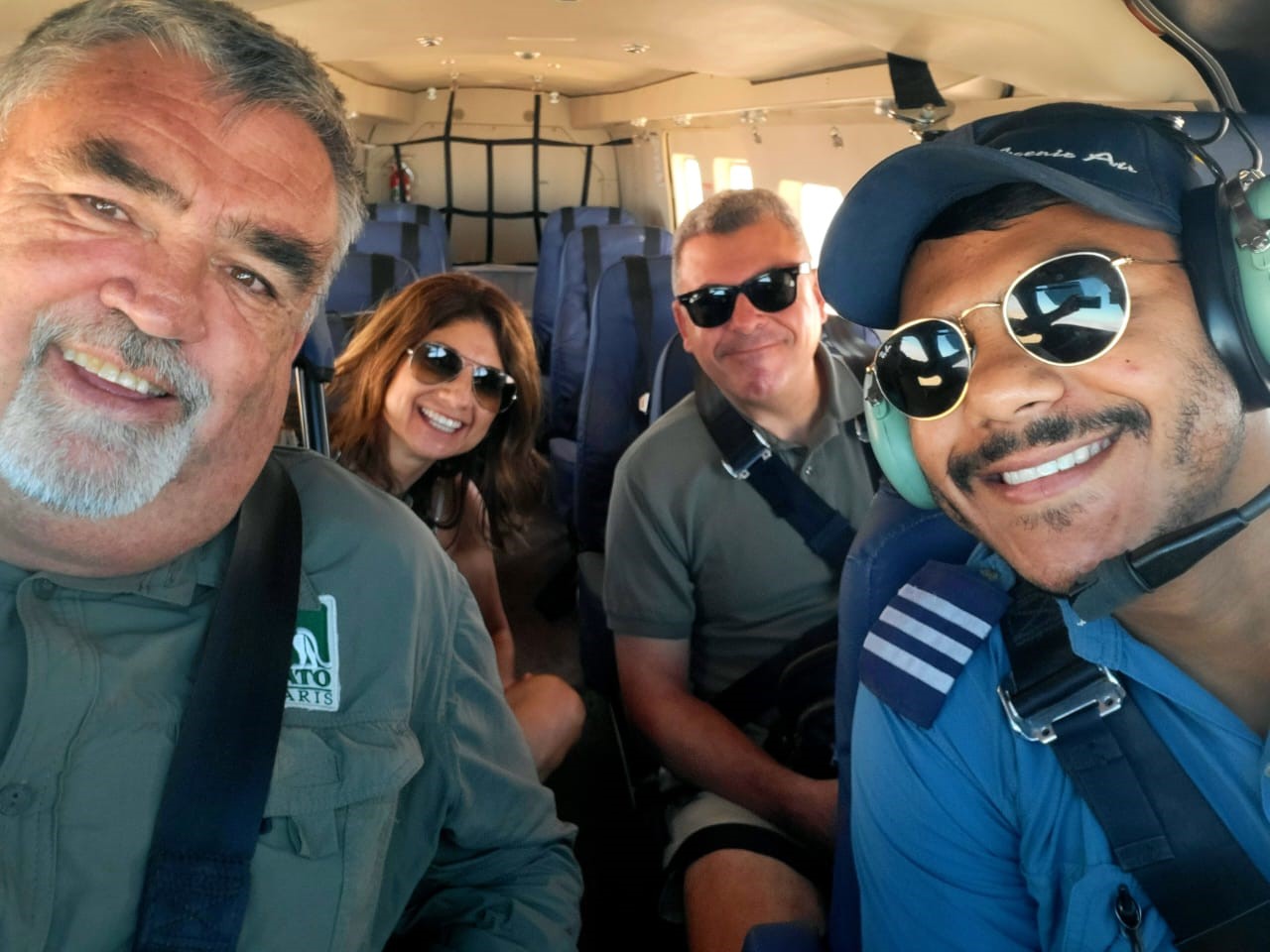
From Windhoek, we flew via Scenic Air light aircraft from lodge to lodge – from Etosha National Park to the Skeleton Coast to Sossusvlei. Our trusted pilot, Cam, made sure we were comfortable in the Kodiak plane throughout our journey, and we were honored to get to know him throughout our two-week trip.

It is indescribable the distinctiveness of this remote, yet well-developed country in the southwestern corner of the continent. Namibia is a land of stark contrasts, where towering sand dunes meet the wild Atlantic Ocean, where traditional tribal customs blend with modern life, and remarkable animal species adapt to a harsh environment.

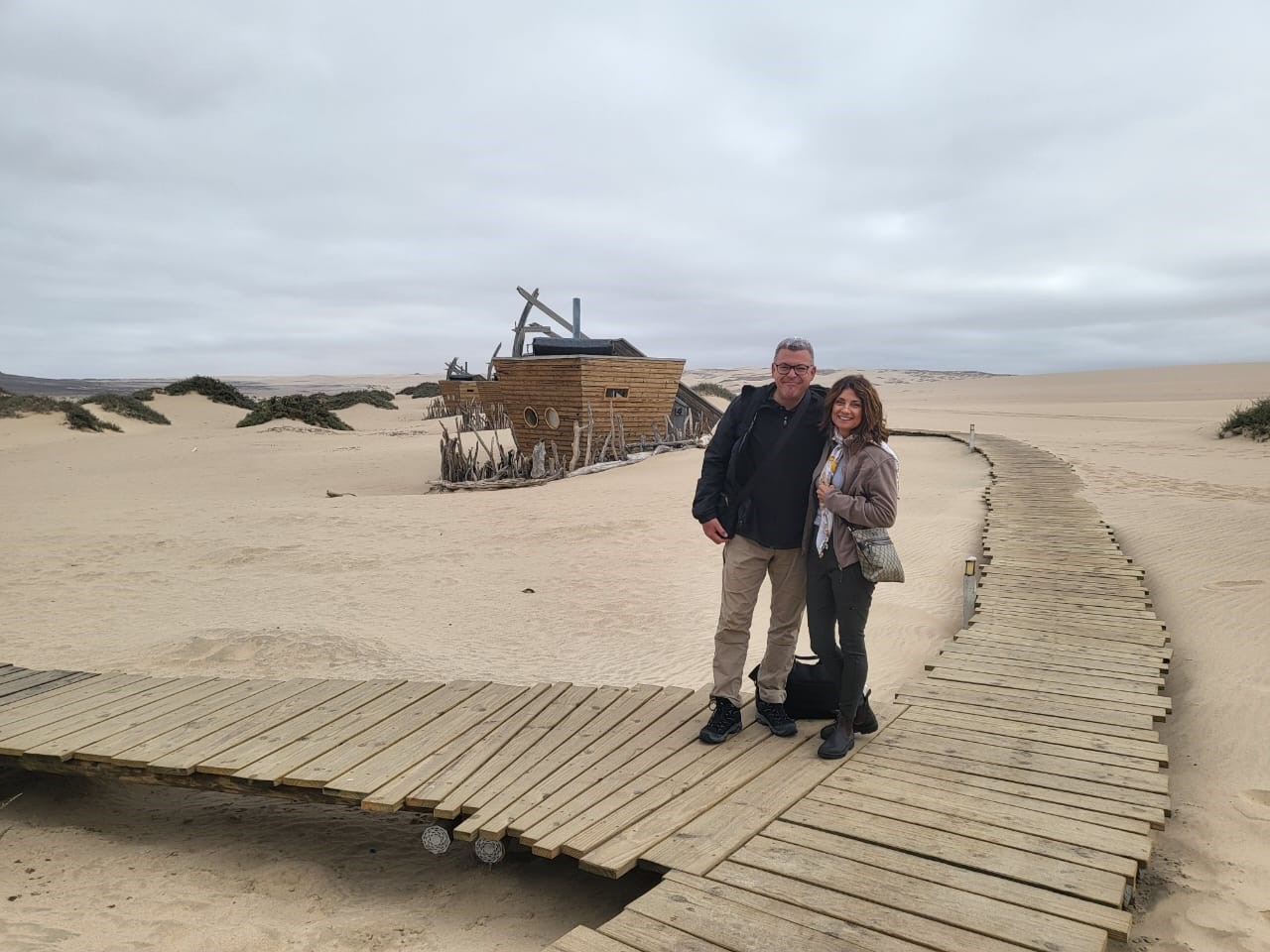
Our itinerary included an unforgettable stay at Shipwreck Lodge, perched on Namibia’s 310-mile-long Skeleton Coast. This revered and feared National Park is a raw, rugged, and remote slice of African wilderness — it earned its name from the countless shipwrecks that wash up on its shores.

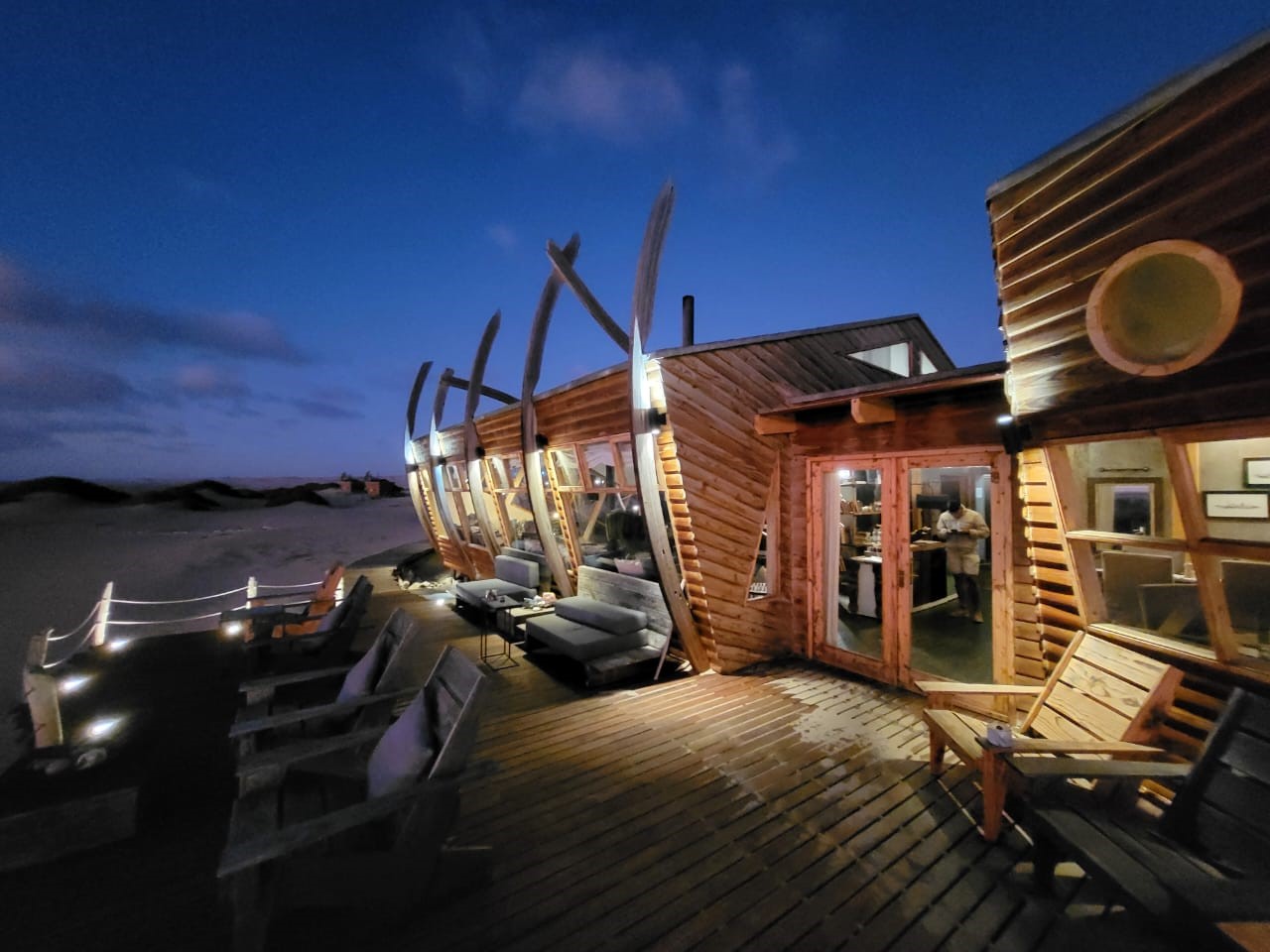
Shipwreck Lodge, which honors the mariners who braved these perilous waters, is an oasis in what is the world’s oldest desert – The Namib. The lodge is uniquely designed to reflect the famous shipwrecks lining the nearby coast. Cabins, nestled between the dunes, with views of the Atlantic Coast, offer a warm and inviting environment that contrasts the harshness of the surrounding area.

Getting here:
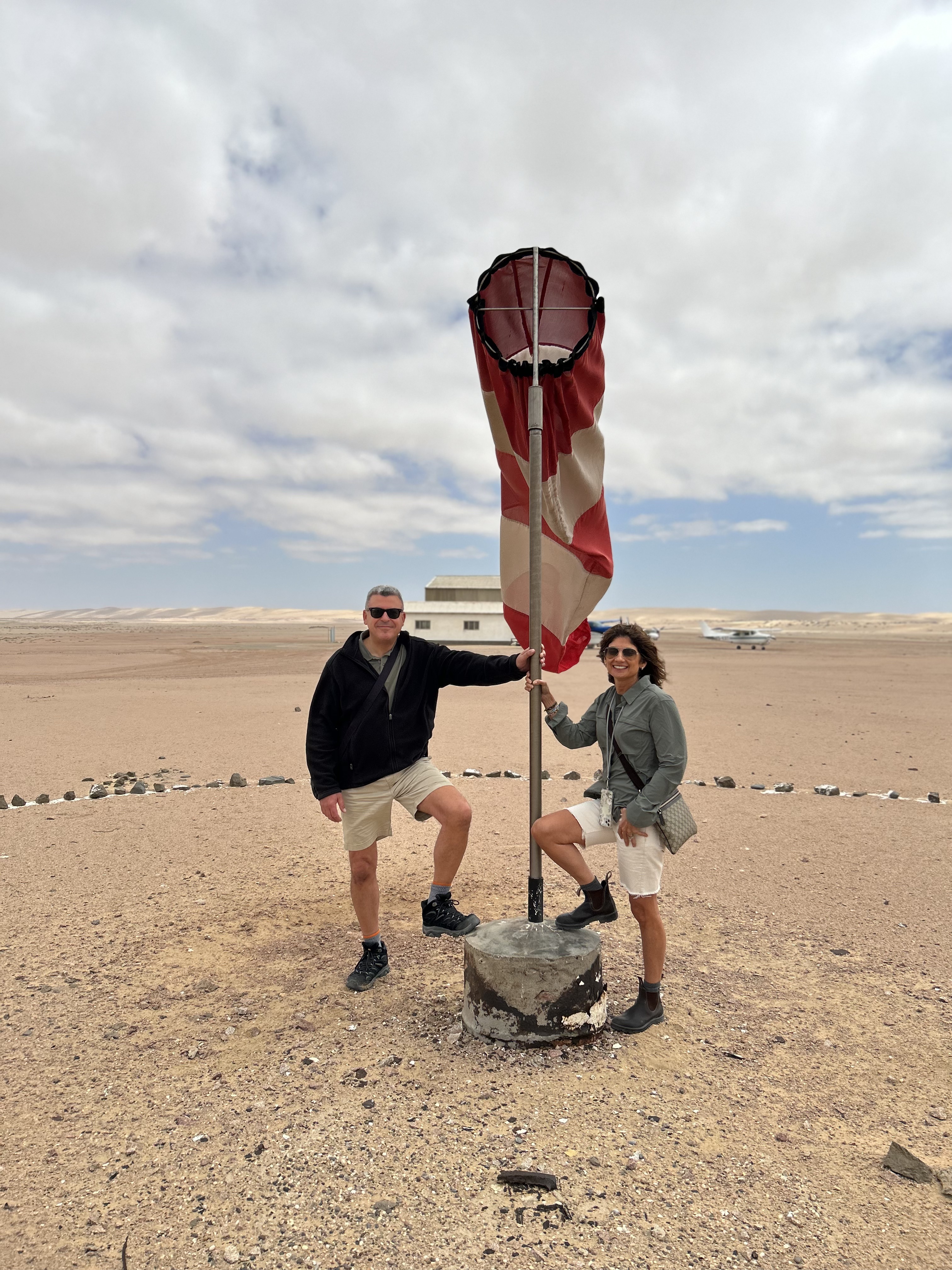
We accessed the lodge via a flight to Möwe Bay, the nearest airstrip. Very surreal — only a simple hanger and a lone, red and white windsock indicates this is an airport – the runway is barely distinguishable from the desert sand. A 45-minute transfer via the lodge’s 4×4 vehicle included a stop at a seal colony and several wrecks perched on the beaches. There is no official “road” to the lodge, only a lightly marked, constantly shifting, sandy path along the dunes.

Accommodations:
The lodge’s rustic elegance and remote location blend easily to create an atmosphere of tranquility and wonder. Ten cozy, eco-friendly, solar powered, wooden cabins come equipped with a wood burning stove to keep warm on chilly nights. Outside the cabin door is a spacious deck with sturdy Adirondack chairs. In the center of the lodge stands the timber and glass lounge, bar, and restaurant. After day-long game drives, we would settle into cozy cushioned couches and chat with other visitors from around the world. A wraparound deck offered uninterrupted views out to the Atlantic Ocean – a great place to just sit and contemplate life!

Excursions:
Our first night we joined other lodge guests and drove down to the beach in a 4×4 for a traditional safari “Sundowner.” A delicious display of canapes and gin was set up on a petite table in the sand just steps from the water. As the sun set behind the dunes, we tried to absorb the vastness of this world around us – it was too big to grasp!

On our second day, our guide took us into the dunes just behind the lodge. After a quick lesson, we donned helmets, boarded quad bikes, and then stopped to do some “sandboarding,” taking turns going head or feet first over the edge and then gleefully being driven back up to the top for another run. Afterwards, we formed a neat line of quads and ventured up even higher into the dune-filled world – colossal mountains of sand as far as the eye could see.

On our third day we joined our local guide and explored the scenic Hoarusib River, an often dry, ephemeral river, rimmed by sheer cliffs and narrow canyons. Driving for several hours, we spotted plenty of unique desert dwelling creatures as we followed the riverbed through a constantly changing landscape. We hiked through the russet-hewed Clay Castles which had been carved out for centuries by the flowing water.

Scenic flights:
After our stay we returned to Möwe Bay where we boarded our plane and embarked on a scenic flight over the southern Skeleton Coast to our next stop, Sossusvlei. Our bird’s eye view afforded us a glimpse of the rugged coastline, shipwrecks, and a startling thousand-member flock of pink flamingoes below.

Namibia’s pristine wilderness is an escape from the fast-paced world we live in – it gives you a profound sense of tranquility. This country has made a strong commitment to sustainability in its approach to tourism by protecting its rich biodiversity, reminding us of the importance of safeguarding our precious environment. Lodges and safari operators are deeply committed to tourism that specifically benefits local communities and supports wildlife conservation. Your visit helps contribute to preservation efforts and safeguards these environments for future generations.

It’s never TOO early to plan your next adventure. Email me: mollie@herrickstravel.com and find out about upgrades, complimentary breakfast, special amenities, and VIP service for all Herricks Travel customers. To receive my blogs to your inbox, please enter your email address in the subscriber box, and respond to the confirmation email.
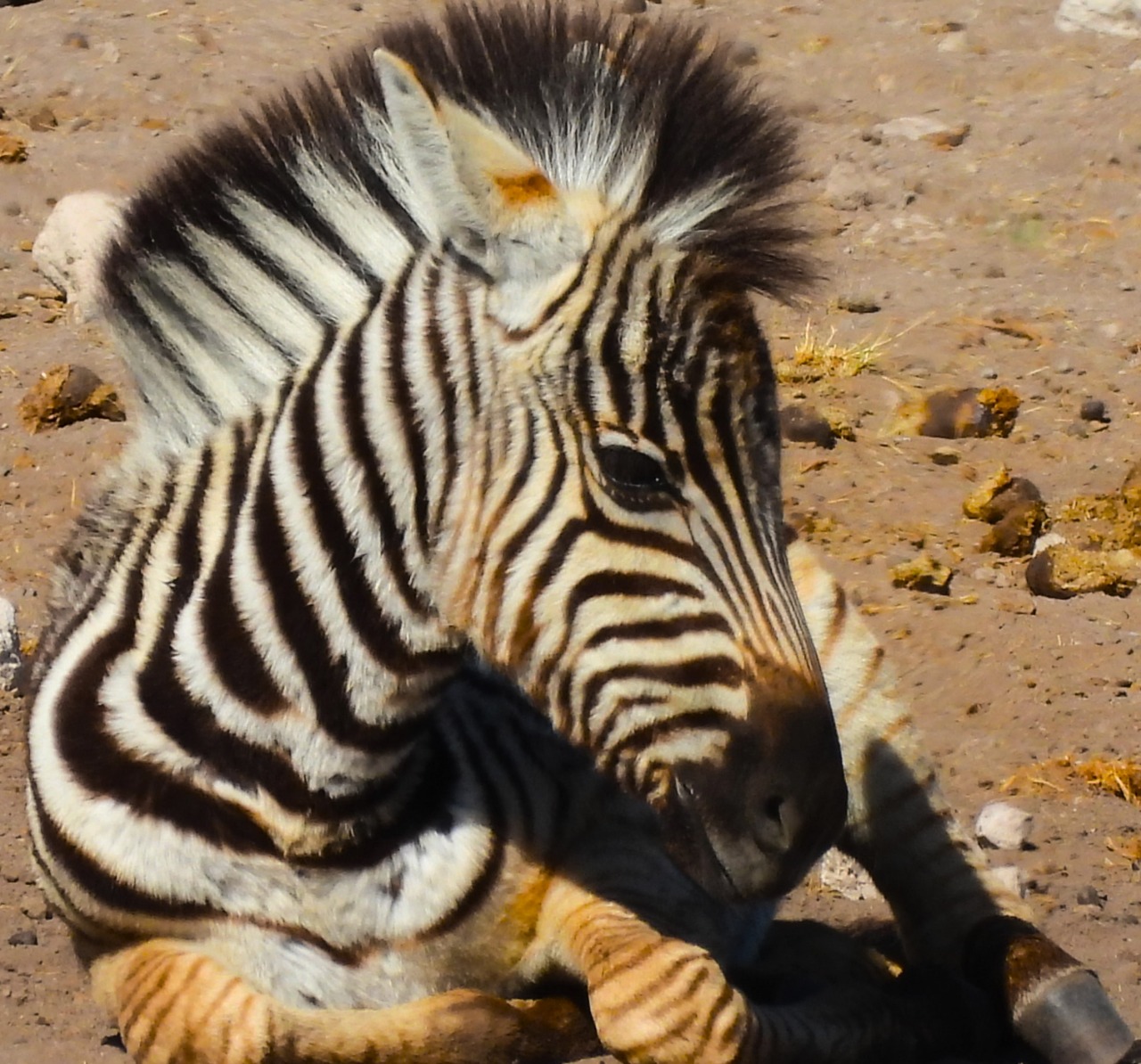
When in Namibia, your eyes can barely absorb all the beauty around you! Check out some videos here below…

What to Expect on Safari in Tanzania

What to Expect on Safari in Tanzania

The word “safari” comes from the Swahili language meaning “journey,” but a safari is more than a journey – it’s a life changing and mind-opening experience, and something to definitely move to the top of your bucket list now that international travel has opened up.

Tanzania offers one of Africa’s most dynamic safari adventures, whether explored on its own or paired with another East African destination. Bordering Kenya to the north, the Indian Ocean to the east, and Rwanda to the west, twenty five percent of Tanzania has been designated as a conservation area. It boasts multiple UNESCO World Heritage sites, the largest national parks and Mt. Kilimanjaro, the highest mountain in Africa. Most travelers come for the Serengeti’s “Great Wildebeest Migration,” the largest movement of animals in the world, but there is plenty of wildlife to view year-round including the big five (elephant, lion, leopard, buffalo, rhino).

On my itinerary, after spending time on safari in Kenya, we flew from Nairobi’s Wilson airport to Kilimanjaro International Airport, Tanzania, and from there, hopped onto a quick flight by bush plane to Lake Manyara Airstrip.

Photo by Leif Blessing on Pexels.com

A safari in Tanzania includes six-to-eight-hour daily game drives conducted by a professional guide to designated protected areas in a pop-up roof style 4×4 vehicle. Most safari vehicles come fully equipped with cold beverages, binoculars, charging ports, and wifi. You will become fully immersed in local knowledge about the landscape, flora, and wildlife encountered along the way. Often a “walking safari” can be arranged and a highlight of the day will be lunch enjoyed outdoors “in the bush.”

There are several locations you can include in your Tanzania itinerary based on how much time you have allotted to your trip. Traveling between the various locations will be by 4×4 vehicle or bush plane, depending on travel distances and budget. Here are a few top locations to consider:

Ngorongoro Crater:
A UNESCO World Heritage site, this three million year old volcanic caldera is known for its incredible population density of animals that call this fertile 100 square mile grazing area home.

Lake Manyara National Park:
Stretched out at the base of the Rift Valley (a lowland region that forms where Earth’s tectonic plates move apart), its shores are populated by more than 500 bird species including thousands of pink flamingoes. If you look up, you might also catch site of tree climbing lions!

Olduvai Gorge:
This “Cradle of Mankind” holds the earliest evidence of the existence of our human ancestors. The Leakey family and fellow paleoanthropologists, discovered human fossils dating back two million years. The forest, swamp, and grasslands are home to monkeys, baboon, jackals, spotted hyena, bull elephants, hippo, and dark maned lions.

Tarangire National Park:
Hosts one of the largest populations of elephants in its vast savannah dotted with giant iconic baobab trees. During dry season, herds of zebra, wildebeest, and their predators (lions, cheetahs, leopards) make their way to this area because of its large river, an important water source.

Arusha National Park:
Home to Mount Meru, the second highest peak in Tanzania, a walking safari through the wide open plains will get you up close with giraffes, zebras and Cape buffalo.

Serengeti National Park:
A World Heritage Site and one of the New Seven Wonders of Africa, this park lives up to its ancient Maasai name which means “endless open plains.” The sweeping savannah grasses turn golden in the dry season, then green and dotted with wildflowers in the rainy season. The Serengeti welcomes the constant grazing of large herbivores. Annually, over 1.1 million wildebeest joined by herds of zebra and Thomson’s gazelle, traverse over 800 kilometers. They graze in the southeastern portion and then make their way towards the north in search of more verdant lands. The Serengeti, along with the South Kenyan Mara ecosystem across the border, is where the wildebeest can be viewed by land, chartered plane, or hot air balloon.

Where to stay?
Accommodations in Tanzania include luxury tented lodges, tree houses, small inns, and hotels. Some accommodations are outfitted with private plunge pools and outdoor terraces with panoramic views. As a travel agent, I can help you pick the perfect accommodations for you and family.

Elewana The Manor at Ngorongoro
Neptune Luxury Lodge Ngorongoro
Neptune Luxury Lodge

It’s never TOO early to plan your next adventure. Email me: mollie@herrickstravel.com and find out about upgrades, special amenities, and VIP service for all Herricks Travel customers. Looking for the best of the best Safari experience? Let me help you plan your trip with Micato Safaris, one of the world’s top outfitters, delivering unparalleled service.

Become a SUBSCRIBER and receive all my latest articles right to your inbox: look for the “subscribe to this blog by email” box and then respond to the follow-up email. For more information on my trip planning services, please click HERE.
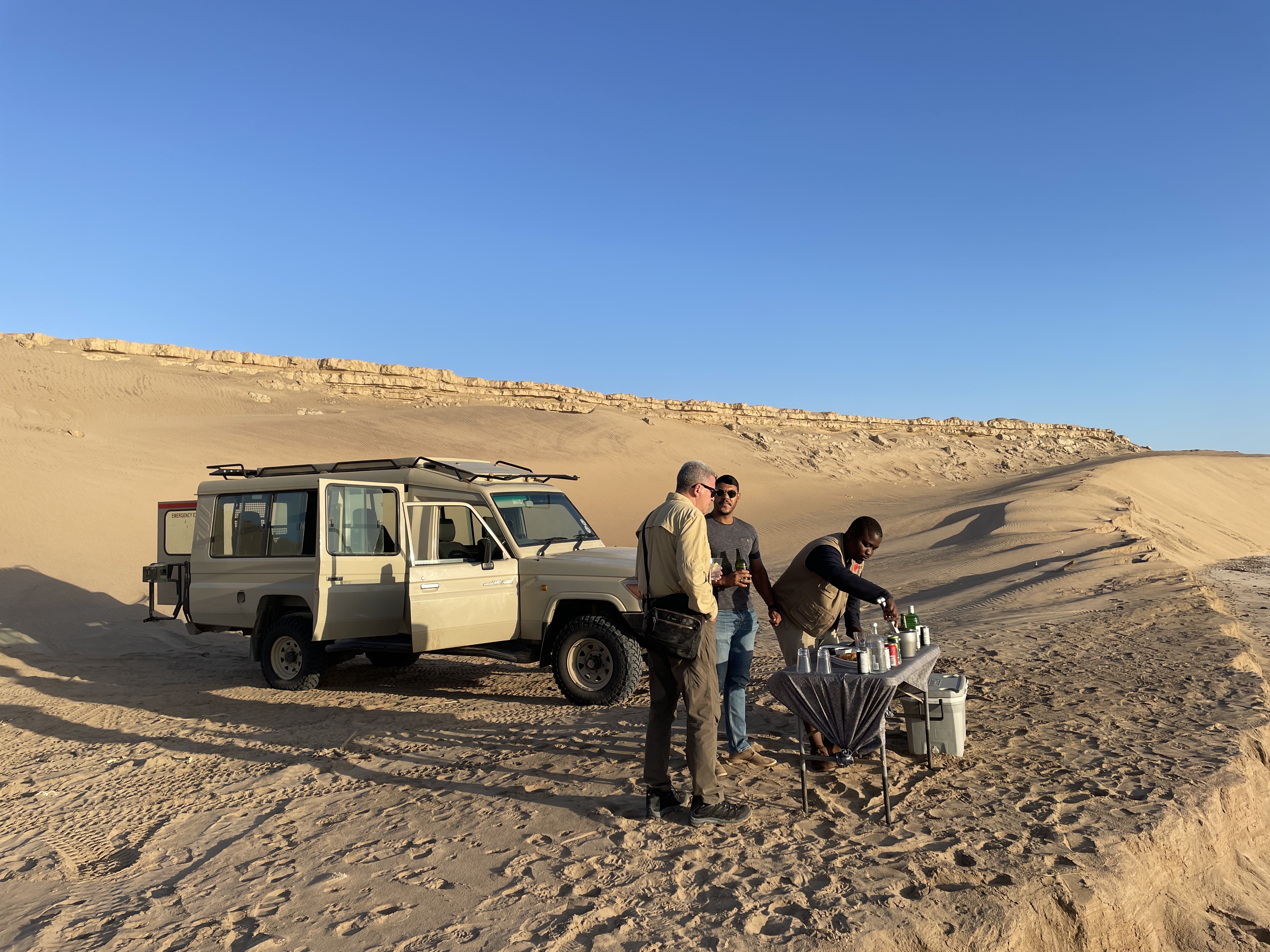
Asante Sana! (Thank you!)

Safari in The Laikipia Reserve, Kenya

Safari in The Laikipia Reserve, Kenya

A Kenya Safari requires much advance planning, but with the help of a travel agent, the process becomes stress free. As a travel specialist, it’s my job to create a seamless experience from take off to safe return home. My recent article on Safari Planning Basics will help you jump start your itinerary and take this from dream trip to reality. After an overnight stay in Nairobi, hop a bush plane to Maasai Mara for excellent game tracking, and then on to Mount Kenya for a little rest and relaxation. Next stop, a stay in The Laikipia Reserve — the perfect addition to your safari experience.

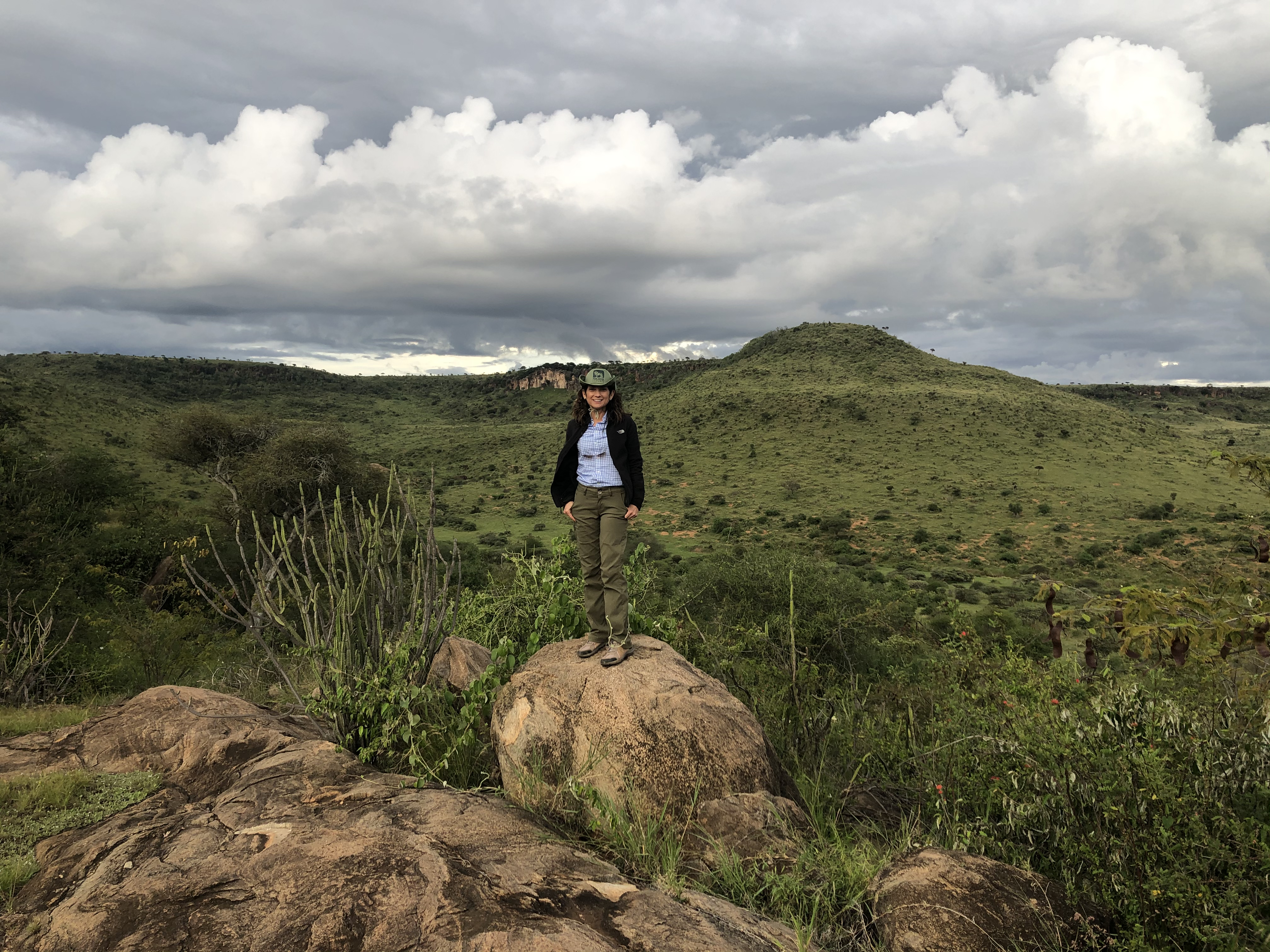
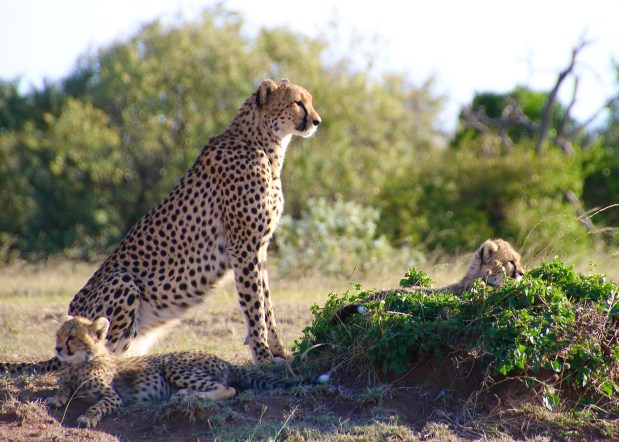
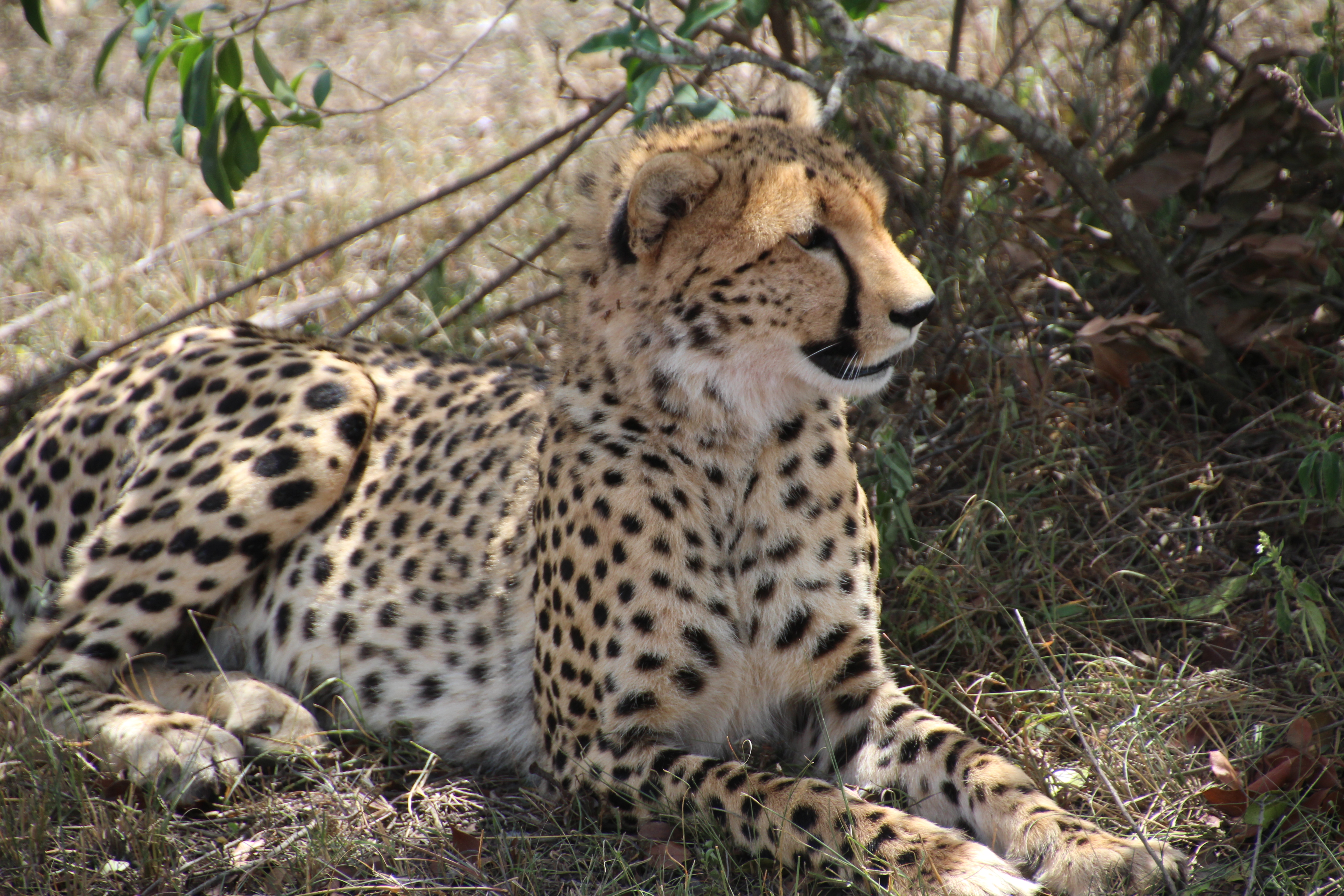
Known for its untamed beauty, The Laikipia Reserve was formed when the ranches of the Colonial era were converted from farming to wildlife. Possessing one of the largest elephant populations in East Africa, it is one of the last strongholds of the endangered black rhino. The plateau has reverted back to its wilderness roots, with a wildlife refuge supporting huge numbers of game including lion, cheetah, leopard, wild dog, impalas, gazelle, and reticulated giraffe.

After arriving by bush plane, we visited the Loisaba Conservation Center, a 56,000-acre wildlife conservancy located within Laikipia. As poachers continue to kill thousands of elephants and giraffes throughout Africa, organizations are banding together to develop strategies to stop the illegal killing of these threatened species. Education is one of these key strategies. The organization aims to become the hub for conservation education in Laikipia for the local community, tourists, and students. The center’s ultimate goal is “to help inform visitors about community-based conservation and how this model, with their support, will help preserve the area’s habitat and the endangered animals that live here.” Through their work, they show how conservation benefits both wildlife and the community.

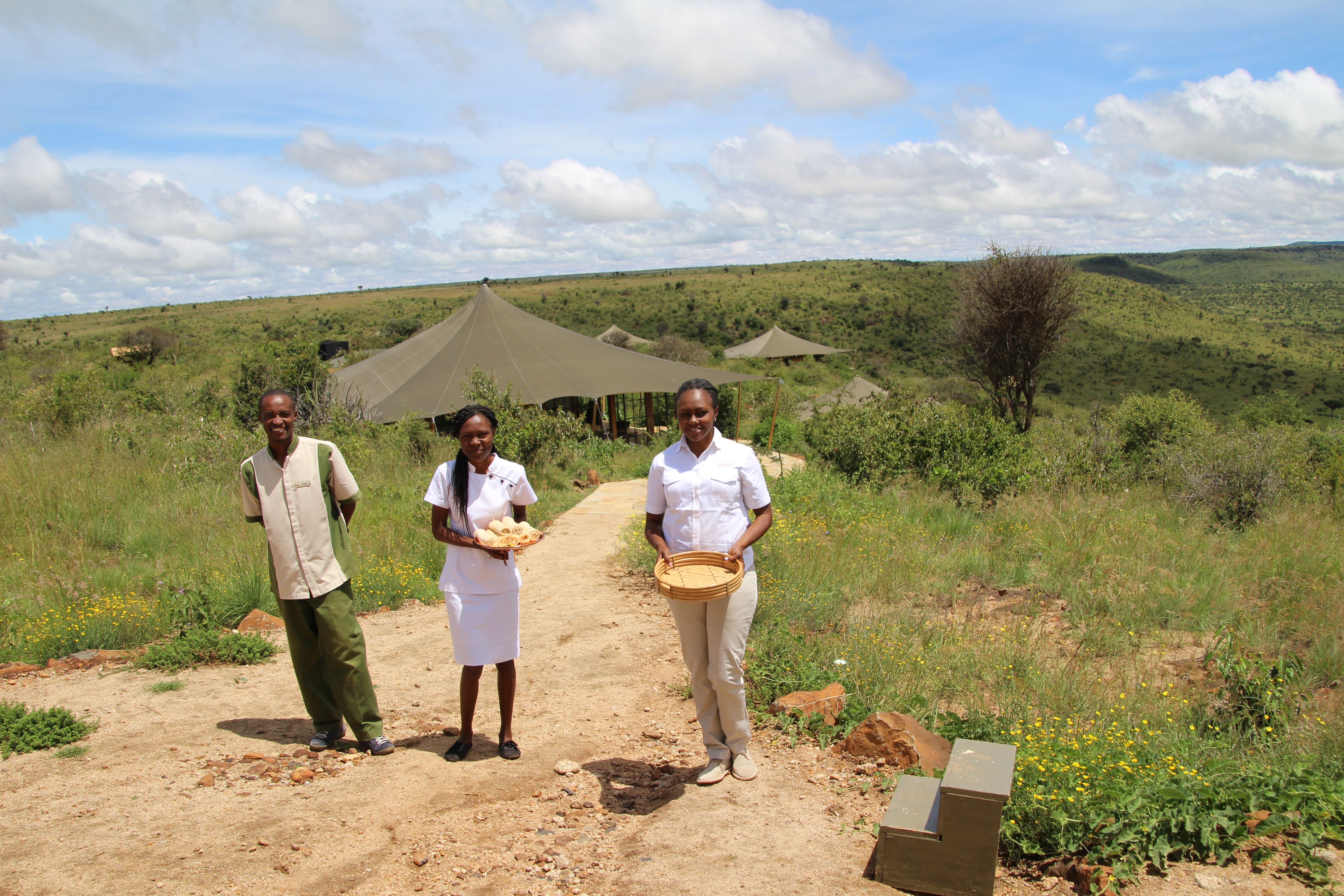
Located within the reserve, Elewana Loisaba Lodo Springs offers the ultra-private lodge experience with eight private, spacious tented rooms each with impressive views over the valley below. With floor to ceiling windows, wide plank wood floors, oversized bathrooms, expansive decks, and minimalist but sophisticated Africana furnishings, they have more in common with boutique accommodations than their canvas namesake. (Click on this video below for a tour of my accommodations.)

Our days were filled with long morning treks and drives across the savannah as we searched out rhino, dik-dik, eland hartebeest, warthog, and Cape buffalo. The resort arranged breakfast served in the bush, and also offers horseback riding, mountain biking, fishing, and nighttime game drives.

For something REALLY unusual, stay a night or two at the Elewana Loisaba Star Beds. Poised on a rocky outcropping, this lodge features individual thatched roof accommodations with four-poster wooden beds that sit on raised wooden platforms. At night, the beds are slowly rolled out to the outdoor deck for guests to enjoy the most memorable sleep under an endless African sky. The Star Beds are rustic in design and are meant to harmonize with the natural rocky landscape.

It’s never TOO early to plan your next adventure. Email me: mollie@herrickstravel.com, for assistance and find out about upgrades, special amenities, and VIP service for all Herricks Travel American Express/Altour customers regardless of credit card membership. Looking for the best of the best Safari experience? Let me help you plan your trip with Micato Safaris, one of the world’s top outfitters, delivering unparalleled service.

Become a SUBSCRIBER and receive all my latest articles right to your inbox: look for the “subscribe to this blog by email” box and then respond to the follow-up email. For more information on my trip planning services, for assistance with Amex “Pay with Points” and Amex Fine Hotels & Resort Hotels, please click HERE.

What to Expect on Safari at Mount Kenya

What to Expect on Safari at Mount Kenya

My previous articles on Kenya traced my Micato Safari adventure which began with a layover in Nairobi followed by a bush plane transfer to Maasai Mara. Next on the itinerary – a bush plane flight northeast to Nanyuki in central Kenya. Known as the gateway to three-million-year-old, Mount Kenya, and the wilderness of Mount Kenya National Park, Nanyuki is also home to the famous Fairmont Mount Kenya Safari Club — Winston Churchill and Ernest Hemingway stayed here.

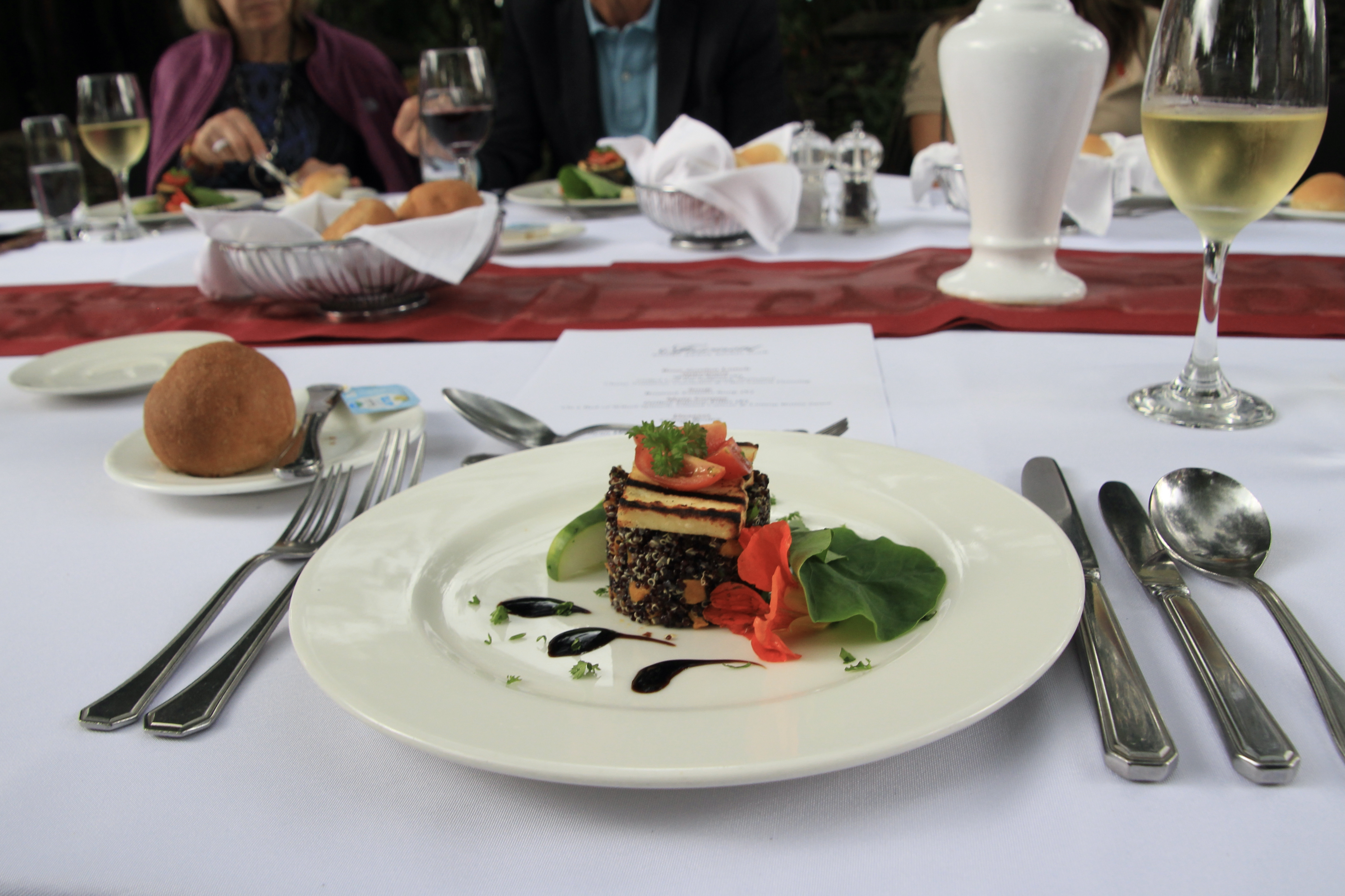
With magnificent views of Mount Kenya, the Fairmont offers 110 luxuriously appointed rooms set in over 100 acres of landscaped gardens. This more traditional, and historical inspired property is a nice compliment to the more rustic/luxury tented camps or boutique lodge experiences found in other parts of the country. The Safari Club, with its central low rise main building, is ringed by individual quaint cottages that offer more privacy. There are a variety of dining options including private al fresco dining experiences; open-kitchen restaurant, Colobus; or cozy wood paneled bar, Zebar. A wide range of services and amenities are offered from rigorous to relaxing – golf, trout fishing, spa, horseback riding, and mountain ascents, which can be combined with visits to local game reserves to continue that Kenya safari experience.

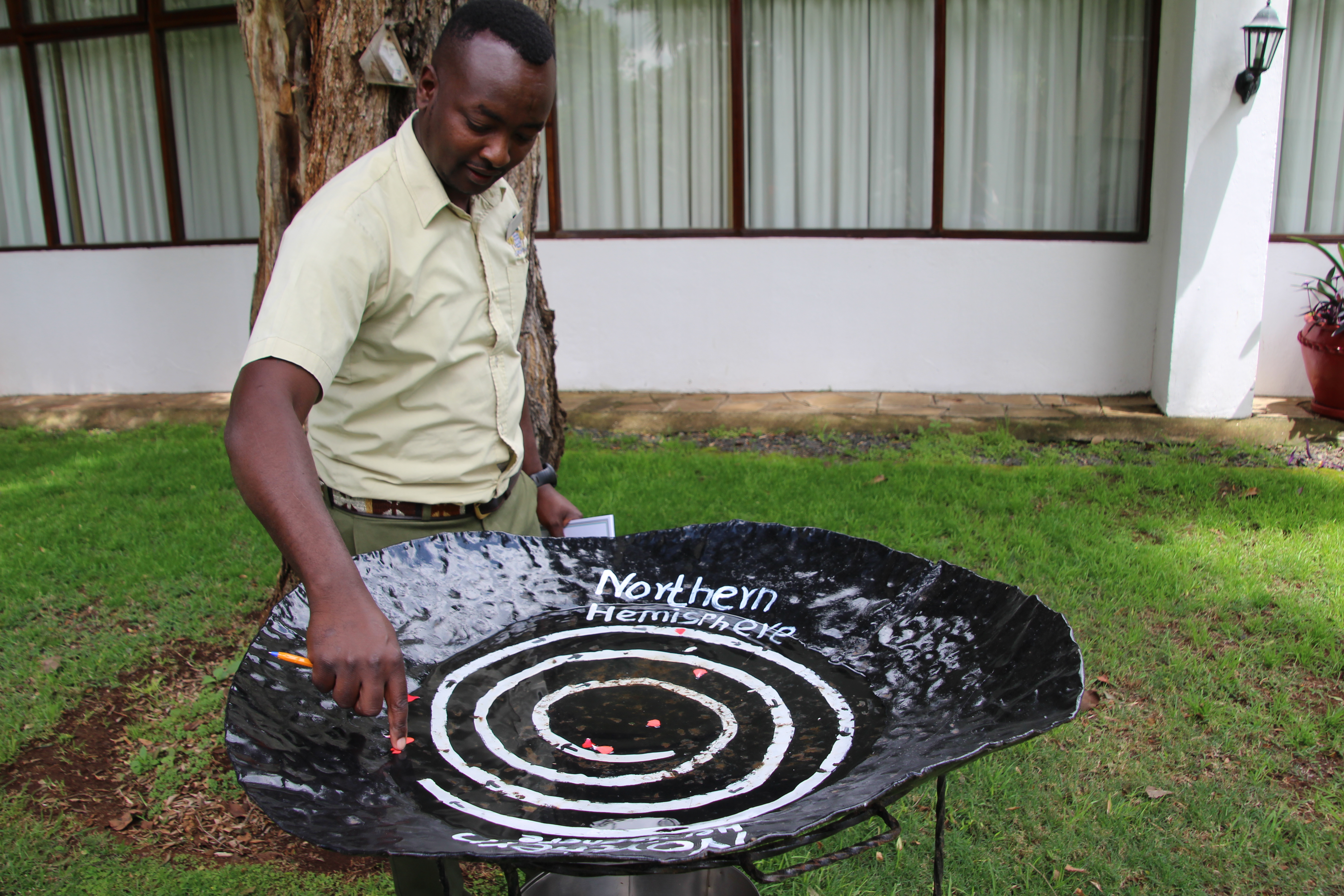
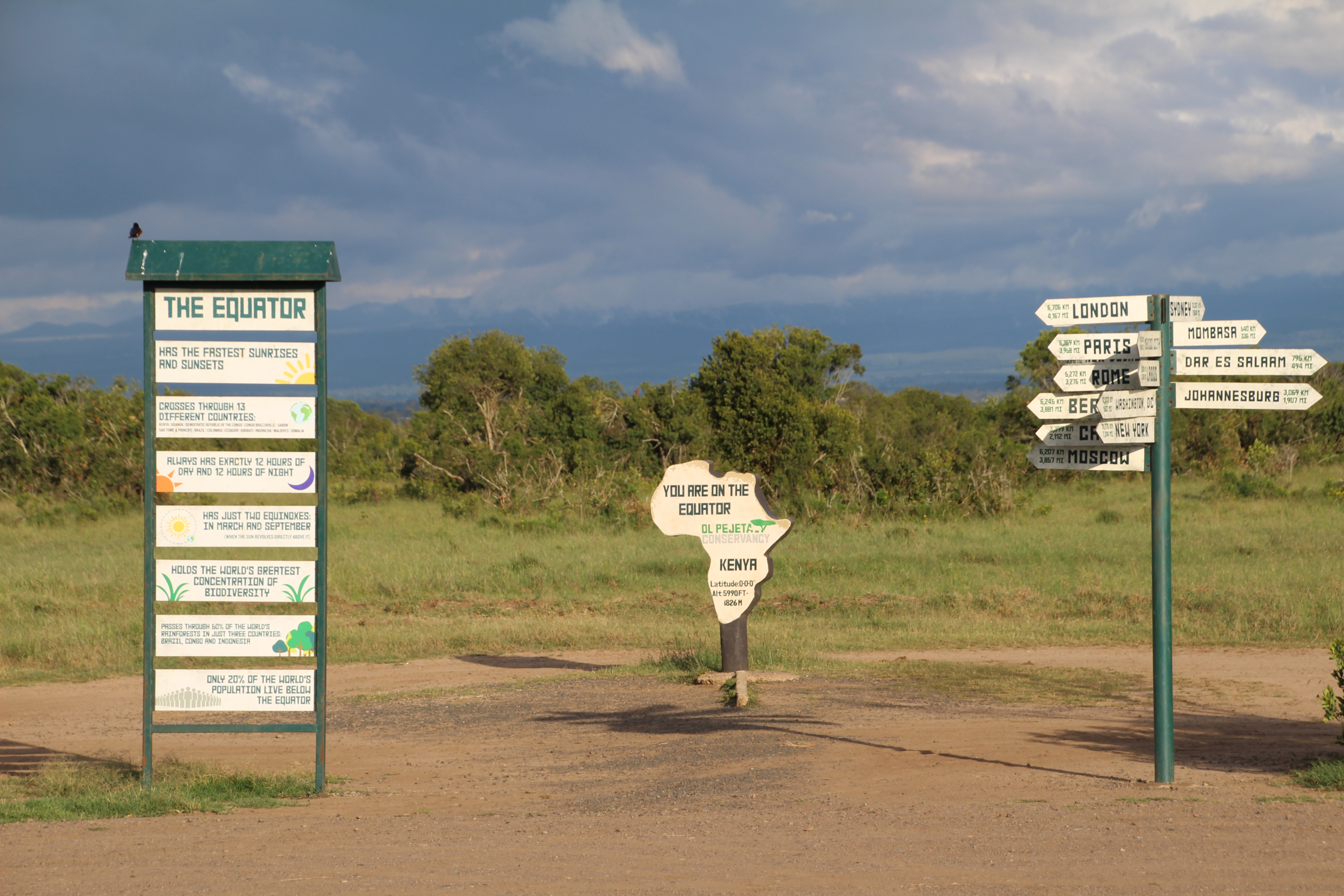
Nestled in the lush foothills of Mount Kenya, Fairmont Mount Kenya Safari Club is uniquely located right on the Equator, stretching into the Northern and Southern Hemispheres. We were welcomed on property with an Equator Ceremony, accompanied by local Kikuyu songs and dance (and an equatorial demonstration that proves water does indeed run down the drain clockwise in the Northern side, and counterclockwise on the Southern side).

Plan to stay a few days at the Fairmont Mount Kenya Safari Club because there are plenty of excursions within a short driving distance to keep you busy. Safaris can be exhausting with early morning game drives and bush flights therefore you might want to also put a visit to the pool or the spa on your itinerary if you need a little down time or pampering.

Here are a few other day trips and experiences to enjoy in the Mount Kenya area:

Animal Orphanage:
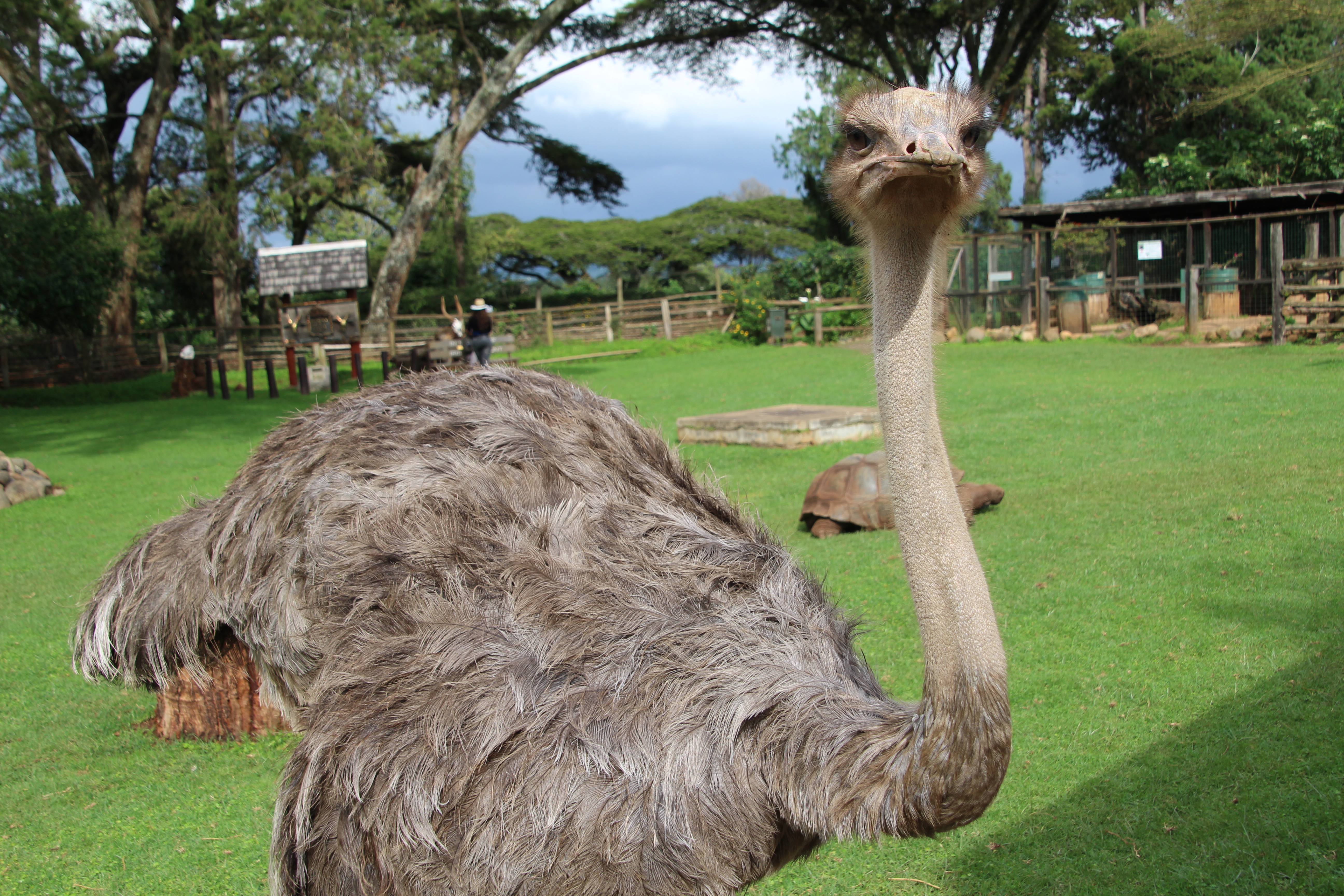
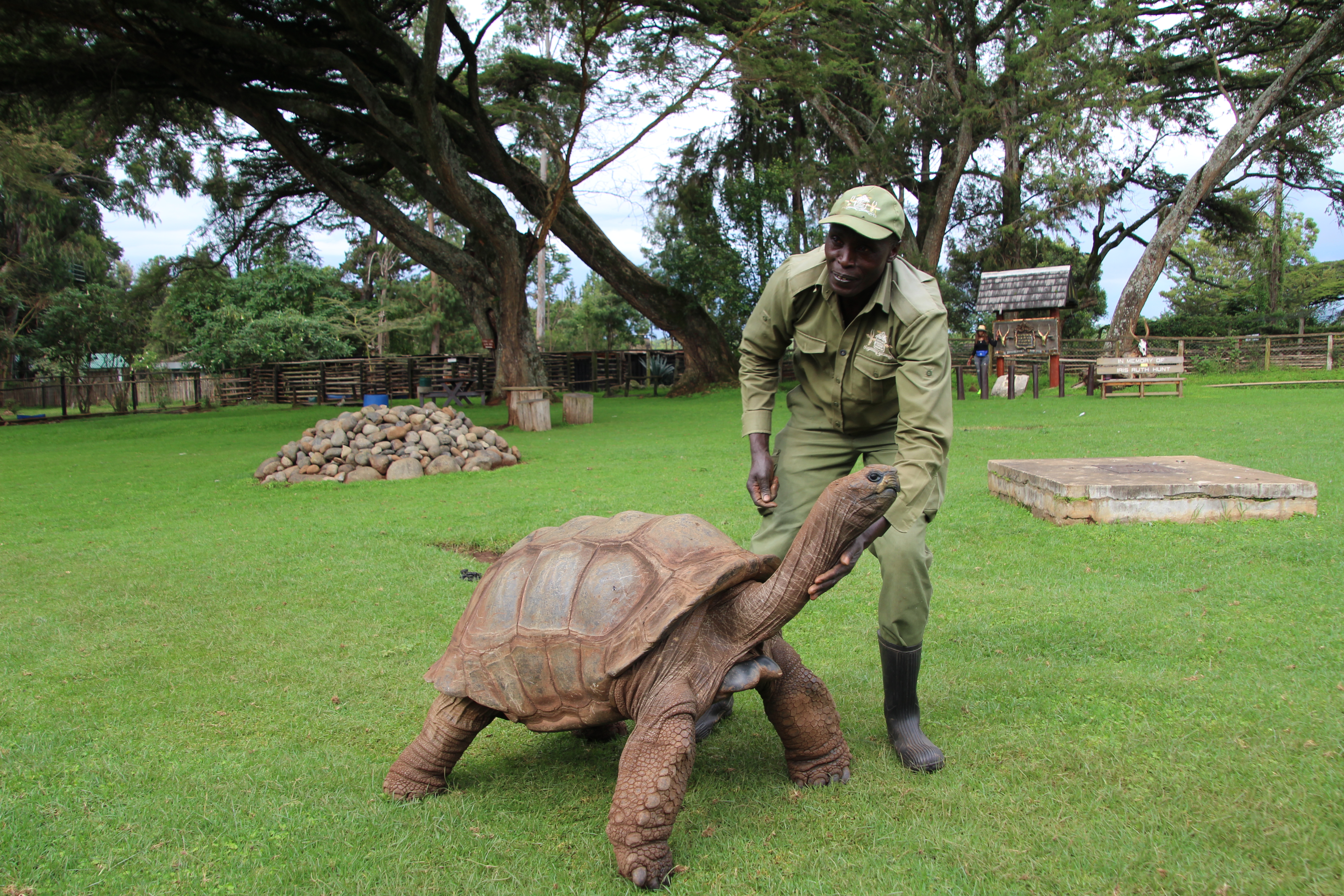
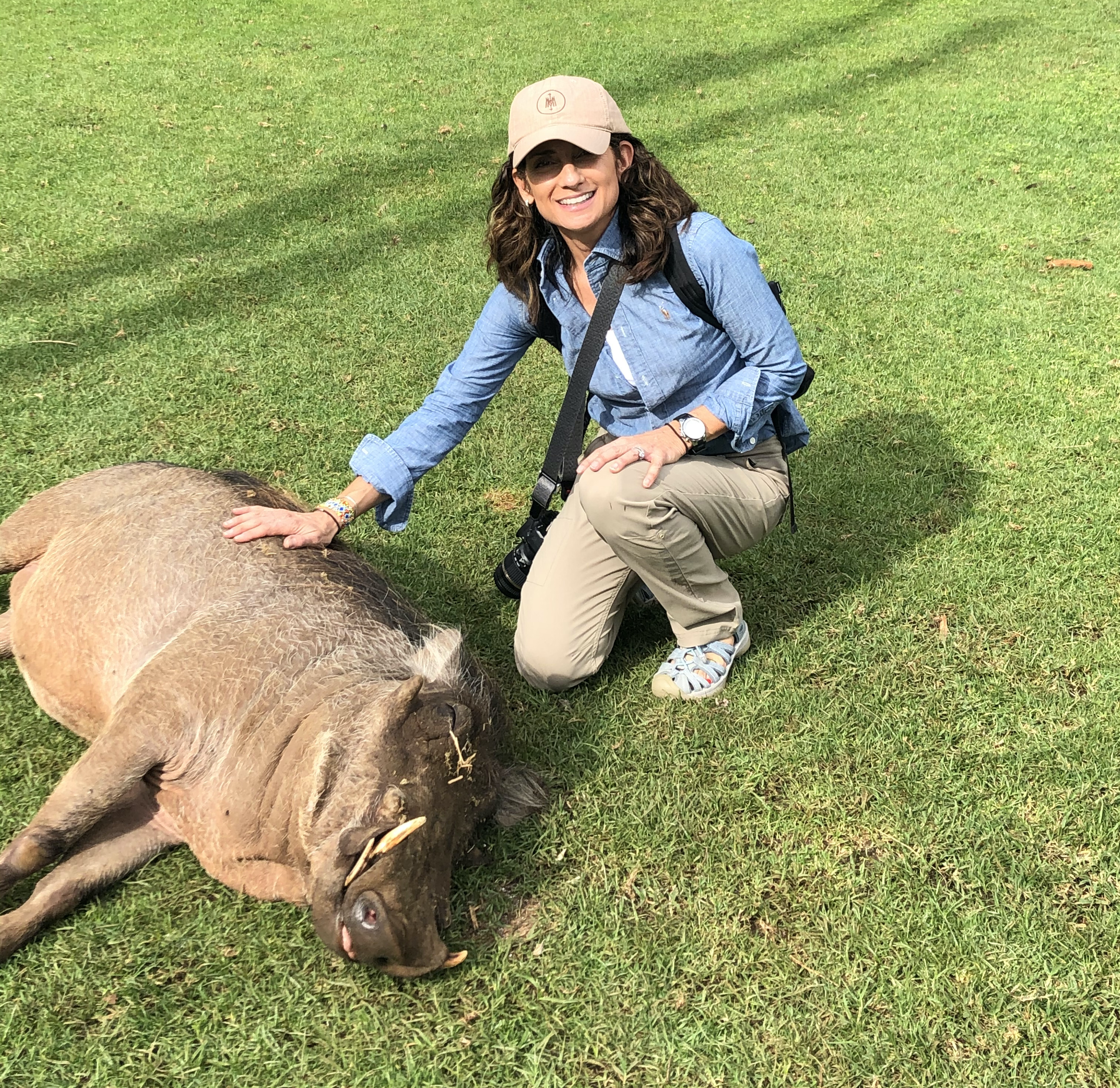
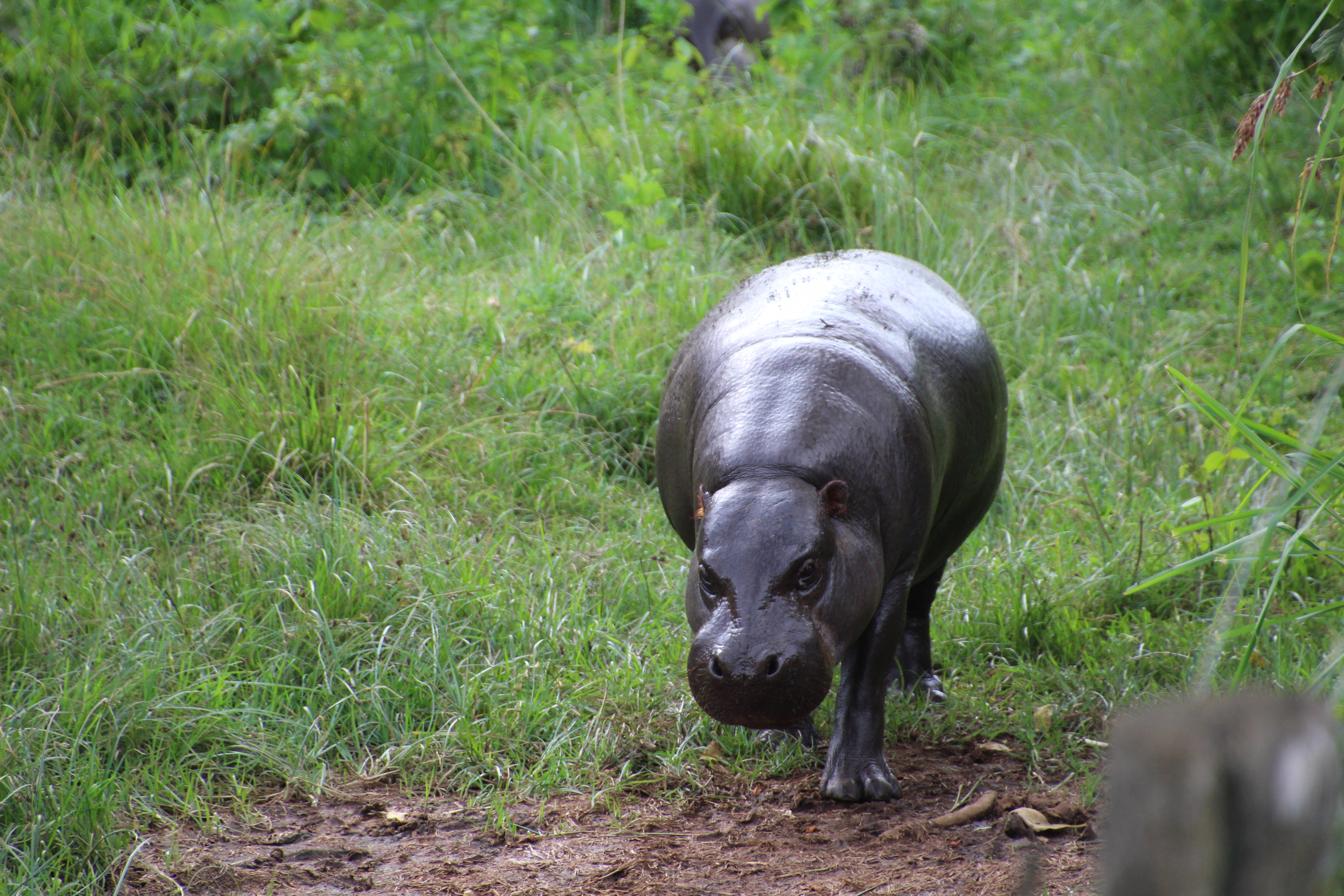
Visit the animal orphanage, just a short walk from the hotel, for an opportunity to learn more about endangered wildlife including the Mountain Bongo, one of the largest forest antelopes known for its striking reddish-brown coat, distinctive white and yellow stripe markings, and spiraling antlers. The orphanage, located within the Mount Kenya Wildlife Conservancy, is also home to injured, neglected, abused, or frightened wild animals that are tended to with the goal of releasing them back into the wild. Rare white zebras are safe from extinction due to the orphanage’s active breeding and release program. Motivating local youth to become future conservationists is another goal of the organization, hosting over 10,000 students annually giving them one to one contact with wildlife. A stroll through the orphanage will put you up close and personal with a variety of species roaming free including friendly warthogs, tortoises, and llamas.

Ol Pejeta Conservancy:
A safari drive through this 90,000-acre ranch will give you the chance to gaze upon the largest black rhino sanctuary in East Africa, and two of the world’s last remaining northern white rhino. The conservancy’s goal is to ensure the protection of existing rhino, elephant, and other wildlife that call this landscape home. And, it is the only place in Kenya to see chimpanzees. The Ol Pejeta Conservancy also supports the people living around its borders to ensure that wildlife conservation translates to better education, healthcare, and infrastructure for the next generation of wildlife guardians.

Sweetwaters Chimpanzee Sanctuary:
This sanctuary was established as an agreement between the Ol Pejeta Conservancy, the Kenya Wildlife Service, and the Jane Goodall Institute to provide lifelong refuge to orphaned and abused chimpanzees from Western and Central Africa. Many were confiscated from cramped and unnatural living conditions and arrive with injuries sustained from abuse at the hands of humans. Some arrive with broken bones or bullet wounds and others are psychologically traumatized after witnessing the slaughter of their family members. At Sweetwaters, they are nursed back to health and coached to relearn the many skills necessary to survive in the wild like hunting, eating leaves off a tree, or building a sleeping nest. Some must learn to shed human behaviors such as walking upright. During your visit you will have the chance to watch the chimps as they explore, climb, socialize, and learn to be chimpanzees all over again.

I can’t forget to mention these adorable “domesticated” animals which call the Fairmont Mount Kenya Safari Club their home. Tusker and Grammy, Canine Ambassadors, who come from a local guide dog association, don’t actually live at the hotel day and night. They are cared for by a staff member who brings them home in the evening and handles all their vet care. These precious pups take their role of welcoming guests very seriously and are available for a leisurely walk around the property.

It’s never TOO early to plan your African Safari Adventure. Email me: mollie@herrickstravel.com, for assistance planning a Kenya Safari itinerary and find out about upgrades, special amenities, and VIP service for all Herricks Travel customers.

Become a SUBSCRIBER and receive all my latest articles right to your inbox: look for the “subscribe to this blog by email” box and then respond to the follow-up email. For more information on my trip planning services, for assistance with Amex “Pay with Points” and Amex Fine Hotels & Resort Hotels, please click HERE

What to Expect on Safari in Maasai Mara, Kenya

What to Expect on Safari in Maasai Mara, Kenya

Rolling grasslands, graceful acacia trees, sweeping vistas teeming with wildlife, drifting clouds, and sun filled skies. Welcome to Kenya. Home to the some of the richest landscapes and animal life.

Kenya’s most treasured natural resource is the Serengeti Maasai Mara ecosystem – its two names reflect the two countries that share this landscape: Tanzania and Kenya. In the area’s Kenyan north, the landscape varies with winding rivers and greener tint, and is less savannah-like than in the Tanzanian south. The Big Five (lion, leopard, Cape buffalo, rhino, and elephant) inhabit this region along with 500 bird species and a few dozen other mammal species including a half million gazelles, 1.3 million wildebeest, and 200,000 zebras whose famous migration crosses the border between the two countries year after year.

No matter what month you travel in, there is plenty of wildlife to experience in Kenya. Bucket list trips require advance planning, so starting several months out will enable you to select the accommodations and itinerary that matches your specific requirements. Need a general introduction to kick start your safari planning? Check out my recent article, Safari Planning Basics. Most Kenya safari itineraries include bush plane flights between several of the country’s regions including Maasai Mara, Mount Kenya, and the Laikipia plateau. Kenya boasts a variety of accommodations ranging from standard hotel-style to the most lux, boutique-style tented experiences.

My recent trip began with a two-night stay in Nairobi. (Click here, to view my article on Planning a Layover in Nairobi). After our city experience, we shuttled to the local airport and boarded a bush plane for an hour flight to Maasai Mara. Upon landing, we were warmly greeted by Maasai villagers with song, dance, and refreshments before climbing into our safari vehicle to head to the lodge. (The Maasai are a semi-nomadic, indigenous tribe whose ancestral territory stretches across Kenya and northern Tanzania). The safari experience started immediately — we stopped along the way to view the wildlife and enjoy a quick walkabout.

Our home for three nights was the Fairmont Mara Safari Club, a beautiful lodge surrounded on three sides by the Mara River. The main lodge area features indoor and outdoor spaces to lounge or dine including an expansive curved wood deck that winds along the riverbank and offers excellent views to the river below.

The lodge’s bedroom tents, generously spaced throughout the lush property, are set up high along the riverbank and offer a bird’s eye view of the hippo families as they lounge along the riverbank, their ears and eyes just visible above the waterline. Each tent is outfitted with a four-poster pillow top bed, private en-suite bathroom, and outdoor verandah. The décor and furnishings reflect the local community incorporating the patterns and rich reds of the Maasai textiles. Although the sides and ceiling of the tented structure are made from canvas, once you pass through the zippered entrance, the lodging more closely resembles the personality and warmth of a finely appointed boutique-hotel suite.

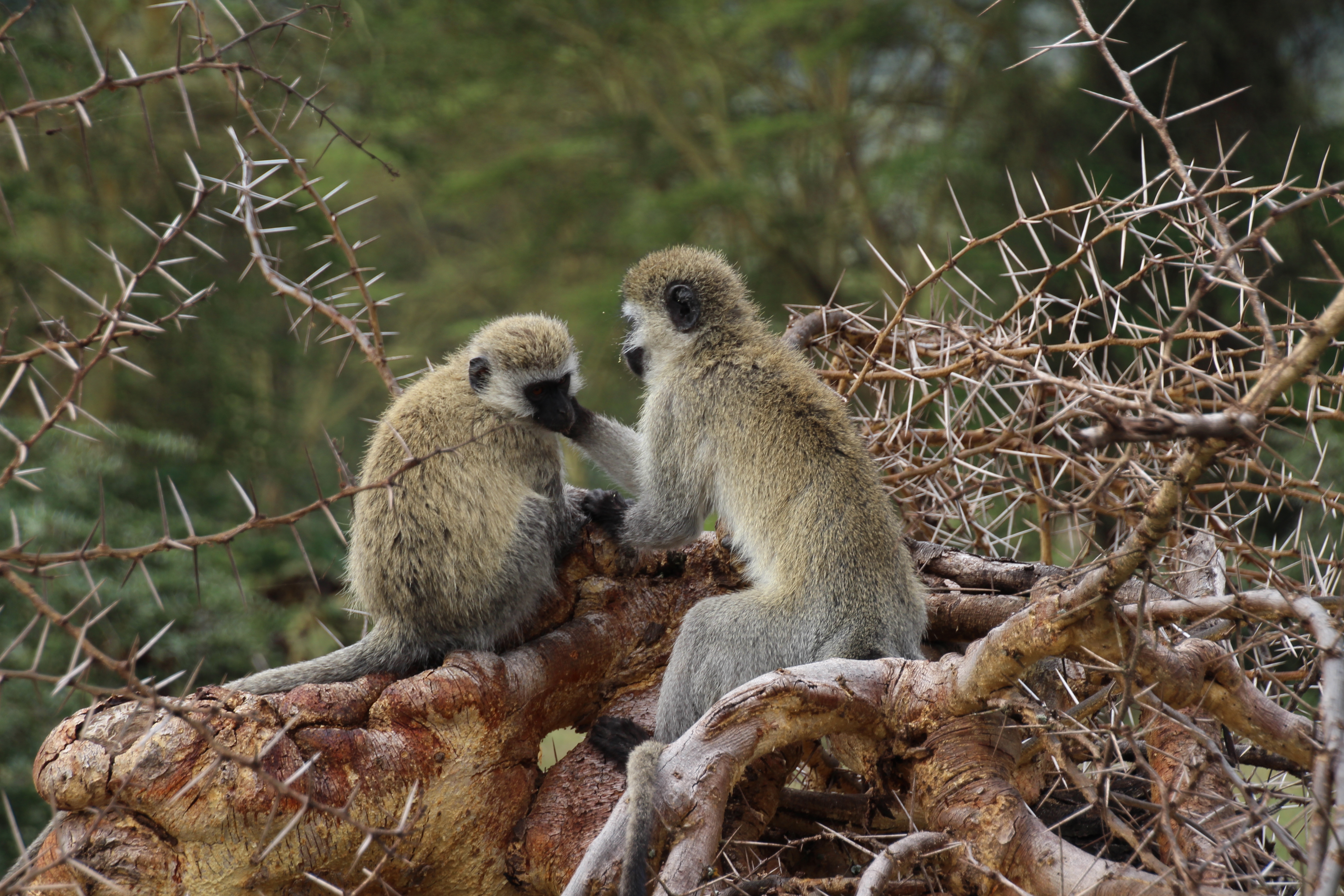
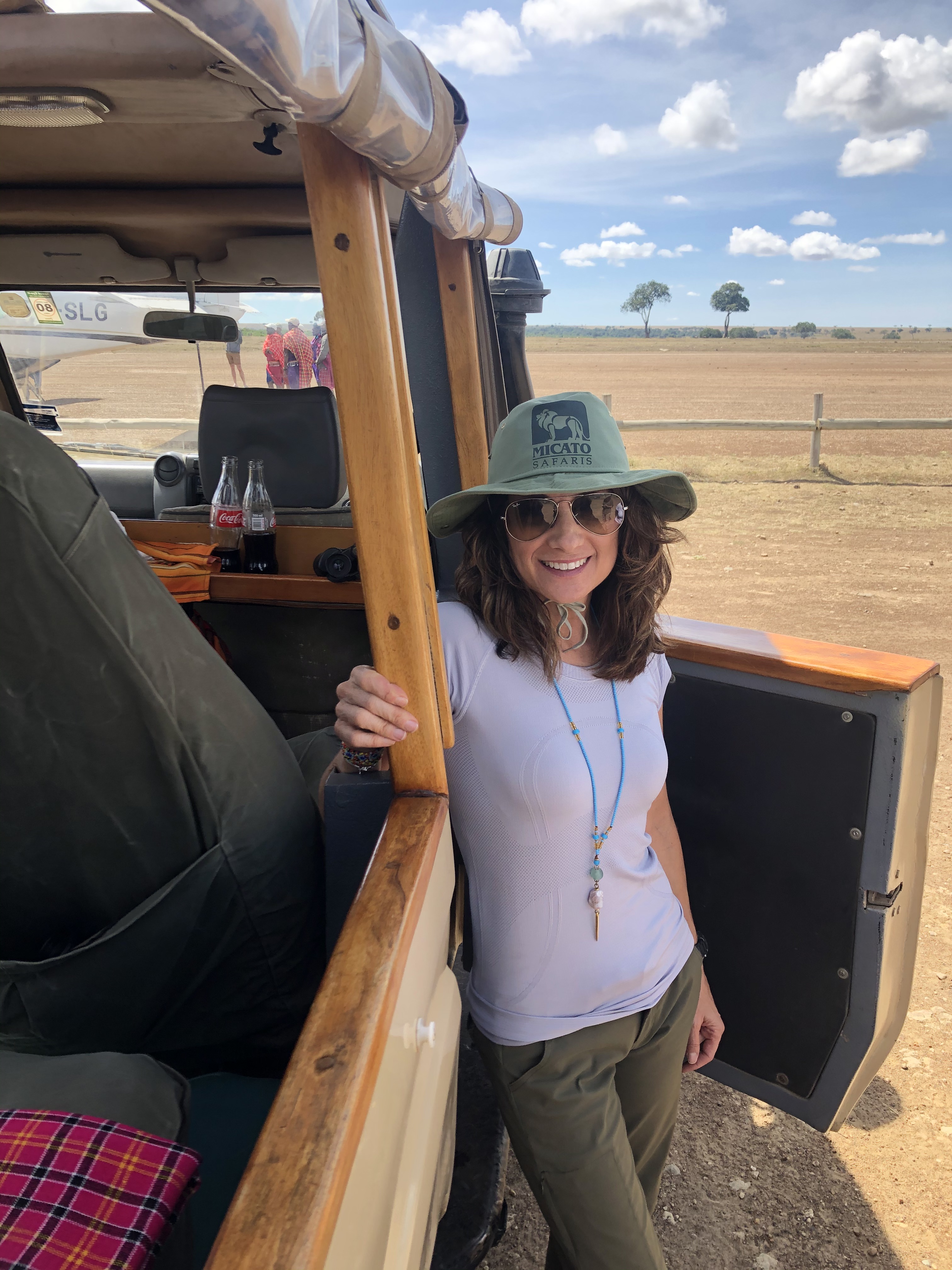
Days start early on safari with continental breakfast brought to your private verandah (look for my video of a tour of the accommodations at the end of this article). Most mornings, I drank my hot coffee under the watchful eyes of visiting silvery-gray vervet monkeys eyeing my plate of biscuits. After a quick walk down the paths to the lodge entrance, we climbed into our safari vehicle stowing our day packs filled with cameras, batteries, phone chargers, and sunglasses. The safari vehicle with its pop-up top and zip-down windows, was outfitted with binoculars, charging stations, wool blankets, and a cooler filled with beverages. Not sure what to bring on your safari? Check out my article, Safari Packing Tips.

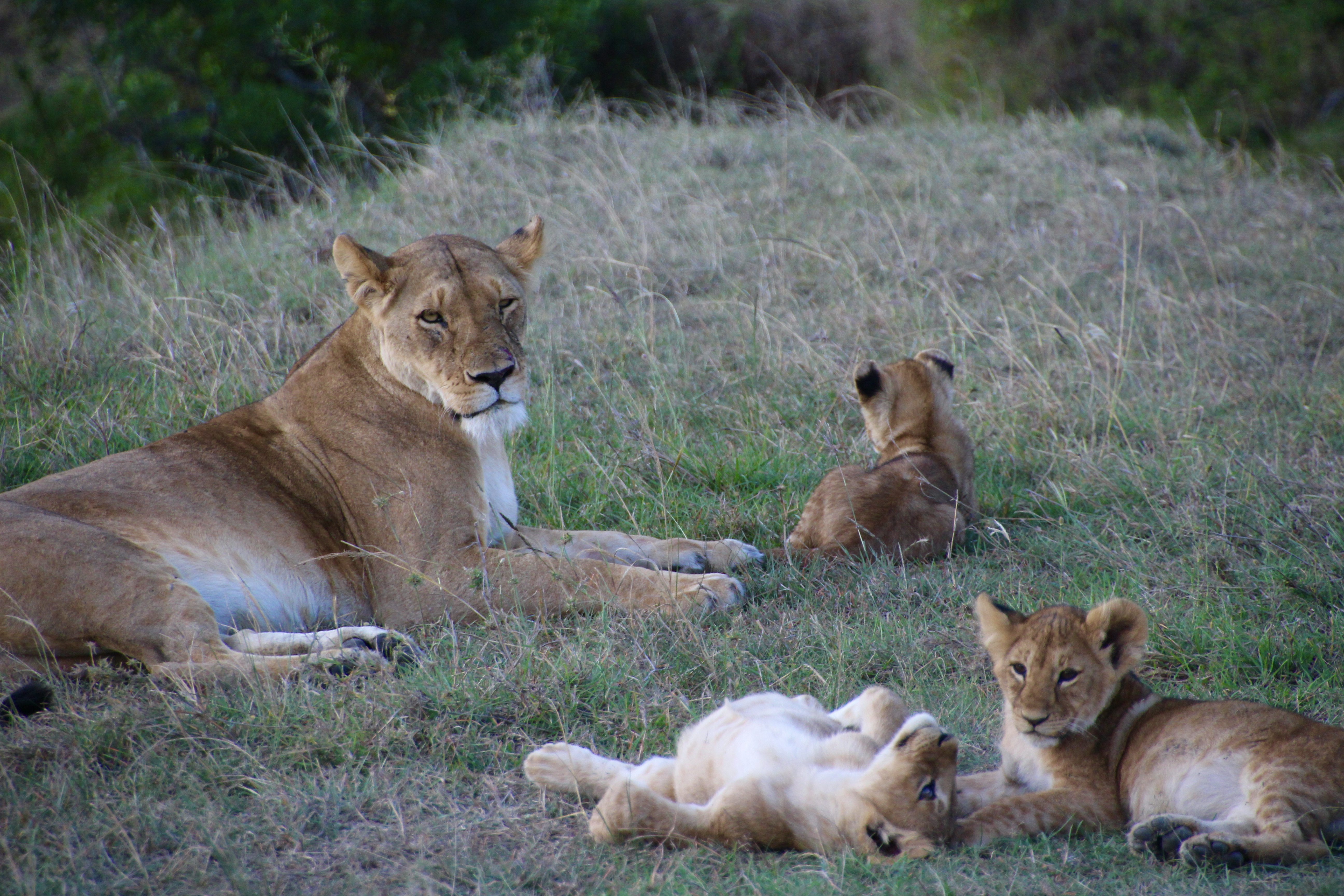
Our mornings were spent on long meandering drives across the savannah led by our experienced guide and ambassador. Kenya guides are experts in botany, ornithology, geology, wildlife tracking, and identification. Our guide would radio other guides to share logistics on interesting sightings: a mama couger playing with her cubs, a lion relaxing in the shade of an acacia tree with her young brood, vultures circling a recent kill, or wildebeest and zebra drinking together from a watering hole.

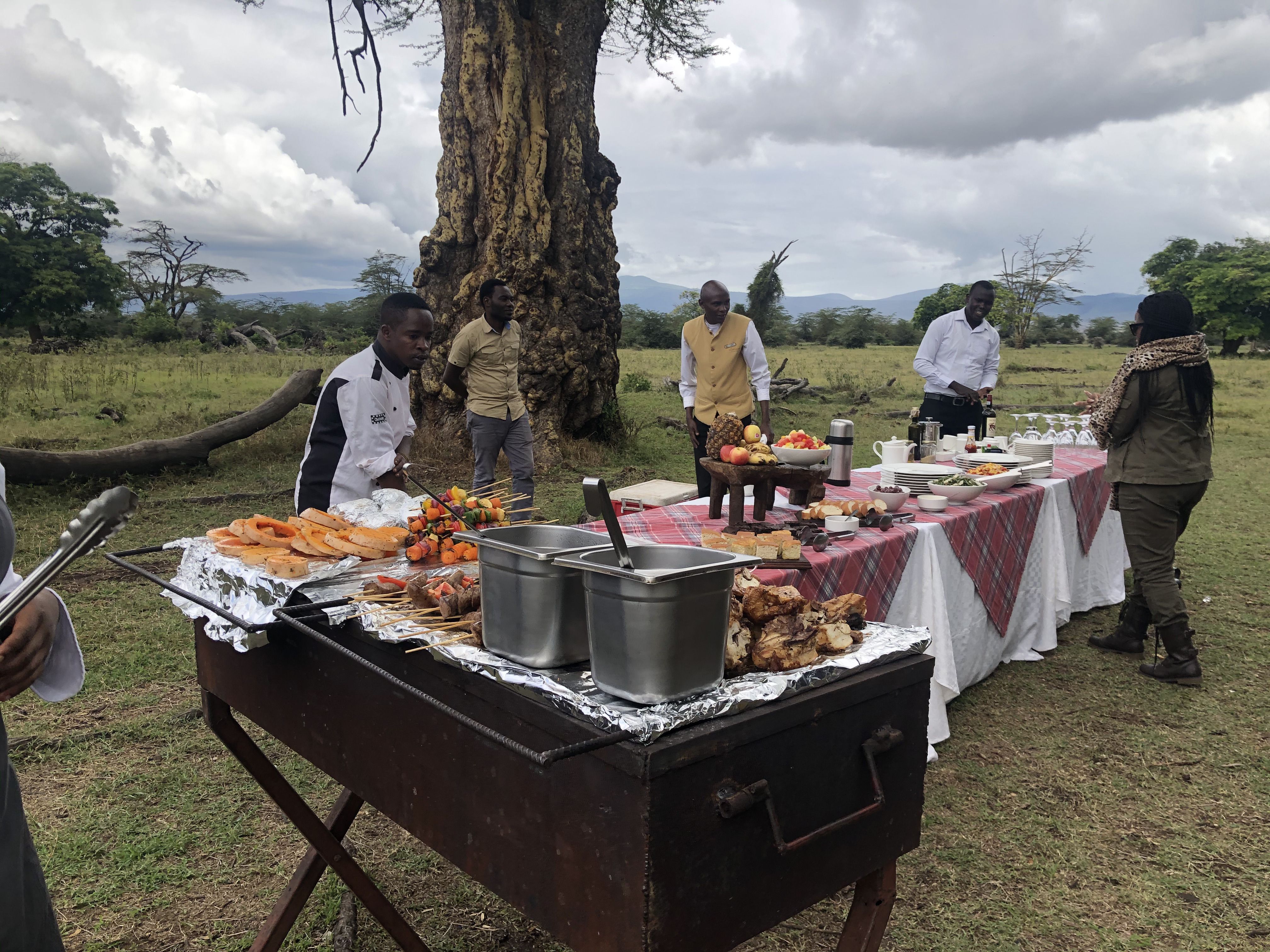
Mid-morning, a full breakfast was served on a grassy plain, under an acacia tree complete with table linens, hot coffee, and a mix of culinary delights. (Plus, a port-o-potty with a view!) With our bellies full, we continued our trek to farther savannahs and then returned to the lodge midday, for a leisurely al fresco lunch.

In the late afternoon, we set out for our next game drive. Every day on safari is unique – there is always something new to see and experience. One day, our guide pulled over to the side of the path and instructed us to quietly tip toe through the brush. Not knowing what to expect, we were mesmerized to come upon a closely guarded rhino kept company by an around-the-clock armed guard to protect against poachers. So sad that these beautiful creatures are so endangered, but happy to know there are local organizations protecting them.

One day, we visited a Maasai village and met the residents and the village elder who gave us a personal tour of his mud home and showed us how to create fire with just sticks. We wandered through their outdoor marketplace and purchased locally made crafts including wooden sculptures, intricate beaded bowls, and richly colored woven blankets. (Look for my video of the Maasai village at the end of this article).

Afternoon game drives slowly stretch out into the early evening and end with partaking in MY most favorite end of safari ritual, “Sundowners,” which is an African happy hour. What’s required? Just sitting by the glowing campfire, cocktail in hand, watching the sun slip below the horizon, and dreaming of the next adventure.

Video of Maasai Village visit
Video of Fairmont Mara Safari Club Accommodations

Ready to plan your Kenya safari? It’s never TOO early to plan. Email me: mollie@herrickstravel.com, and find out about upgrades, special amenities, and VIP service for all Herricks Travel customers. I am happy to help you book your next safari adventure.

Become a SUBSCRIBER and receive all my latest articles right to your inbox: look for the “subscribe to this blog by email” box and then respond to the follow-up email. For more information on my trip planning services, please click HERE

Planning a Layover in Nairobi

Planning a Layover in Nairobi

My recent article highlighted how to jump start your Kenya Safari planning. As I mentioned, a safari requires advance planning (six months to a year is not unusual), therefore it is wise to start the research while you have some down time. As a Travel Agent, I am here to ensure that your dream trip is seamless from initial inquiry to safe return home and I can help you craft the perfect trip to suit your interests and budget.

International flights to Kenya are routed through centrally located Jomo Kenyatta Airport (JBO). Since most flights arrive in the late afternoon or evening, you will most likely need to stay overnight in Nairobi prior to boarding a bush plane at local airport Wilson. If your schedule allows, I highly recommend staying at least a night or two. Traffic can be daunting in downtown Nairobi, so an overnight stay will allow ample time between experiences and airport transfers. Plus, this will give you a chance to adjust to the new time zone and give you an opportunity to learn a bit about the country, the people, the culture and wildlife prior to embarking on safari. Here are just a few suggestions not to be missed:

Karen Blixen Museum:
“I had a farm in Africa at the foot of the Ngong Hills…” is the famous first line of the novel, Out of Africa, penned by renowned Danish author Karen Blixen. The farm, owned by Karen (pen name Isak Dinesen) and husband Baron Bror von Blixen Fincke, gained international fame after the release of the 1985 epic award-winning drama based on this autobiography. Starring Meryl Streep and Robert Redford, it’s a must-see prior to your visit to Kenya.

Single handedly, Karen (and Streep) inspired a generation of safari goers (and safari chic!). Visit the farmhouse and Museum and step back in time to 1914 when Karen moved to Africa to marry her half cousin and carry out dairy farming in the then British Colony of Kenya. Her husband, however, changed his mind and wanted to farm coffee, which did not go well. After her divorce, Karen was left to run the financially troubled farm on her own, a daunting task for a woman of that generation. She fell in love with an Englishman, Denis Finch Hatton (Redford) and the rest I will not comment on, lest I spoil the movie.

Giraffe Center Wildlife Conservation Park:
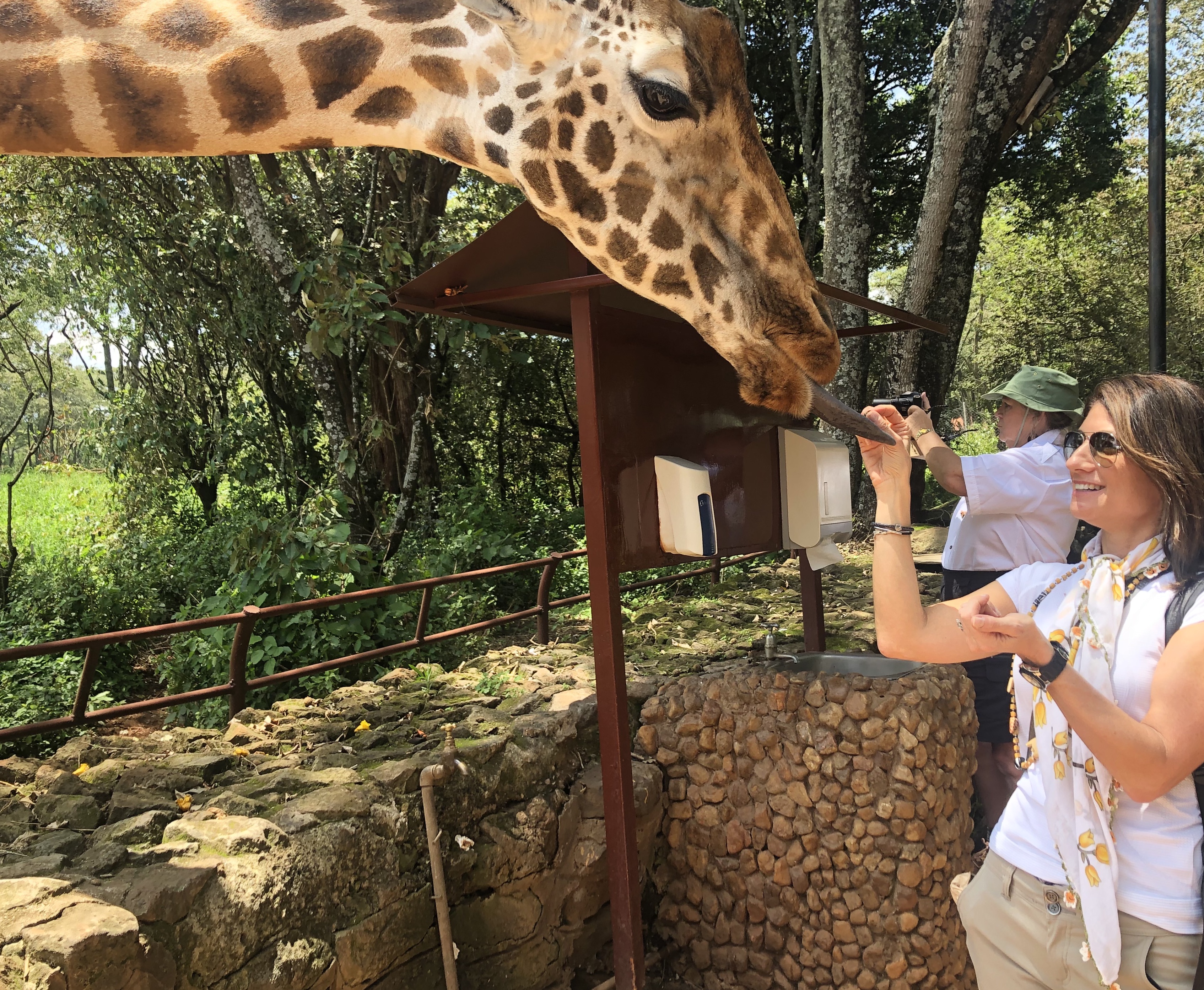
On safari, you will of course see hundreds of giraffes in the wild, but at this Nairobi center, created by the African Fund for Endangered Wildlife, you will get up close and personal with the beautiful Rothschild giraffe and even have the opportunity to hand-feed this stately subspecies of the giraffe found only in the grasslands of East Africa. At the time the center was established in 1979, the animals had lost their habitat with only 130 of them remaining. This 60-acre sanctuary started with just two giraffes and now there are over 300 safe and breeding well in various Kenyan National Parks.

Sheldrick Wildlife Trust:
Founded in 1977, this non-profit focuses on anti-poaching and safeguarding the natural environment, enhancing community awareness, addressing animal welfare issues, providing veterinary assistance to animals in need, and rescuing and hand rearing elephant and rhino orphans. The Trust’s main base, the elephant orphanage, often referred to as the Nairobi Nursery, is in Nairobi National Park. As of now, the visitation to the center is closed, but hopefully will resume in the near future so you can witness the care and feeding of these lovely animals up close. In the meantime, you can support the organization by personally “adopting” an orphaned elephant.

Photo credit: Sheldrick Wildlife Trust

Travel with a Purpose:
Including “Purposeful Travel” in any vacation is something easy to do. It’s about engaging in educational and mind-opening experiences that benefit both the traveler and the location, often shining a light on local communities, their needs and their accomplishments. My recent article Travel with a Purpose highlighted my visit to the Harambee Community Center, the non-profit partnership between Micato Safaris and AmericaShare, located in Mukuru, East Nairobi’s densely populated slum. During the pandemic, their school was hit hard, and students risked several months without guided learning which would significantly set back their future performance.  As an update to my article, I am pleased to report that through their Student Sponsorship Program, students were successfully connected to the online world: smartphones were distributed with access to educational apps, resources, and streaming lessons hosted by local teachers in the community. To find out more or donate, please visit AmericaShare.

Photo credit: Micato Safaris & AmericaShare

Travel with a Purpose, Part Two:
Another stop I made during my recent trip to Kenya was to learn about Huru International, which manufactures environmentally friendly, reusable sanitary pads that have been distributed to more than 175,000 girls in Kenya, Tanzania, and Uganda. Founded in 2008, this organization addresses an important issue: East African girls cannot afford sanitary pads and very often avoid school during their period resulting in missing as much as an entire month of school yearly. Girls who miss school fall behind, drop out, or even quit which leads to the endless cycle of poverty and gender inequality. Huru Kits are a simple, sustainable, and practical way to tackle this problem. The kits include a colorful drawstring backpack, eight reusable pads, three pairs of undergarments, detergent soap, and educational materials on HIV prevention and reproductive health. The items are replaced on a timely basis.

All Huru supplies are produced in their sprawling factory by women and men from underserved communities who have learned the art of industrial sewing and tailoring, along with lessons on business, finance, and entrepreneurship.  Now, in the age of Covid-19, the production facility in Nairobi is running full steam, producing much needed multilayered cloth face masks that are donated to the residents of Mukuru.

Huru also designs and manufactures lovely reusable, colorful fabric tote bags and lunch bags which we had the opportunity to purchase and bring home — a heartfelt memory of this amazing organization. For more information or to donate, please visit Huru International.

Ready to plan your next adventure? It’s never TOO early to plan. Would you like to maximize the redemption of your American Express Points? Email me: mollie@herrickstravel.com, and find out about upgrades, special amenities, and VIP service for all Herricks Travel American Express/Altour customers regardless of credit card membership

Become a SUBSCRIBER and receive all my latest articles right to your inbox: look for the “subscribe to this blog by email” box and then respond to the follow-up email. For more information on my trip planning services, please click HERE

Kenya Safari Planning Basics

Kenya Safari Planning Basics

Now that we have turned the calendar page and put 2020 behind us, it’s time to think positive, look forward and plan for future travel. It’s the perfect time to put some serious thought into a bucket list trip: an African Safari. A safari is a magical and unique experience that envelopes you in nature, culture, and history. Safaris enrich the mind, stretch the imagination, calm the soul, and encourage self-reflection. Out of the many countries our two sons have visited with us, our Micato Safari experience definitely stand out as most memorable. This is an itinerary that requires advance planning to ensure availability in the more intimate and authentic tented camps and lodges, arrange for visas, as well as inquire about any necessary inoculations. As a travel agent, I can help ensure the entire process runs smoothly from initial inquiry, to your safe return home.

LOCATION
A relatively small country in East Africa, Kenya’s capital and central transportation hub is Nairobi. Travelers fly into the international airport Jomo Kenyatta, while connecting flights within Kenya or to neighboring countries are booked from Wilson, the domestic airport just next door. After a short stay in Nairobi (most international flights arrive in the evening), you will reach the other areas of the country primarily by bush plane. There’s plenty to explore within Kenya, but if you have more time, a Kenya safari can be booked in conjunction with a visit to Tanzania (to the south), Uganda (to the west) or Rwanda (to the south west). These countries, plus 15 others, comprise what is known as East Africa.

LANDSCAPE
When compared with popular safari destination South Africa (located in the southernmost point on the African continent,) Kenya has a more temperate climate. To learn more, check out my previous articles on South Africa Safaris: here. The further north in Kenya you travel, the drier and hillier the landscape becomes as the area doesn’t benefit as much from the rains received in the south-west of Kenya. Because it shares its longest border with Tanzania, Southern Kenya is the best place to see glacier-capped Mount Kilimanjaro, the highest peak in Africa and the tallest free-standing mountain in the world.

GAME VIEWING
Fantastic year-round game viewing makes Kenya a TOP safari location. Although it is a “Big 5” destination in the sense that lion, leopard, buffalo, elephant and rhino are found here, it’s difficult to see them all in the same place. Rhinos are the rarest and most difficult to find and unfortunately, due to poachers, have become a critically endangered species. Safari itineraries will often include overnight stays in Maasai Mara, Amboseli, Samburu, Mt. Kenya, or the Laikipia Reserve in order to increase the variety of game viewing.

Kenya is the perfect place for first-time safari goers – because the land is so flat and open, it’s easy to enjoy 360-degree views and spot game throughout the year. Roads are well-maintained and English is widely spoken throughout the country. Long-standing conservation projects in Kenya also means that animals are generally plentiful and in good condition. Special relationships between tribal landowners, the government, conservationists, and safari operators mean that the needs of humans, nature, and agriculture are carefully balanced.

MAASAI MARA
Kenya’s most well known wildlife gem is the Great Migration: the 1,900-mile journey of over two million wildebeest (and zebra and gazelle) as they follow the rains over the Mara River into the Maasai Mara National Reserve where they feast on thousands of hectares of fresh grazing land. They stay for about four to five months, slowly mowing the Mara between approximately July and November when they cross back into Tanzania’s Serengeti region. (Only humans require a passport to cross this border!) The massive herds also attract large predators including lion, leopard, hyena and the occasional cheetah, therefore witnessing a “kill” on safari is most likely to occur during this time period.

Our guide took us on a bush walk to visit a rhino, heavily guarded against poachers

The main reason the Maasai Mara attracts the Migration is because its open, flat savannah dotted with flat-topped acacia trees, provides superb grazing. The wide landscape gives you that classic “safari look” with green grass turning golden as the seasons change. It’s impossible to know exactly when wildebeest will cross the Mara River – they don’t all cross in one place at the same time. Large groups can be viewed at different points and on different days. This unpredictability and sense of exploration is what makes safaris so exciting.

Subscribe to my blog to read my upcoming articles on Kenya including Safari Packing Tips, Weekend in Nairobi, and specifics on Maasai Mara, Mt. Kenya, and the Laikipia Reserve.

Need help planning your Bucket-list Trip?

It’s never TOO early to plan. Would you like to maximize the redemption of your American Express Points? Email me: mollie@herrickstravel.com, and find out about upgrades, special amenities, and VIP service for all Herricks Travel customers.

Become a SUBSCRIBER and receive all my latest articles right to your inbox: look for the “subscribe to this blog by email” box and then respond to the follow-up email. For more information on my trip planning services, please click HERE

Travel with a Purpose: Kenya

Travel with a Purpose: Kenya

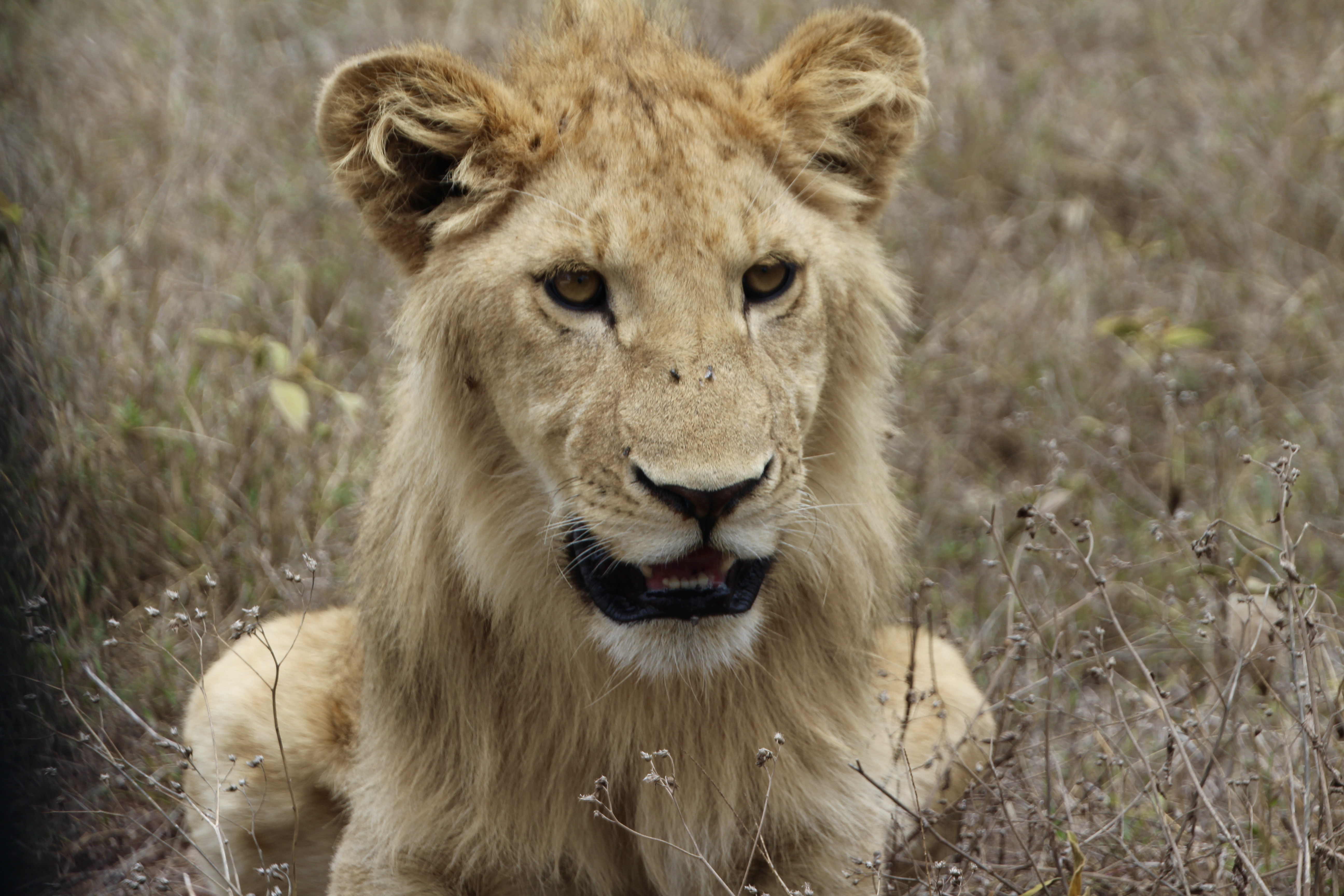
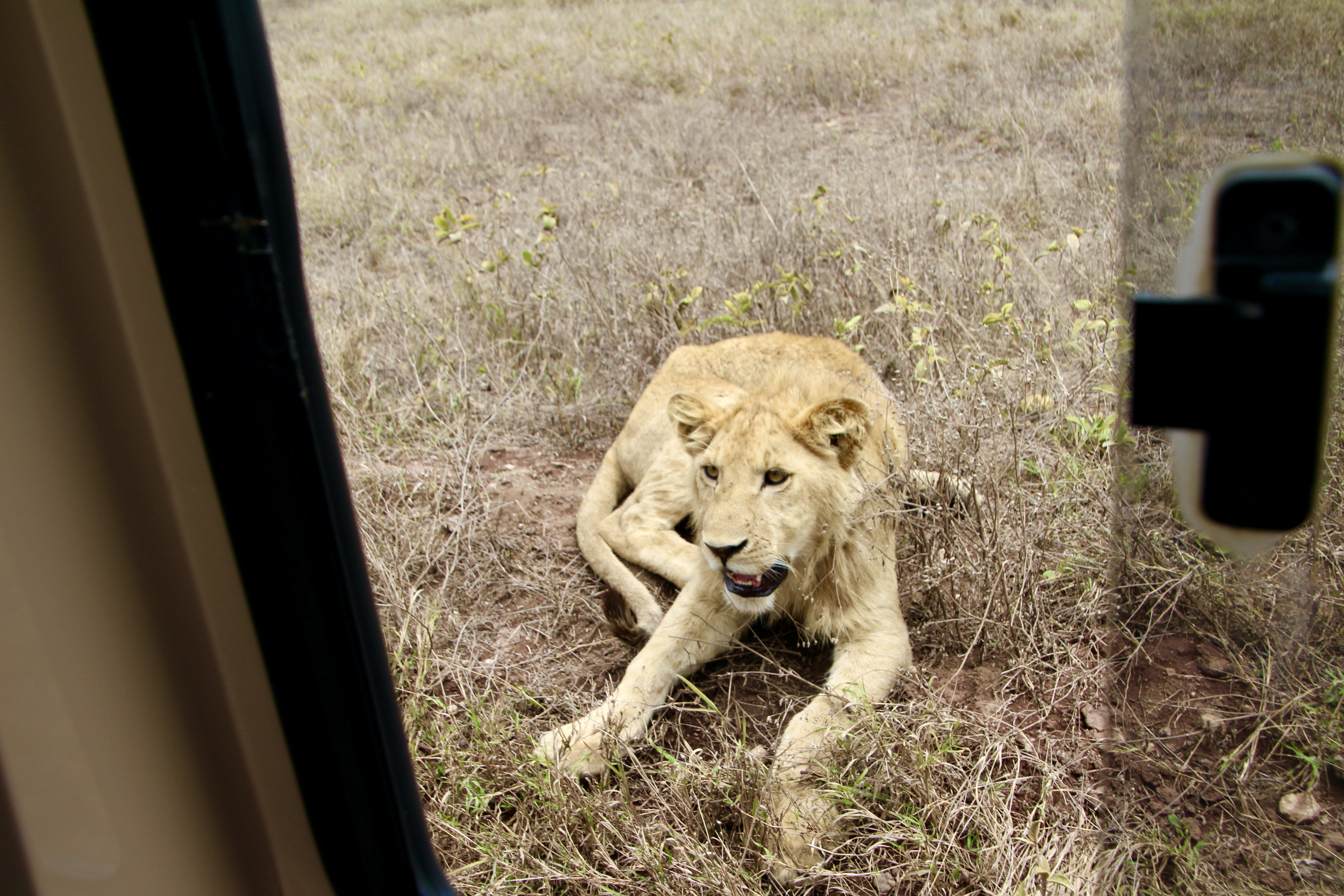
Safaris are magical, otherworldly experiences, wholly unlike other journeys. Not just transported to a foreign land, you are completely immersed in nature, culture, food, history. Safaris enrich the mind, stretch the imagination, calm the soul, and encourage self-reflection. A typical day? Rise with the sun and enjoy a peaceful breakfast in the wilderness; hold your breath while a mamma lion brushes up against your safari vehicle; dance with Masai warriors upon exiting a bush plane; tour a proud village elder’s mud hut; quietly tip toe through the brush to gaze at the majesty of a carefully guarded rhino; contemplate a flawless night sky and the Milky Way stretching over the evening bonfire.

But, my recent trip to Kenya included an even MORE unique experience, thanks to Micato Safaris and its nonprofit arm, AmericaShare. A recent article in AFAR magazine reminded me of what made this safari so memorable. Our two-week travel industry familiarization trip to Kenya and Tanzania hosted by Micato included a visit to one of the organizations supported by this award-winning travel company: the Harambee Community Center. Located in Mukuru, East Nairobi’s densely populated slum, this center left an indelible impression, and reminded me that travel for enjoyment can also include travel with a purpose: to open your heart and mind and shine a necessary light on causes and people around the world.

Packed into Mukuru are 500,000 people whose daily income barely exceeds four dollars. The township lacks basic formal infrastructure, running water, electricity, and sanitation. Its residents live in tiny one-roomed corrugated iron shacks with up to twenty families sharing a communal water tap and toilet.

AmericaShare, founded over 30 years ago, is dedicated to improving the lives of the children living in Mukuru. Through education and community outreach programs, they provide disadvantaged children with access to basic education resources to facilitate sustainable change. Many children in Mukuru cannot afford to consistently attend school. While public primary school tuition fees are covered by the government, hidden costs, such as uniforms, books, and lunch fees keep children from attending.

Harambee CenterOur travel agent group was brought to the Harambee Center – it means “Let’s Pull Together” in Swahili.  The center is a multi-purpose facility – a bright and beautiful oasis of hope and green space in the middle of the Mukuru slum. A vital community center, it allows residents to gather for lectures, educational sessions, and meetings. Our visit (pre-pandemic) included a tour of the classrooms, lending library, and computer resource building. Students of all ages were seated shoulder to shoulder at tables, quietly doing homework, studying for exams, and forming study groups. The library is stocked with over twenty thousand books, including novels, textbooks, and study guides. Books are a rare gift in Mukuru; many schools do not have adequate textbooks, and novels are a luxury most cannot afford.

AmericaShare has programs aimed at helping children living in poverty remain in school, giving them the opportunity to learn as every child deserves. For every trip booked with Micato Safaris, the company sends one child to school. Now in the age of COVID-19, AmericaShare’s mission has become even MORE dire: providing protective masks and organizing food donations to help ameliorate the increasing problem of hunger, something that is running rampant worldwide. Now, keeping kids from falling behind due to the recent closure of schools is even more paramount. New rules on social distancing and the lack of smart phones, tablets, or even the internet, severely limits digital learning.

Harambee Center

Harambee CenterI was grateful for the opportunity to see this organization’s efforts in action and help shine a light on their mission. Although the residents are faced with the daily challenge of survival, our visit to Harambee included an opportunity to see the children’s commitment to education, positivity, and kinship.

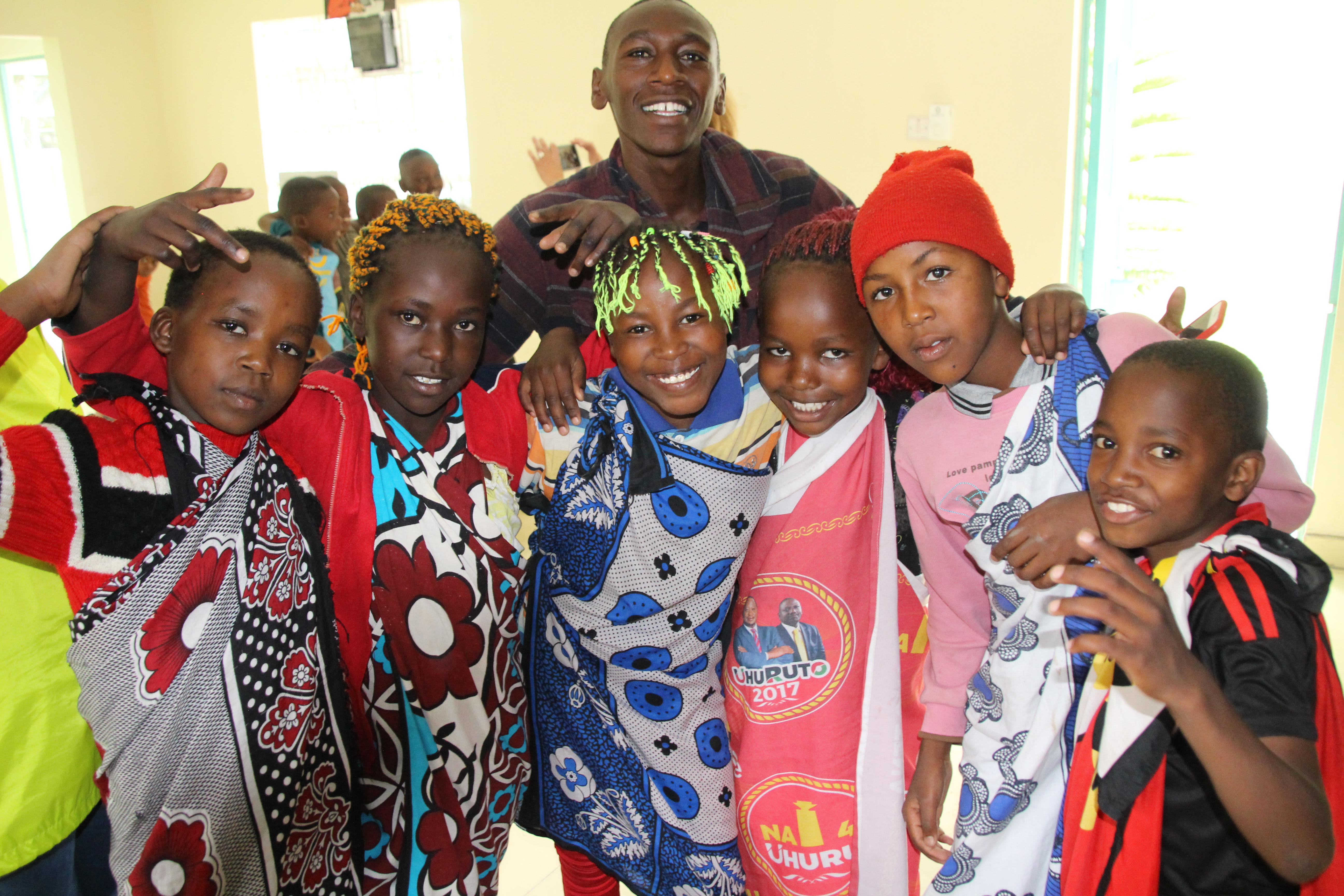
Our tour ended with a jubilant musical performance by the children (see video linked below). As the singing concluded, the children enveloped us and welcomed each of us into their circle, forever leaving their mark on our hearts and our souls. To learn more about AmericaShare and make a donation click here.

Click on photo to view video:

Need help putting together your Bucket-list Trip or Dream Vacation? It’s never TOO early to plan. Email me: mollie@herrickstravel.com, and find out about upgrades, special amenities, and VIP service for all Herricks Travel customers.

To view this complete article online and read my previous articles, use this link: uniquefamilytraveler.com.

Become a SUBSCRIBER and receive all of my latest articles right to your inbox: look for the “subscribe to this blog by email” box and then respond to the follow-up email.

For more information on my trip planning services, please click HERE.

Mukuru and Harambee Center exterior photos courtesy of AmericaShare.