Istanbul: Where East Meets West

Before our first visit to Istanbul, it was hard to imagine how this historic Silk Road city straddles two continents – Europe and Asia. Its dividing line is the 17-mile long Bosphorus Strait, the narrow channel of water that connects the Black Sea to the north, with the Sea of Marmara to the south.

Although no longer the capital, Istanbul is Turkey’s largest and most memorable city. Ancient religious places of worship and palaces mix with modern European-style buildings and hotels. This blending of old and new makes this ancient city unique – it’s no wonder it has been used as the dramatic setting of many Hollywood films.

With only a few days at the conclusion of our Regent Cruise, we confined most of our sightseeing to central Istanbul, which can be divided into four distinct areas: Seraglio Point (home to Topkapi Palace), Sultanahmet (dominated by Haghia Sophia and the Blue Mosque), the Bazaar Quarter, and the trendy Beyoglu district. It is easy to walk or take a taxi between locations, but try to have your destination written down and ready to hand to the taxi driver to avoid any confusion.

Galata Tower, Istanbul, Turkey

Medieval Galata Tower in the Beyoglu District stands tall just north of the Golden Horn

Topkapi Palace, originally built as a residence for Sultan Mehmet, and then serving as a seat of government is now a museum. Allow several hours to explore its many courtyards, apartments, and pavilions. A must see is the Treasury room with its vast array of jewel-encrusted artifacts including the Topkapi dagger. Rent the award-winning 1964 film, “Topkapi” to see the Hollywood version.

Across from the palace is the Blue Mosque, which takes its name from the 20,000 blue-green Iznik tile-work interior. No expense was spared in designing one of the most famous religious buildings in the world. The dome and six minarets of this 17th century masterpiece can be seen for miles.

Bosphorus, Istanbul, Turkey, Blue Mosque

As we sailed up the Bosphorus, we caught our first glimpse of the Blue Mosque

Not far from the mosque is the Haghia Sophia. This Byzantium Church is over 1,400 years old but is well preserved thanks to recent renovations. In the 15th century, the Ottomans converted this architectural wonder into a mosque. In 1936 it became a museum, and now many of the intricate mosaics and frescoes have been restored to their original grandeur. And, for a bit of trivia, in the movie “Argo,” you can watch actor Ben Affleck have a clandestine meeting in the Haghia Sophia.

Istanbul also dazzles from below. The Basilica Cisterns or “Sunken Palace” is a massive underground water cavern of beautiful arches and Roman columns, originally the Byzantine city’s main water storage during times of siege. Now this cathedral-size interior presents a mystical aura, with its dramatic lighting and fish filled pools—an appropriate location in the classic James Bond film “From Russia with Love.”

The Turkish people, known worldwide for their hospitality, are extremely welcoming especially to children. No shop could be entered without accepting generous offers of apple tea and biscuits, which my boys happily obliged. One of our favorite stores, Iznik Classics, offers the hand-made, color-rich tiles and ceramics Turkey is famous for.
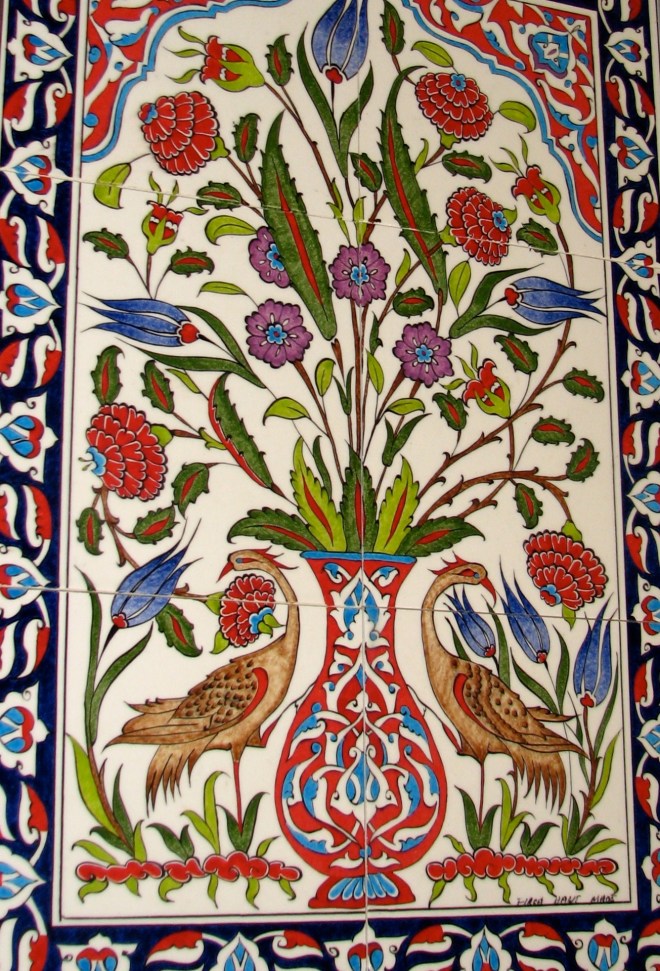
Iznik tiles, Istanbul, Turkey

We loved the Iznik tiles so much, we brought some home

After a day or two of touring, a shopping trip to a bazaar provides a welcome change of pace. The Grand Bazaar with its labyrinth of streets is filled with over 4,000 booth-like shops. It is impossible to walk even a few steps without being summoned to sample all the exotic wares contained inside: intricate gold jewelry, embroidered silk scarves, antique copperware, and Turkish rugs.

We spent hours wandering, bargaining, and getting lost. My son reminded me that actor Daniel Craig furiously drove a motorcycle across the roof of the Bazaar in “Skyfall,” the most recent James Bond flick. The Spice Market, although smaller, is worthy of close inspection. Known by its Turkish name, the Egyptian Market, it is filled with fragrant spices from the Orient and endless displays of dried herbs, tea, honey, nuts, and caviar. We filled several satchels with all sorts of delicacies to enjoy upon our return to the states.

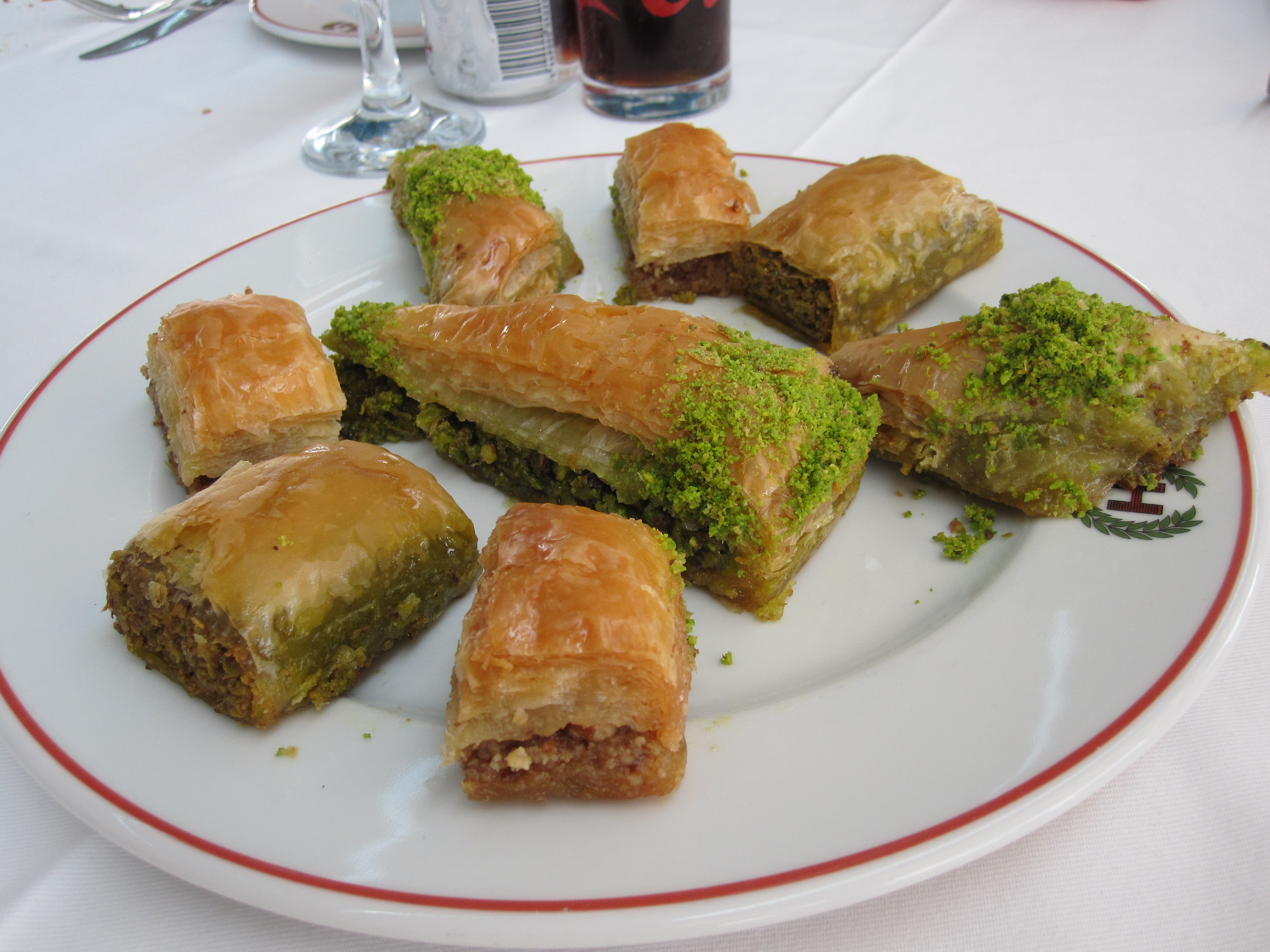
Next to the Spice Market is one of our favorite restaurants Hamdi. Perched several flights up it offers majestic views of the Galata Bridge, the Bosphorus, and the Golden Horn, the inlet that forms Istanbul’s natural harbor. After a long morning of walking, my kids dove into plates of meze (appetizers), lamb kebab, humus with pide bread (similar to pita), numerous cups of traditional Turkish tea, and ample plates of sweet baklava for dessert.

Hamdi Restaurant, Istanbul, Turkey

The dramatic view from Hamdi

Baklava, Hamdi Restaurant, Istanbul, Turkey

Delicious Baklava — rich, sweet pastry filled with layers of filo, nuts and honey

At the end of the day, we went back to our hotel, the Four Seasons—perfectly perched on the shores of the Bosphorus. Originally a 19th-century Ottoman palace, it was transformed into an elegant property that perfectly blends traditional and modern decor. The boys cooled off in the marble-rimmed pool and heated up in the hot tub. We spent our evenings on the terrace at Aqua, the hotel’s romantic Mediterranean restaurant, feasting on plates of homemade spaghetti and langoustines. The Bosphorus Bridge provided us with our own movie-set backdrop as we watched the ferries make their way under this architectural wonder, beautifully illuminated by an impressive LED rainbow light show.

Four Seasons Bosphorus, Istanbul, Turkey

The Four Seasons Bosphorus offers views across the water to the Asian side of Istanbul

At home, we often reminisce about Istanbul’s exotic sights, tastes and smells. And, when we make our Turkish tea and sip it from our glass, tulip-shaped Spice Market teacups, we think often of returning to this distinctive city that connects the continents.

Four Seasons Bosphorus, Istanbul, Turkey

The Four Season Bosphorus pool — the perfect place to end a day of touring

Interested in visiting Istanbul by ship? Check out Regent Cruise Lines  — their small, luxury ships specialize in unique ports and top notch service.

Ready to plan a unique trip for you or your family? Contact me at mollie@herrickstravel.com. For more information on my trip planning services, please click here.

EMAIL SUBSCRIBERS: to view my previous posts, and my ENTIRE blog, please click here: uniquefamilytraveler.com . To become a SUBSCRIBER of unique family traveler, please enter your email address in the box on the upper right hand side of the blog (or scroll ALL the way to the bottom), and then make sure to respond to the follow-up email (check spam). Thank you!
Journey Through Alaska’s Inside Passage

Although it is rarely represented properly on a U.S. map, Alaska looms large over North America – it’s actually twice the size of Texas. For the traveler, this means you could spend months exploring “The Last Frontier”—mountain climbing in Denali National Park, biking in Fairbanks, fishing for Sockeye, and exploring Juneau, the state capital. With a coastline longer than all other states combined, many people choose to cruise Alaska on their first visit in order to cover a lot of territory in a short amount of time.

Home to Mt. McKinley (North America’s highest peak), massive fjords, glaciers the size of Rhode Island, the northernmost rain forest, and the treacherous Chilkoot Trail, Alaska combines geography, earth science, and history lessons all rolled up in one unique vacation. An Alaskan cruise usually means a trip through the Inside Passage—the coastal route that weaves through the thousands of islands, coves, and bays that dot the Pacific Coast.

We chose a one-week cruise with Regent in order to minimize days at sea and also to make time for both a pre- and a post-trip. And, a smaller ship allowed for more stops and excursions. Before flying to Anchorage and embarking on our cruise in Seward, we spent several days in Seattle, which I covered in previous posts, “Seattle Top Spots” and “Four Days in Seattle.”

Seward, Alaska

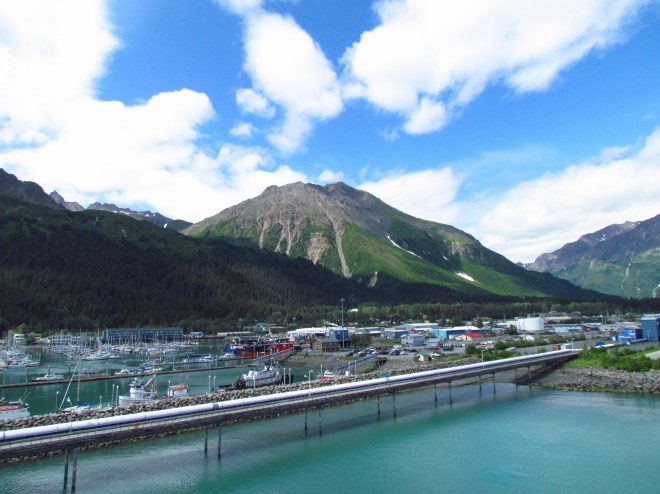
Our cruise began in Seward, a busy fishing port on the Gulf of Alaska’s coast

At the conclusion of our cruise, we spent a few days in Vancouver (the subject of my “Canada’s Outdoorsy Urban Oasis” post). Many cruise lines follow this same route, from Northwest to Southeast and in reverse. Other ships embark from Seattle and can last 10 to 14 days. To take advantage of the most outdoor activities, the best time to cruise Alaska is summertime, when days are longest and temperatures are warmest. But, definitely pack lots of layers, a waterproof jacket, boots, hats and gloves, because the weather can change rapidly.

Regent Cruise

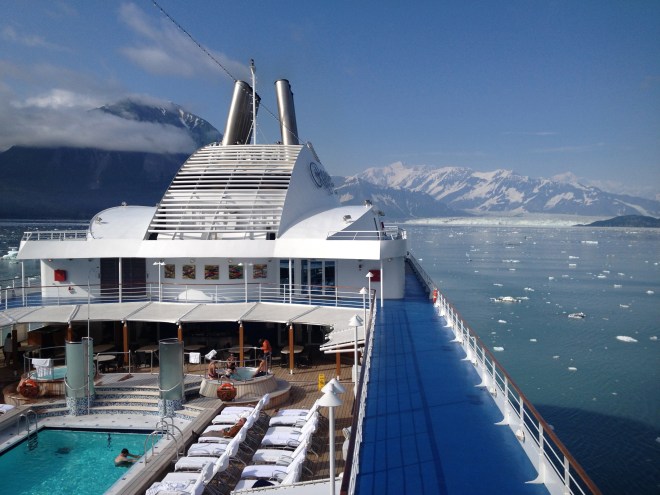
To reach Hubbard Glacier, we sailed through Yakutat Bay

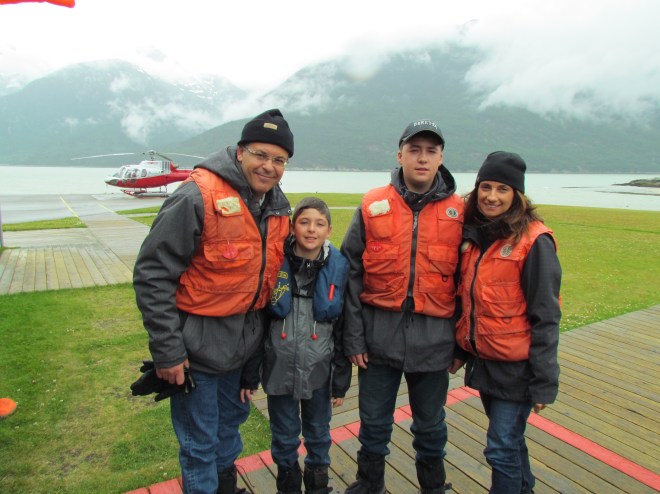
Our days were exciting and included a JetCat Sitka wildlife tour, a scenic helicopter tour, a hike through Juneau’s rain forest and a walk to Mendenhall Glacier, and a trip back in time at the Skagway Gold Rush Museum. Our ship offered a wide range of active excursions: kayaking, biking, and dog sled adventures. In the summer, the fog can roll in quickly, so excursions can be cancelled at a moment’s notice, so backup plans are necessary.

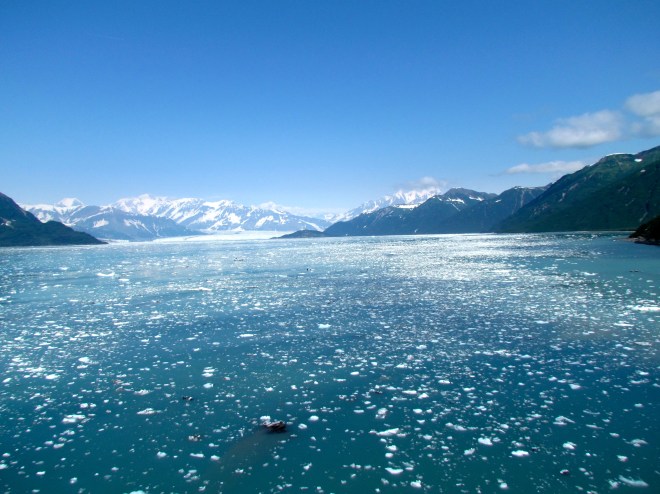
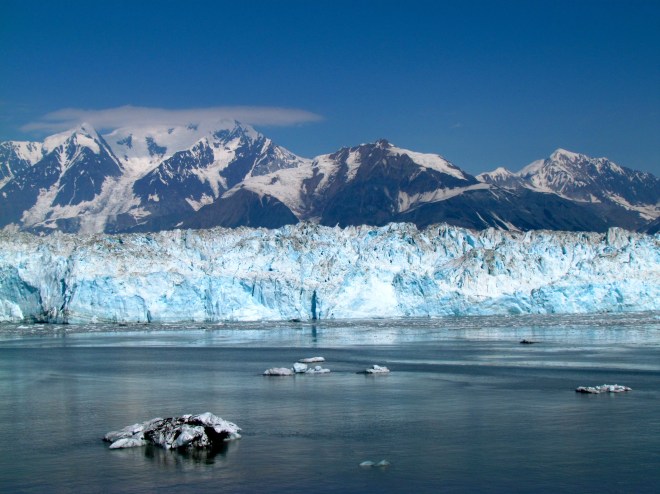
Early one morning, we gathered on deck to watch as the ship approached one of the highlights of the cruise—Hubbard Glacier. This “river of ice” measures 76 miles long and 7 miles wide and it is the state’s most active glacier. It is very common to see sheets of ice separate themselves from the glacier, and crash into the sea with a loud crack that can be heard for miles. These pieces, christened icebergs, filled the bay and we watched in awe as these icy-blue splendors floated past the ship.

Disenchantment Bay

Pristine Disenchantment Bay

Hubbard Glacier

From a distance, Hubbard Glacier’s size is deceiving –it’s actually more than 30 stories high!

The one-week cruise made stops in several ports: Seward, Sitka, Juneau, Skagway, and Ketchikan (covered in my post “Fish & Feast”). The scenery and wildlife viewing in between ports was equally magnificent and kept us up on deck with camera and binoculars in hand as we scanned the horizon for humpback whales and porpoises.

Although this was a long journey, we look back on our visit to the 49th state grateful for our eye-opening experiences and reassured that the wilderness does still exist. And, even though Alaska is so large and so far away, upon our return, we felt a little bit closer to it.

Alaska iceberg

Although they got a bad rap in “Titanic,” icebergs are quite beautiful

Juneau

Tongass National Forest, the heart of the world’s largest remaining temperate rainforest

Mendenhall Glacier

Easily accessible, Mendenhall Glacier is located just 12 miles from downtown Juneau

Skagway, Alaska

In Skagway we took off on a helicopter tour

Ready to plan a unique trip for you or your family? Contact me at mollie@herrickstravel.com. For more information on my trip planning services, please click here.

Email subscribers: to view my previous posts, and my ENTIRE blog, please click here uniquefamilytraveler.com. To become a subscriber of unique family traveler, please enter your email address in the box on the upper right hand side of the blog (if reading on a cell phone, please scroll ALL the way to the bottom), and then respond to the follow-up email. Thank you!

Sarasota: Florida’s West Coast Wonder

Orlando, Miami, Palm Beach – these are the cities that get top billing when considering Florida’s top vacation destinations. But, it is the Sunshine State’s west coast that truly features the best of what Florida can offer, and Sarasota is its heart and soul.

Sarasota lies on Florida’s Gulf Coast and is known for its award-winning, white talcum-powder beaches, vast cultural offerings, and natural beauty. With an increase in flights to its international airport, it’s even more accessible than ever. Sarasota, located south of the Tampa Bay area and north of Fort Meyers includes several barrier islands, known as keys, which lie just off the coast in the Gulf of Mexico.

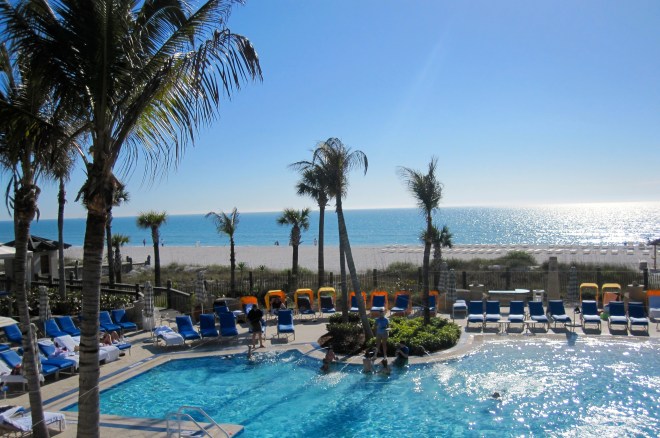
The Ritz Carlton, positioned across from the city’s downtown area and marina, has served as our Sarasota home on several trips. Although its location on the mainland’s bayside might seem inconvenient, a quick trip across the John Ringling Causeway by car or hotel shuttle brings you to the resort’s lovely pool and beach club on Lido Key. Located between Long Boat and Siesta Keys, Lido also features an array of small, beachside hotels and condo rentals and acres of recreational area. Adjacent to Lido Key is St. Armonds Key with its popular pedestrian area. St. Armonds Circle is a charming place in which to meander and sample the diverse restaurants and sidewalk cafes, specialty stores, gelato and ice cream shops, all laid out in a lush, tropical, circular setting.

Ritz Carlton Sarasota

The Ritz Carlton Sarasota Beach Club — just steps from its gorgeous gulf beach

Sarasota’s downtown area, with its scattered high-rise office buildings and hotels, and low-rise historic areas offer an eclectic mix of eateries and galleries with annual street fairs, farmers markets, and art exhibits a focal point of the downtown culture.

Of course those gorgeous, white-sand beaches are Sarasota’s draw. We spend hours there collecting shells, fishing, and snorkeling in the Gulf — much calmer than Florida’s eastern, Atlantic coast. On cloudy days, there are plenty of nearby fun and educational activities including Jungle Gardens, MOTE Aquarium, kayak tours, and Marie Selby Botanical Gardens.

Sarasota, Florida

The MOTE Marine Laboratory & Aquarium offers hands-on learning like panning for shark teeth

Last year a highlight of our trip was a half-day spent with Tearin’ Em up Charters. We were met one early morning at the pier behind the Ritz Carlton and whisked away for a four-hour, hook-to-fork adventure on Captain Doug’s charter boat. We cast our lines in and around the inlets and then, with our catch of the day in the boat’s cooler, pulled up to the bayside beach of South Lido Park. We jumped out of the boat into the shallow water and strode up to the rustic beachside campsite complete with wooden picnic tables and barbeque station.

Sarasota, Florida

Jack reels in a Spotted Seatrout from the emerald-blue waters surrounding Long Boat Key

Captain Doug, a classically trained and experienced chef, had all the fixings to whip up his signature shore lunch. Right on the spot, he fileted and prepared my sons’ spotted sea trout en papillote, wrapping the freshly caught fish with sweet potatoes, Vidalia onions, and ginger root into a foil pouch. While we waited for it to cook, he offered us skewers and marshmallows, which we roasted in the fire and then sprinkled with fresh lime juice for a delicious take on “Siesta Key Lime Pie.” Accompanying our meal was warm honey-pepper corn bread and grill-cooked beans. After we finished our mouth-watering, open-air meal, we boarded the boat for our trip back to the Ritz Carlton, with our stomachs and our hearts full.

Sarasota, Florida

Lido Key’s acres of recreational area provide the perfect setting for a seaside picnic

While our tasty beach barbecue cooks up over the open flame, Harris toasts a marshmallow appetizer

While our tasty beach barbecue cooks up over the open flame, Harris toasts a marshmallow appetizer

Unique Family Traveler sampling of things to do and places to eat in Sarasota:

Marie Selby Botanical Gardens: This 14-acre “oasis of inspiration and tranquility” on the Bay features rare tropical plants including 6,000 orchids.

Almost Heaven Kayak Adventures: Their kayak eco-tour takes you through the exotic mangrove tunnels on Lido Key into the bay to view manatees and dolphins.

MOTE Aquarium: There’s plenty to see — sharks, sea turtles, manatees, seahorses, dolphins, plus over 100 other species, along with touch pools and viewable, working marine-studies labs.

Sarasota Jungle Gardens: Meander through 10 acres of lush, tropical, winding jungle trails and view creatures like Florida’s crocodiles and famous pink flamingos

John & Mable Ringling Museum: This original, 66-acre winter home of the legendary circus entrepreneurs, features an art museum, a 56-room estate, and the world’s largest miniature circus.

Ritz Kids: This Ritz Carlton camp program, held at their beach club, has top-notch staff who will keep young kids engaged with a diverse set of activities including swimming, arts, science and nature-studies

Darwin’s on 4th: This downtown Peruvian restaurant features a mix of Latin American flavors with an Asian flair including an extensive selection of ceviches.

Pacific Rim: Japanese/Thai fusion cuisine and sushi in Sarasota’s lovely Southside Village neighborhood.

Café Epicure: Authentic Italian in the downtown area with sidewalk seating, offering excellent, freshly made pasta, thin-crust pizza, and homemade desserts and gelato.

Le Macaron: Located on St. Armonds Circle, this French patisserie creates mouth- watering, freshly-baked macarons — the perfect place for cappuccino and dessert.

Tommy Bahama: On St. Armonds Circle, serving contemporary, American cuisine with a tropical twist. Get a table upstairs for a view of the setting sun and order the delicious coconut shrimp.

Jack Dusty: The Ritz Carlton Sarasota’s lively seafood restaurant is not your typical hotel dining experience – recently opened, this restaurant’s creative “coastal cuisine,” first-rate service, casually elegant décor, and bay views are delightful.

Ready to plan a unique trip for you or your family? Contact me at mollie@herrickstravel.com. For more information on my trip planning services, please click here.

Email subscribers: to view my previous posts and my entire blog, please click here: uniquefamilytraveler.com . To become a subscriber of unique family traveler, please enter your email address in the box on the upper right hand side of the blog (if reading on a cell phone, please scroll ALL the way to the bottom of the blog), and then respond to the follow-up email. Thank you!

For more information on Sarasota:

Visitsarasota.org

Thisweekinsarasota.com

Ritz Carlton Sarasota

Sochi: Russia’s Sub-tropical Olympic City

Sochi: Russia’s Sub-tropical Olympic City


Our recent family cruise on the Black Sea included a fortuitous stop in Sochi, Russia. We embarked in Athens, sailed across the Aegean Sea and the Dardanelles to the Sea of Marmara, up the Bosphorus Strait through Turkey, where our ship, Regent’s Seven Seas Mariner, entered the Black Sea. Besides being an exceptional lesson in world geography for my boys, it was an opportunity to explore several unique ports in four countries on this lovely turquoise sea. Most memorable was Sochi, located close to Russia’s border with Georgia.

At the time of our visit, the 2014 Winter Olympics (February 7th -23rd) seemed very far off. I noticed only a small billboard in the port announcing this upcoming international event that would draw thousands of visitors to this city, established as a fashionable resort under Stalin and home to his dacha, or summertime residence. While the mighty snow-capped Caucuses, Europe’s tallest mountains, loom above the harbor, this tourist destination actually enjoys a sub-tropical climate in its lower elevations and features inviting sand and pebble beaches and graceful palm trees along its coast. The Olympic events will actually be split between the coastal and mountainous districts, roughly 30 minutes apart.

As we strolled along the lovely sea promenade in shorts and t-shirts under bright skies and sunny 77 degrees Fahrenheit weather spending our rubles on cold bottles of water, it was hard to imagine Sochi serving as this winter’s Olympic venue since its average February temperature is a balmy 50 degrees. It is actually the warmest city to ever host winter Olympic games and according to Time, for the past year, Russia has been diligently stockpiling snow and inventing ways to keep every flake frozen.

Our visit to Sochi included a tour of the Russian Tea Plantation, the only one in the country and because of the city’s unique climatic conditions — warm, humid and consistently sunny — it’s the northernmost such farm in the world. Up in the mountains an agronomist, who specialized in the technology of growing tea, greeted us near the fields and expounded on the distinctive history of tea in Russia. A quick hike down a forest path led us to a wooden izba (chalet) where we were treated to a tea tasting and serenaded by a folklore troupe in traditional dress — their lively Russian melodies accompanied by accordions.

Servers produced traditional Russian samovars to dispense the freshly brewed black tea, which was served with delicious homemade breads and pastries, honeys, nuts and jams. We explored the Russian handicrafts – matryoshka (nesting) dolls, lacquered boxes, and painted clay figurines — in the tiny gift shop at the front of the chalet. On our journey back down the mountain, into the city proper, I gazed up at those beautiful and majestic Caucuses, and prayed for snow in February 2014.

Sochi, Russia

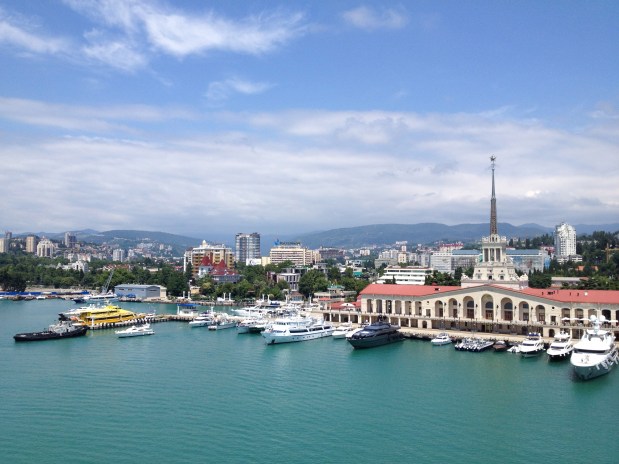
Sochi’s Sea Terminal and its notable 71-meter high steeple tower

Sochi, Russia

Sochi — Russia’s Riviera on the Black Sea

Sochi, Russia

The view of the Caucuses from the Russian Tea Plantation

Sochi, Russia

A Russian folklore troupe performs at the Tea Plantation

Russian matryoshka nesting dolls

Russian matryoshka nesting dolls

For more information:
Sochicityguide.com
Sochi Winter Olympics

Ready to plan a unique trip for you or your family? Contact me at mollie@herrickstravel.com. For more information on my trip planning services, please click here.

EMAIL SUBSCRIBERS: to view my previous posts and my entire blog, please click here: uniquefamilytraveler.com

Please help me build an audience by subscribing to my blog. Simply enter your email address (top, right hand side of the blog), and then respond to the follow-up email. Thank you and happy travels!